Rent or Buy a Country House: How to Test Your Real Needs
When renting can prevent an expensive mistake, what to test in the house and community, and how to compare rent with the true annual cost of ownership.

The rent-versus-buy question is often reduced to finance. In practice, the decisive issue is how well a household understands its own country-life requirements. A mistake in house size, school route or community type can cost more than several months of rent. Yet endless experimentation is wasteful when the criteria are stable and a strong property is available.
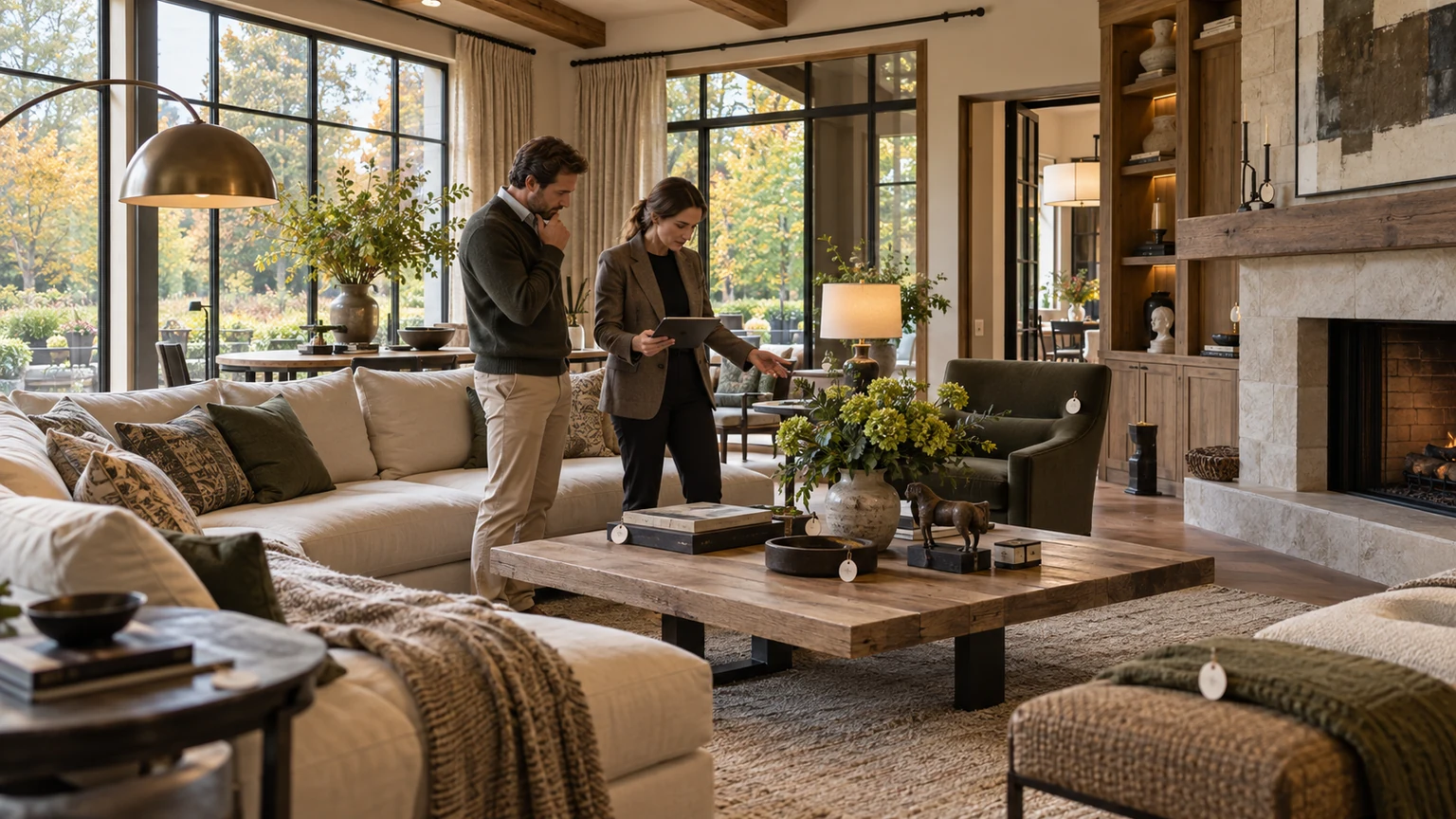
Renting works best as a managed experiment, not as a lighter version of ownership. It reveals a location on weekdays, heating in winter, drainage after rain and the household’s real habits beyond a Sunday viewing. To make the experiment useful, define the questions and a decision date in advance.
Begin by comparing homes to rent with homes for sale that serve the same scenario: similar area, location, bedroom count and service level. Otherwise the conclusion will be based on two different products.
When renting first is sensible
The clearest case is a move from the city without sustained experience of country living. A family may underestimate commuting, seasonal maintenance, dependence on cars or the staffing needed for a large house. Renting also protects flexibility when schools, workplaces or family composition may change within a year or two.
It is valuable when choosing between areas. Daily life along Rublyovo-Uspenskoye Highway differs from the offer around Novorizhskoye Highway. Test personal journeys, not nominal distance from Moscow. Renting can also clarify scale: a 900-square-metre residence may be impressive, while 450–600 square metres with a better garden connection may work better.
- This is the household’s first permanent move outside the city.
- The school, office or primary route may change.
- Two directions or community formats remain under consideration.
- The need for a pool, staff suite, large garage or guest house is uncertain.
- The eventual purchase requires major renovation and interim housing anyway.
When buying may be the stronger choice
Purchase becomes more rational when location, weekly routes, house scale, plot criteria and holding period are clear. The buyer also needs time for legal and technical due diligence, a reserve for early works and willingness to operate a substantial asset.
An excellent property may have no precise rental substitute. Architecture, mature trees, orientation and a rare plot cannot be commissioned instantly. Scarcity must not become permission to skip checks. The more emotional the house, the more disciplined the pre-contract process should be.
Buying because rent feels like paying for “someone else’s walls” is not a complete argument. Neither is renting merely to keep capital liquid without calculating the full occupancy cost. Consider duration, liquidity, adaptation cost and the value of being able to change location quickly.
What to test while renting
Real-life logistics
Do not time the journey once on a Saturday. Record morning and evening departures, school runs, airport journeys, healthcare and regular meetings for several weeks. Test alternative routes and the final road to the gate. Consider whether teenagers or staff can travel without a dedicated driver.
The house at different times and in bad weather
Morning reveals bedroom and breakfast light; daytime tests workspaces; evening exposes living-room acoustics and terrace use. Rain shows drainage and approaches, while frost tests heating, glazing and entrances. Record repeated friction as well as failures: too many doors from garage to kitchen, nowhere for wet coats, or audible plant at night.
The community as a service
Use guest access, deliveries, snow clearance, emergency reporting and contractor procedures. Speak to residents and the manager. The detailed gated-community management checklist provides a structured interview. Marketing shows the amenities; renting shows whether they are easy to use.
The true amount of space required
After two months, occupied and decorative rooms become obvious. Note where the family gathers, how many workstations are actually needed, whether guests stay overnight and whether storage is sufficient. This evidence becomes a far better brief for an agent or architect.
Calculate the full rental cost
Monthly rent is only the beginning. Add deposit, any agency fee, community charges, metered resources, internet, security, landscape care, seasonal work and staff. Establish which maintenance falls to landlord and tenant, including minor repairs and complex equipment.
For a furnished house, prepare a photographed inventory and condition record. Note meters, keys, controls, manuals and existing defects. The agreement should clearly address early termination, notice, landlord access, pets and deposit return. A lawyer should tailor the wording to the particular property.
If furniture or equipment is essential, list it instead of accepting “fully equipped”. Do the same for garden machinery, generator, pool and vehicle charging: identify the maintainer, consumables and procedure after a fault.
Calculate the real ownership cost
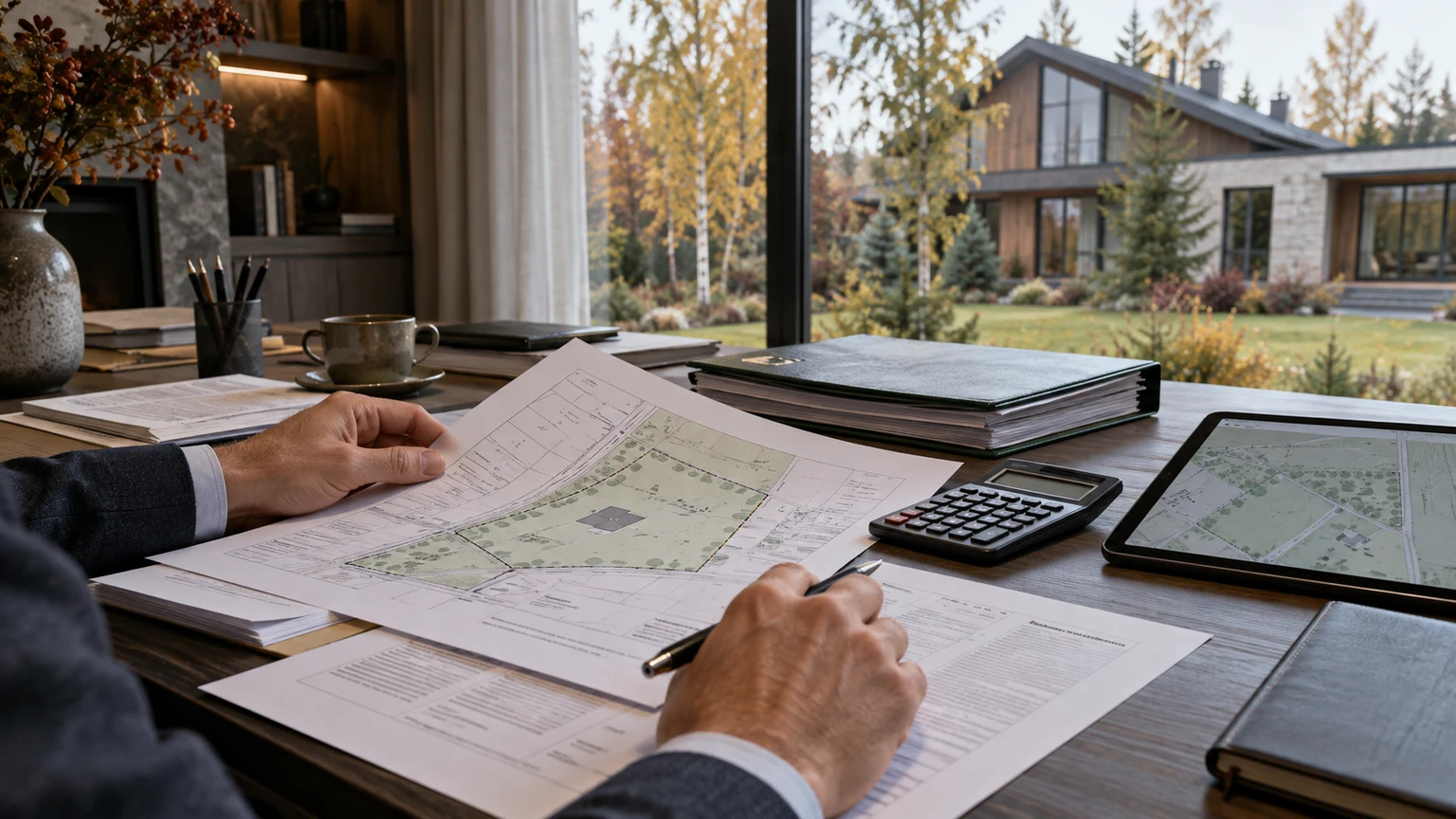
The asking price is not the entry budget. Add due diligence and transaction work, adaptation, repairs, furniture, equipment, landscaping and deferred defects. Then model annual operation: community service, utilities, taxes, security, staff and maintenance of systems, façades, roof, pool and grounds.
A maintenance reserve cannot be one universal percentage. A new compact house and a complex residence have different profiles. A technical survey should identify first-year priorities and medium-term works such as plant replacement, drainage, trees and road surfaces.
Include capital cost and liquidity, but avoid pretending to know the future sale price. Model base, adverse and early-exit cases. This reveals whether the decision remains workable if expenses rise or plans change.
Use a decision matrix
Score each option and give the criteria different weights. A family with schoolchildren may prioritise logistics over floor area; a remote worker may emphasise quiet and connectivity; frequent hosts may care more about guest circulation and parking.
- Location: repeated routes, alternative access and amenities.
- House: area, plan, daylight, engineering condition and storage.
- Plot: privacy, terrain, water, trees and maintenance load.
- Community: management, charges, roads, security and rules.
- Finance: entry cost, annual cost, reserve and alterations.
- Flexibility: duration, exit and future household needs.
Do not let arithmetic conceal a critical failure. An unsuitable school route or uncertain access cannot be offset by a beautiful terrace. The matrix exposes assumptions and disagreements; it does not remove judgement.
A useful three-month experiment
- Before moving: write ten hypotheses about travel, area, service and cost.
- Month one: observe before redesigning the house around your habits.
- Month two: test guests, remote work, poor weather and late arrivals.
- Month three: write a new search brief and compare it with the original.
- On the chosen date: renew, change format or begin a purchase search.
A household might test the area through rentals in Barvikha or another location page, but the choice should follow scenarios rather than the prestige of a name. Street, plot position and management can matter more than a famous address.
A good pre-purchase rental is a time-limited research project. Without explicit questions, it creates impressions but not a decision.
Renting and buying can both be correct. Rent purchases time and information; ownership provides control and deep adaptation. The better choice appears when the household is honest about the stability of its plans, models the entire budget and tests the property in the modes that motivated the move in the first place.