Gated Community Management: 17 Questions Before You Buy
The documents, charges and operating procedures to request from a gated-community manager—and the warning signs to identify before buying a home.
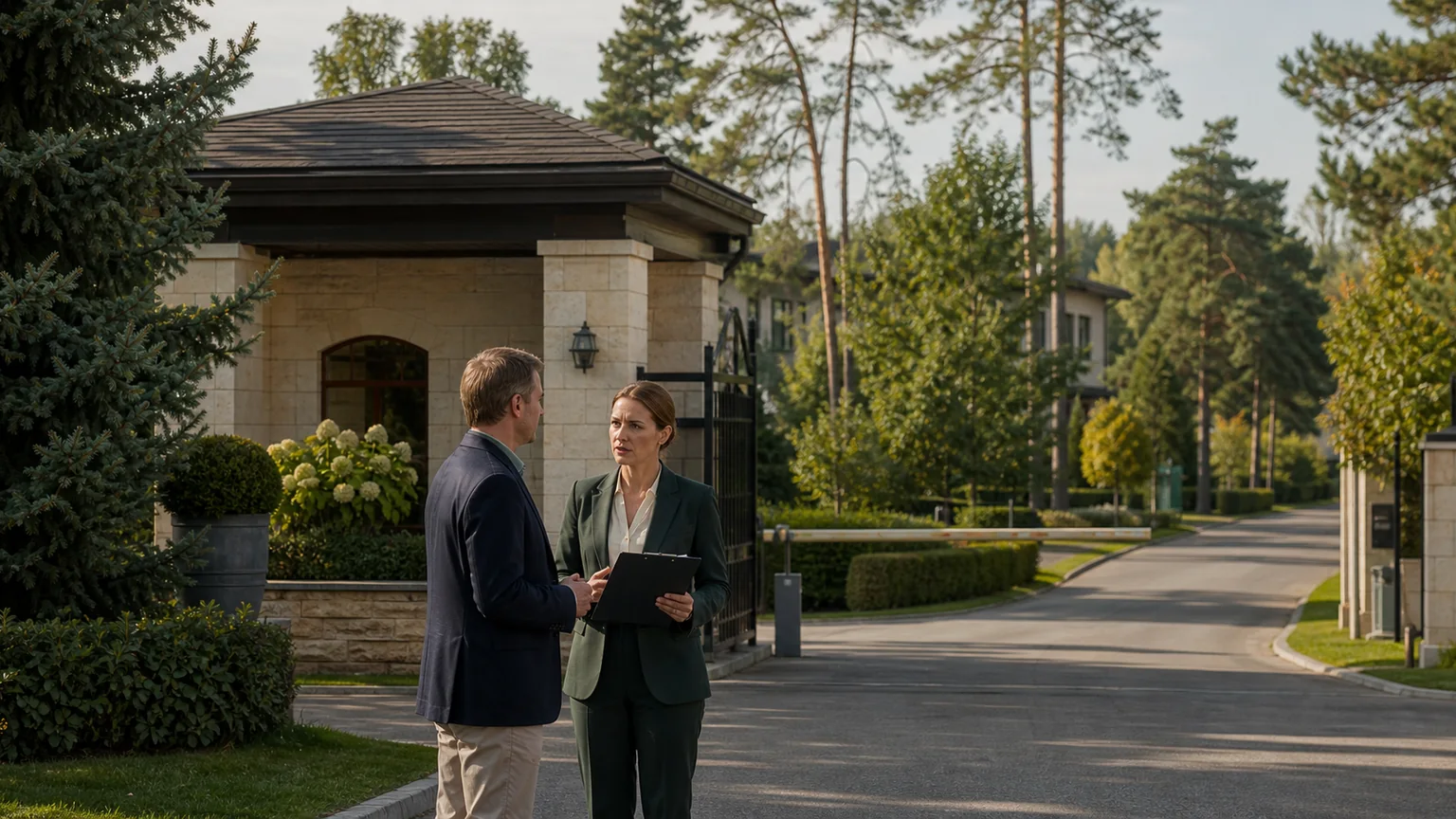
A management company rarely shapes the first impression of a house, yet it often determines the quality of the second year of ownership. In winter, roads and utility resilience matter; in spring, drainage; in summer, landscape maintenance. At all times, residents depend on clear procedures for guests, contractors and emergencies. A conversation with the manager therefore deserves the same attention as the boiler-room inspection and the title review.
The goal is not to find a community without charges or rules. Well-run shared environments need both. The real questions are what the owner pays for, who controls the common assets and how major work is approved. The following seventeen questions turn the promise of effortless service into evidence that can be compared.
Start with the gated-community directory and use one scorecard for every candidate. This makes the differences between established communities along Rublyovo-Uspenskoye Highway and larger developments near Novorizhskoye Highway practical rather than impressionistic.
Authority, contracts and ownership
1. What is the manager’s legal role?
Request the full legal name, details and document under which the organisation operates. A manager may also own part of the infrastructure, act as a contractor, or work for an owners’ association. Separate these roles: they affect who can set charges, commission work and sign agreements.
2. Which agreement will the new owner sign?
Read the proposed agreement before paying a reservation. Review the service schedule, duration, termination terms, liability, price-change mechanism and dispute process. A phrase such as “territory maintenance” is insufficient unless an appendix defines the work, frequency and responsibility boundaries.
3. Who owns roads, utilities and amenity areas?
Ask for an asset map covering internal roads, lighting, electricity, gas, water, wastewater and shared leisure areas. Identify each owner and the legal basis on which residents use the asset. If several companies or individuals hold different parts, obtain the linked agreements.
4. Where does management responsibility end?
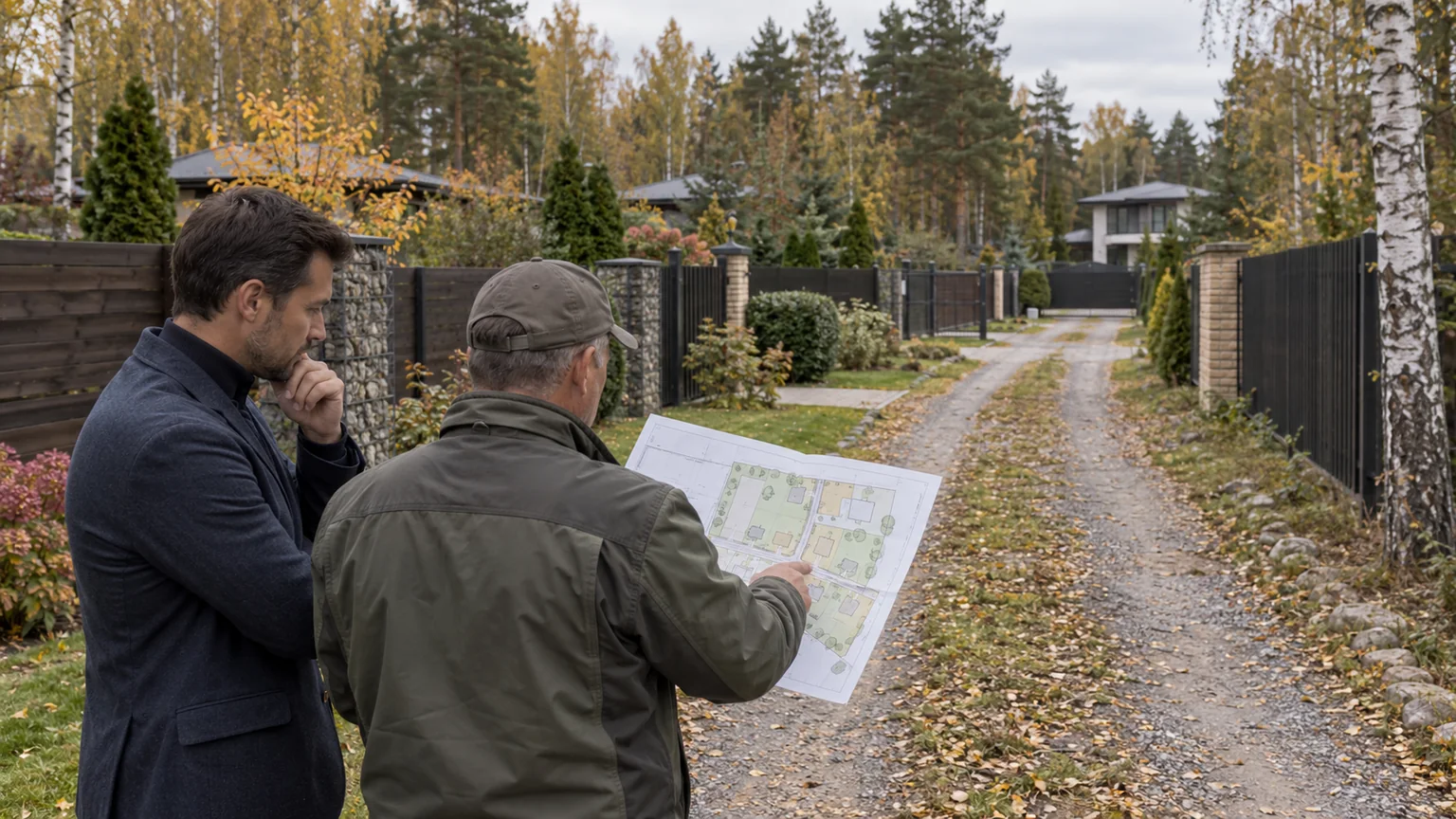
Every utility has a point beyond which the homeowner becomes responsible. Establish who repairs the service entry, responds to a leak beneath an internal road and restores landscaping after excavation. A one-page responsibility diagram is more valuable than repeated verbal assurances.
Charges, reporting and major expenditure
5. What is included in the compulsory charge?
Request an itemised schedule: security, snow and cleaning, lighting, waste, engineering facilities, emergency desk, landscaping and administration. Mark metered resources and optional services separately. Two monthly figures are not comparable until their service scope is the same.
6. How can the charge change?
Ask who approves indexation, how much notice owners receive and whether a two- or three-year history is available. A transparent, explainable progression is usually more useful than a temporarily low charge without a stated review process.
7. Can owners face special assessments?
Road reconstruction, a replacement pump or access-system upgrades may sit outside routine charges. Learn who approves the specification, how contributions are allocated and how owner input is recorded. The aim is not to predict an exact future bill but to understand the governance mechanism.
8. Does the selected property owe anything?
Before completion, obtain available confirmation of the account position and clarify how any outstanding balance will be cleared. A transaction lawyer should determine which obligations attach to the contracting party and which may affect the property or continued service. Do not rely on the seller’s recollection alone.
9. What operating reports are produced?
Review an actual report, not an empty template. Useful evidence includes completed works, significant expenditure, upcoming tasks, fault statistics and a clear contact route. The absence of a polished app is not concerning; the absence of facts and accountability is.
Utilities and emergency response
10. How are out-of-hours incidents handled?
Test the published number and ask how requests are logged, prioritised and escalated. Discuss the last significant incident and its timeline. A concrete account of detection, communication and repair is more credible than the claim that nothing ever fails.
11. How resilient is the electricity supply?
The manager should explain the supply to common infrastructure, the property’s available capacity and the service boundary. If a generator exists, establish which loads it supports, how fuel is managed and how often it is tested under load. An independent engineer must still inspect the individual house.
12. What are the water and wastewater systems?
Identify the water source, available testing records, pump redundancy and network-maintenance routine. For wastewater, review the treatment method, servicing and emergency plan. The marketing term “central utilities” says nothing about ownership, capacity or condition.
13. Who services gas infrastructure?
Separate common distribution assets from equipment inside the property. Ask for the responsible service organisation, property connection records and maintenance procedure. Boiler and gas-appliance inspections require qualified specialists; a manager’s reassurance is not a technical report.
Daily rules that become visible after moving in
14. How does access control work?
Test the workflows for guests, taxis, couriers, household staff and builders. Find out how access data is handled and what happens during a system outage. Check lighting, response at the gate and emergency-vehicle access. A barrier is only one component of security.
15. What renovation rules apply?
Working hours, truck routes, wheel cleaning, skips and worker access affect both the renovating owner and neighbours. Obtain the rules early if the house needs finishing. Architectural controls for façades, boundaries and landscaping should also be understood before purchase.
16. How are roads, snow and drainage maintained?
Ask about clearance priorities, snow storage, de-icing materials and road-repair cycles. Visit after heavy rain if possible: standing water and eroded verges reveal more than a summer presentation. Buyers considering a wooded plot should also read the guide to light, trees and forest-edge risks.
17. How do owners influence decisions?
Establish whether there is an owners’ council or meeting, how projects are communicated and where decisions are recorded. A predictable process matters: residents should be able to review the scope, cost, timing and person responsible for major work.
Warning signs
- The service agreement is withheld until after a payment.
- Different representatives give conflicting answers about road ownership.
- The charge is quoted but its contents and extras are not disclosed.
- No utility diagram, emergency contact or request log is available.
- Written rules are dismissed as rules that are “never enforced”.
- No one can explain who approves work or informs owners.
- A low routine fee depends on unpredictable special collections.
A single issue need not end the purchase. A small club development, for example, may not need sophisticated software. Essential rights, responsibilities and money flows must nevertheless be documented. Any missing answer should become a condition to resolve before the transaction.
A one-hour management test
- Request the documents electronically before the meeting.
- Inspect the entrance, roads, drainage, waste area and engineering assets.
- Test the fault-reporting and guest-access procedures.
- Speak to at least two residents from different parts of the community.
- Record each answer as fact, evidence, risk and next action.
When assessing a location, compare options in Barvikha, Zhukovka and neighbouring areas without transferring assumptions from one development to another. Communities beside the same road can have entirely different ownership and operating structures.
Reliable management does not mean that problems never occur. It means that the rules are clear, incidents are logged quickly and the remedy, responsibility and cost can be explained.
The outcome of the meeting should be a document pack and a focused list for the lawyer and engineers—not merely a good impression. A house can be refurbished and a garden redesigned. An opaque system of shared roads, utilities and charges is much harder for one owner to change.