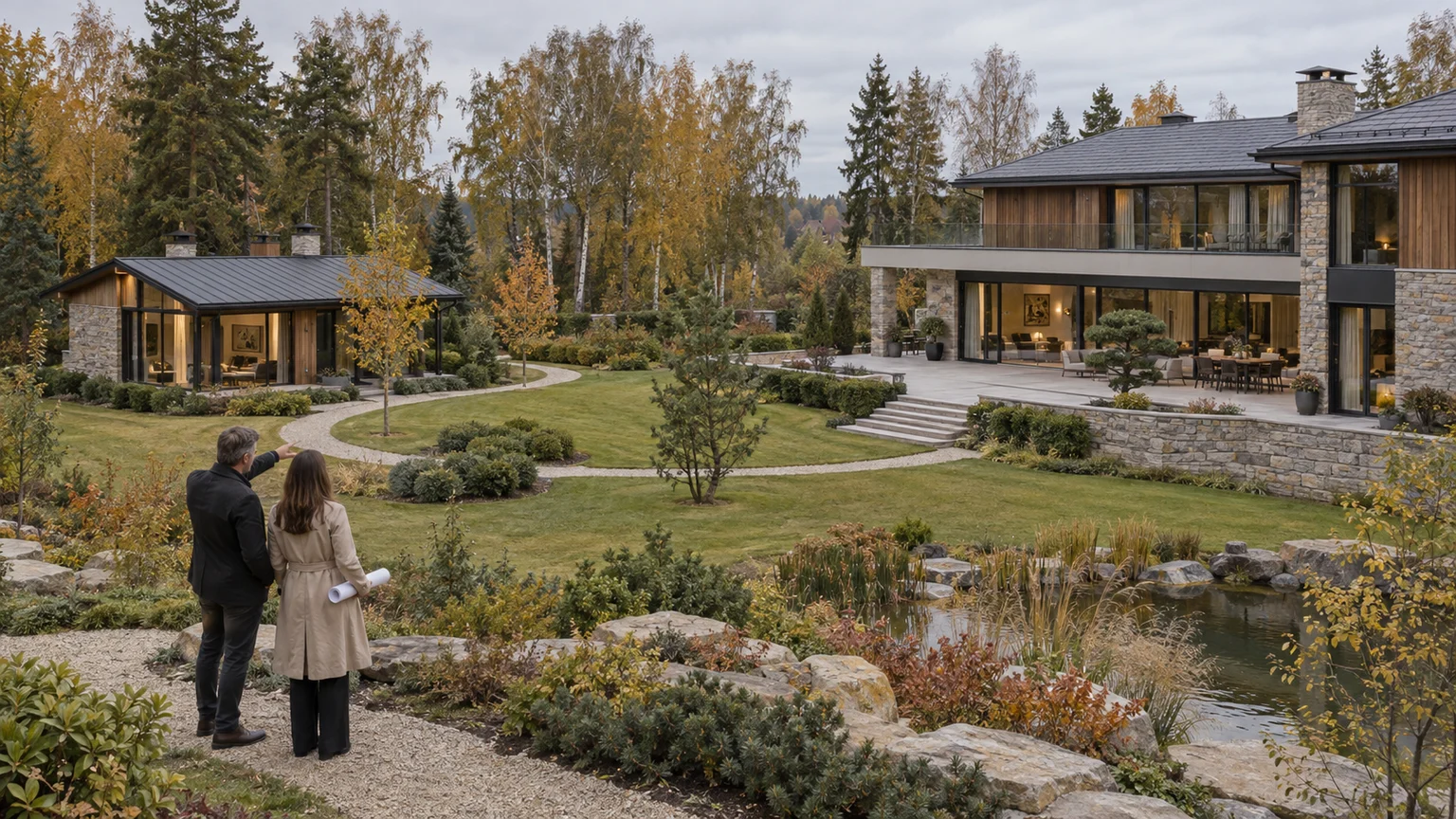
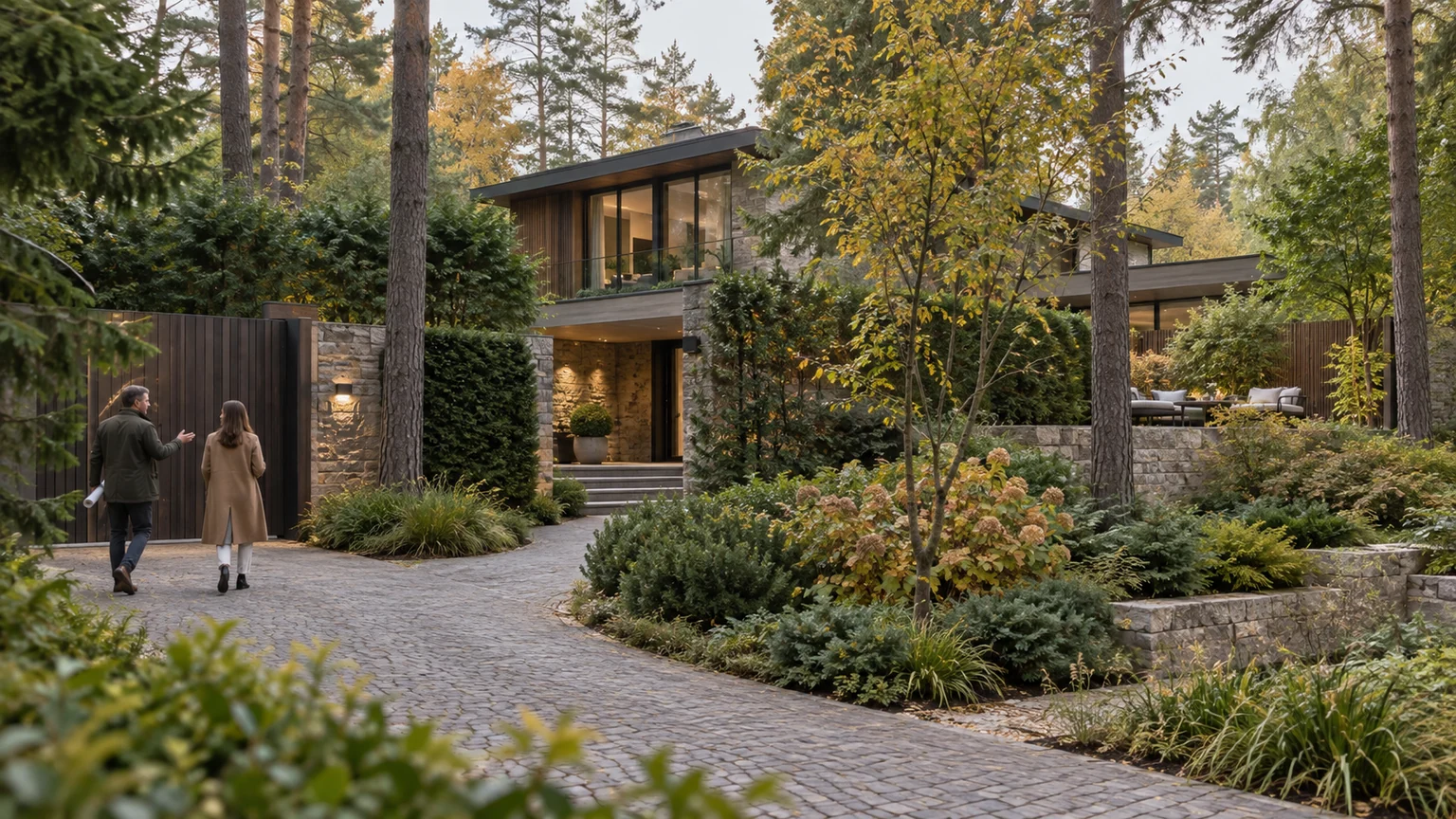
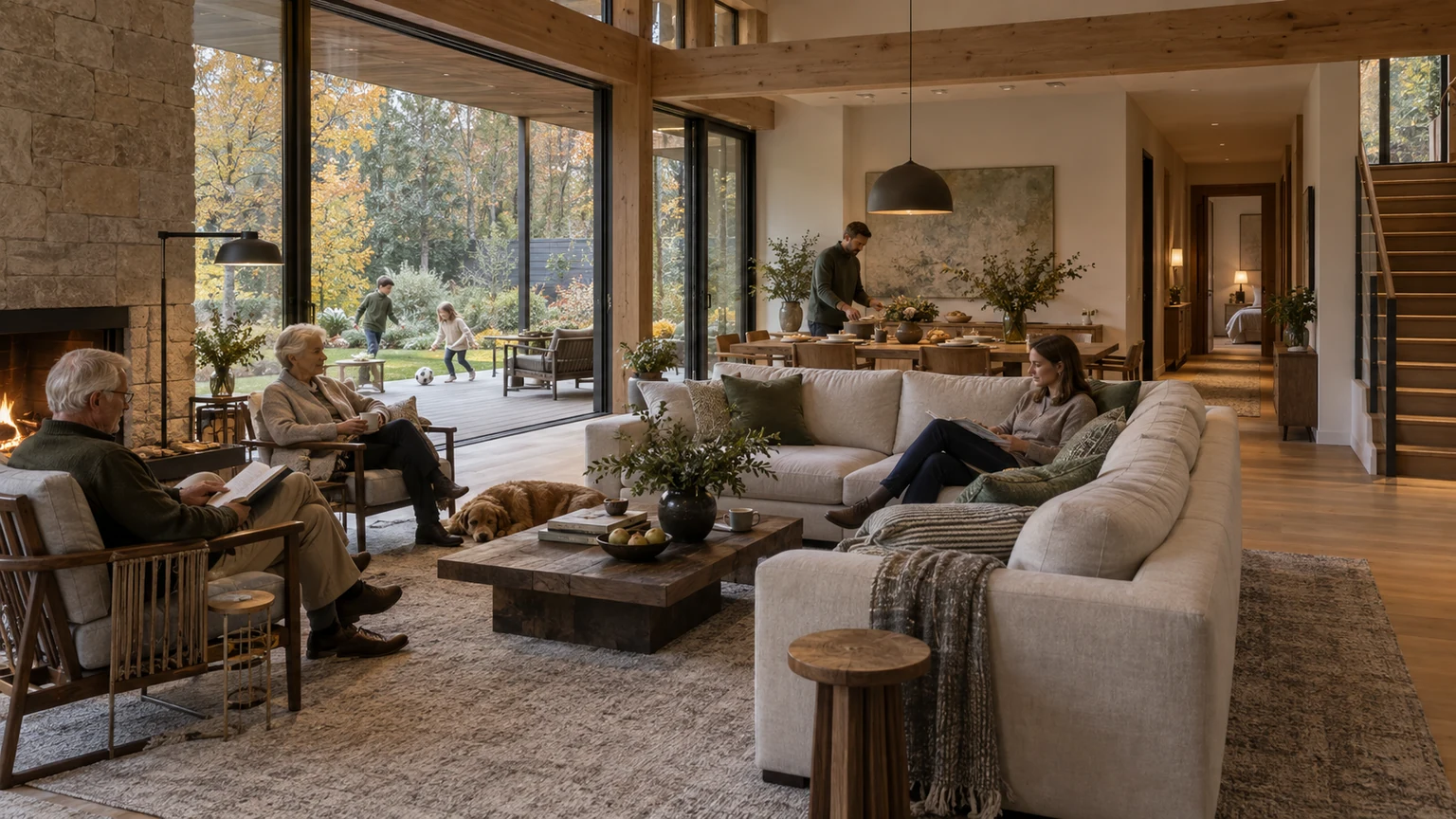
A House by the Forest: Light, Privacy and Plot Risks
A practical guide to forest-edge plots: daylight, tree health, moisture, drainage, fire safety, maintenance and the right position for the house.
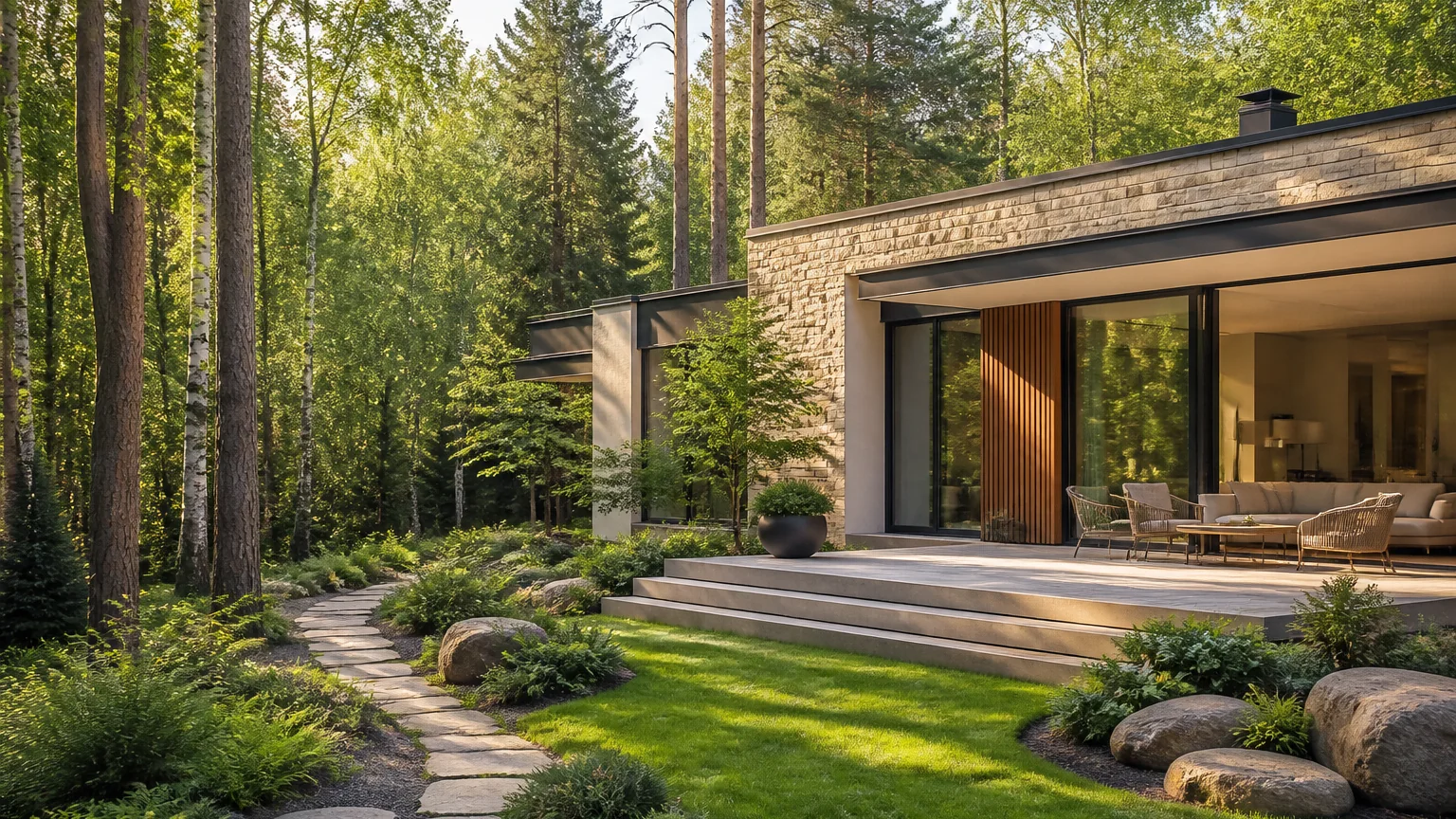
A forest-edge house creates an emotional response before its floor area is considered: quiet, scent, privacy and a view that cannot be produced in one season. Yet a wooded plot is not a finished backdrop. It is a living system of shade, roots, water, wind and maintenance. A strong property works with those conditions instead of simply placing a large house among trunks.
Distinguish a plot adjoining a forest from one embedded in established woodland and from a site with several mature trees. Each has different implications for light, safety and restrictions. The word “wooded” in a listing proves nothing without inspection.
Use the forest-edge property collection to shortlist options, then compare them consistently. Both Rublyovo-Uspenskoye and Novorizhskoye Highway include old dacha woodland and newer developments landscaped during construction. Tree age alone does not define quality.
Start with daylight, not tree count
Woodland changes light more than a single viewing suggests. Deciduous canopies vary by season; dense conifers shade throughout the year. Morning and evening conditions depend on orientation, terrain, tree height and neighbouring buildings. A bright midday reception room may still be dark when it is used most.
Obtain a north-oriented site plan with important trees marked. Add windows, terraces and outdoor rooms. For a high-value property, seasonal sunlight modelling can show when direct light reaches each space and where permanent shade forms. It informs comfort, artificial-light demand and solar control.
- View in the morning and toward sunset.
- Compare seasonal photographs where available.
- Identify which trees create the main shade and who owns them.
- Assess bedrooms, kitchen and study as well as the principal room.
- Do not assume trees can be removed before checking status and advice.
Tree health requires specialist inspection
A large trunk beside a terrace may be the plot’s finest feature or a risk. Commission an independent tree specialist to review species, roots, crown, deadwood, lean, disease and previous construction impact. Routine garden care and diagnostic tree assessment are different services.
Pay particular attention after recent building works. Compacted soil, altered levels and root damage may take time to appear. New turf does not prove that root zones were protected. Establish when construction ended, what machinery crossed the plot and how trees have been monitored.
Create an inventory: retain, observe, treat or remove subject to the necessary rules. Photographs and follow-up dates turn uncertainty into a maintenance plan and budget.
Water, humidity and drainage
Shade slows the drying of soil and façades. Low ground collects surface water, while changed contours may direct runoff toward foundations. Look for moss, basement odour, salt deposits, damaged paving, gutter discharge and marks on retaining walls. A return after sustained rain or snowmelt is particularly valuable.
Drainage cannot be judged by the presence of pipes. An engineer should establish the discharge point, access to chambers, pump resilience and conflicts with critical root zones. A pumped system requires power and a failure plan. Moving water to the neighbour’s boundary is not a solution.
Inside, check lower-ground rooms, north-facing walls, wardrobes, bathrooms and window reveals. Excess moisture may result from construction or operation rather than the forest itself; the cause needs professional diagnosis.
Distance between house and forest
Close trunks create drama, but roots need undisturbed soil, the roof and façade need maintenance access, emergency vehicles need a route and rooms need light. Mandatory planning and fire-safety requirements also depend on the land and building context. Current rules must be checked for the specific property.
Russia’s emergency authorities advise owners next to forests to clear dry vegetation, fallen timber and other combustible material or provide the required fire barrier. Exact duties and permitted activities can vary, especially during a special fire regime, so use current official guidance rather than a number copied from an old article.
Ask practical questions: can a fire appliance reach the house, where is usable water, who maintains the common forest boundary and how are seasonal restrictions communicated? The answers matter as much as façade materials.
Wind, branches and the roof
Wind loads are uneven at a forest edge. Isolated trees and the front line of a group can behave differently from protected trees within it. Storms may leave broken or suspended branches. Assessment should consider stability, crown and possible fall zone—not height in isolation.
Leaves and needles increase maintenance of roofs, gutters and flat areas. Check access, protection and cleaning procedures. Dark staining beneath canopies may suggest persistent moisture. Excessive pruning for tidiness can weaken a tree, so work should follow competent advice.
Privacy changes with the season
Summer foliage hides neighbours, roads and lights. After leaf fall, view corridors change. Request winter photographs or return during the cold season. At night, observe headlights, street lighting and neighbouring façades; elements invisible by day may define a bedroom’s atmosphere.
Build privacy in layers: terrain, retained trees, understory, shrubs and architecture. A wall of newly planted mature trees offers an immediate effect but needs suitable species, irrigation and room to develop. New work must respect existing roots.
Insects and life with nature
Woodland brings greater contact with insects, birds and small animals. This is an operating condition, not automatically a defect. Screens, entrance lobbies, grass management, control of standing water and professional treatment where appropriate reduce inconvenience. Follow current public-health advice for ticks and any chemical treatments.
Design night lighting with restraint. A blanket of bright light destroys the forest atmosphere, affects neighbours and attracts insects. Low, directed light at paths and steps is often both safer and more elegant. Cameras and sensors should be tested with moving branches and seasonal foliage.
Architecture should respond to the plot
A successful woodland house need not be glazed everywhere. Large windows belong where view, light and privacy support them. Canopies and deep reveals protect from weather but may deepen shade. Lower façade materials must tolerate moisture and soil splash.
Planning should give the strongest views to everyday spaces. The detailed country-residence planning guide explains how to organise those priorities. A terrace needs both useful sun and protected shade; otherwise a beautiful photograph may correspond to only a few weeks of comfortable use.
Second-viewing checklist
- A site plan showing boundaries, north, levels and significant trees.
- Independent inspection of important trees and potential risk zones.
- Drainage, runoff, foundation and moisture checks after rain.
- Seasonal daylight review for principal rooms and terraces.
- Status of adjoining forest land and relevant restrictions.
- Current fire-safety review and emergency access.
- Annual maintenance plan for trees, roof, gutters, paths and treatments.
- Winter photographs or a leaf-off viewing.
Compare not only houses but also gated communities. Who maintains the shared forest boundary, roads and drainage? Is there a consistent tree-work process? These factors affect a private plot even when everything inside its boundary is well designed.
The value of a wooded plot is not the maximum number of trunks. It is the right distance between nature and the house—close enough for atmosphere, carefully planned for light, safety and maintenance.
A good forest-edge house remains convincing in February, after heavy rain and during strong winds, not only in a summer photograph. Professional inspection does not remove the magic of the place. It helps preserve it and makes the true ownership commitment visible before purchase.