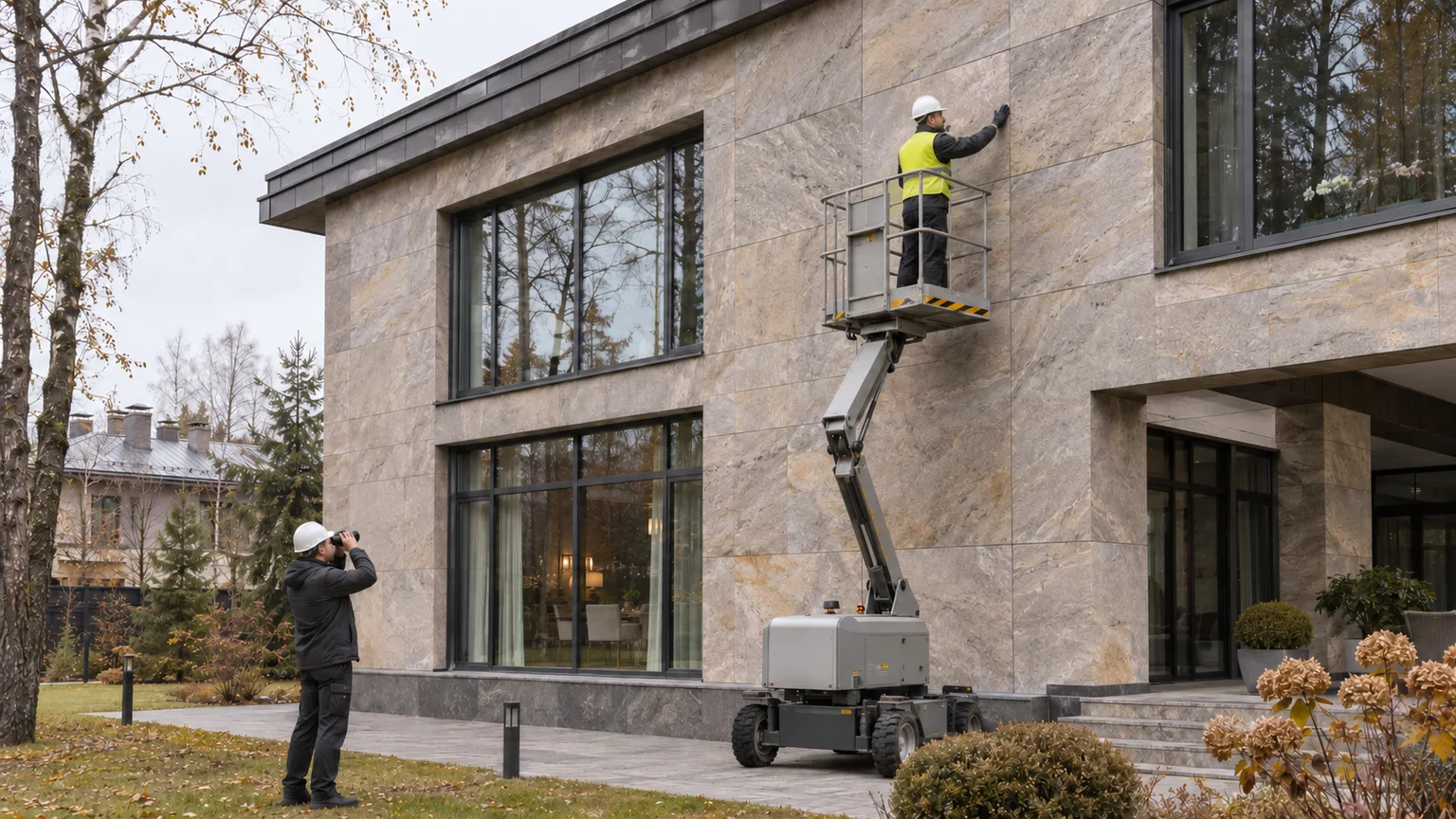
A Dog-Friendly Country Home: Entry, Paw Wash and Secure Garden
A genuinely dog-friendly country home works as one system: garden-to-entry circulation, paw washing, ventilation, secure boundaries, practical storage and routines that remain manageable every day.
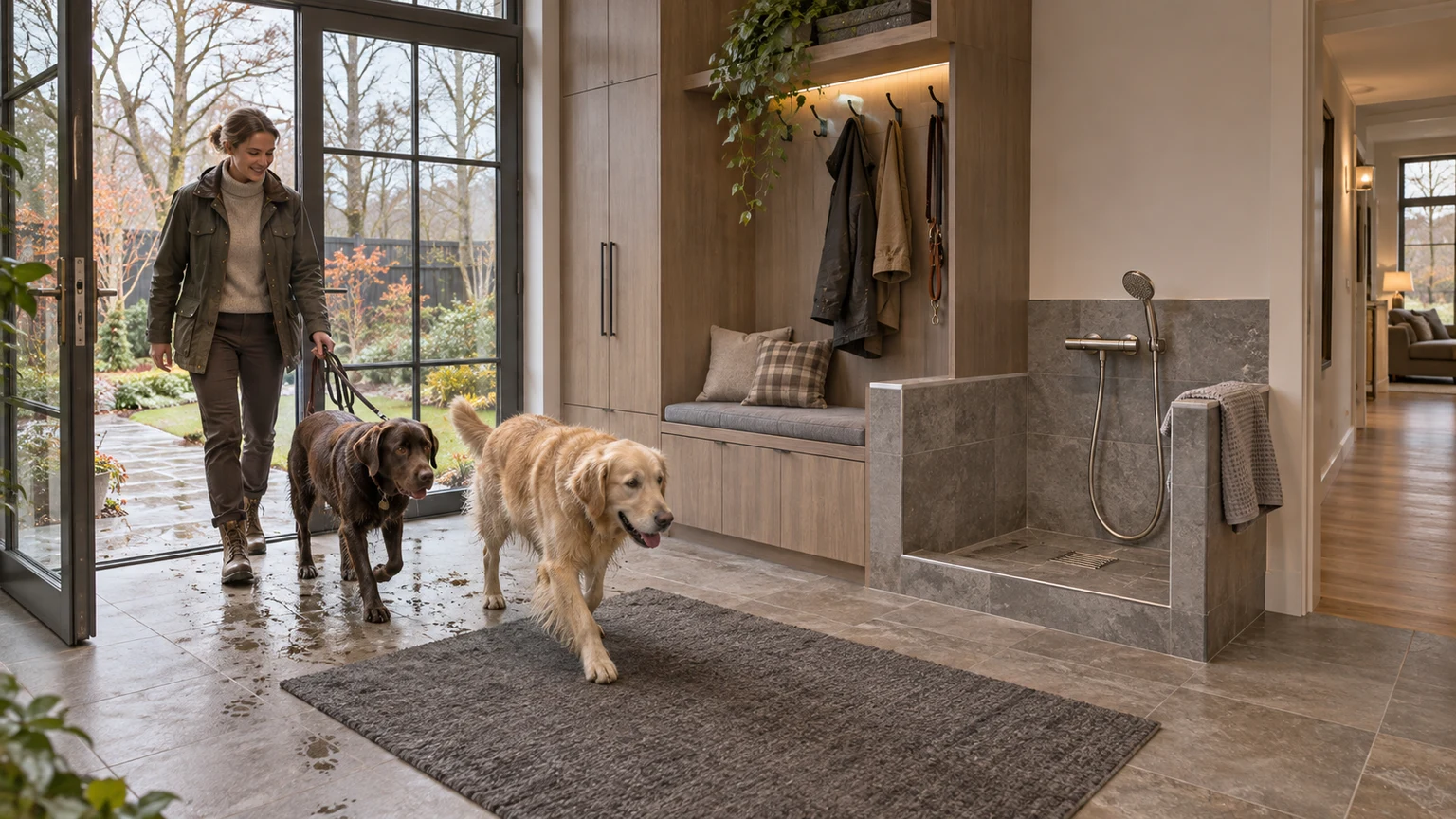
A listing that says pets are welcome does not prove that a country home works well for a family with dogs. The useful evidence is operational: how a wet dog moves from the garden into the house, whether the entrance can contain two animals while doors are handled, how the paw wash drains, whether floors remain stable when wet, where damp textiles dry, how odours are removed, and whether every gate closes reliably. A viewing should therefore follow the complete route from the street boundary to the dog's resting area instead of treating the wash station, fence and ventilation as unrelated amenities.
Start with the dogs and the household routine
There is no universal dog-friendly floor plan. A large senior dog may need a short, slip-resistant route without abrupt steps. A young athletic dog may test every gate and soft boundary. Two or more dogs may need separation during feeding, cleaning or guest arrivals. Puppies, recovery after surgery and breed-specific sensitivity to heat or cold create different requirements again. Those decisions belong with the owner and veterinarian, not with a generic room schedule.
Before the viewing, map the routine: number and size of dogs, who walks them, how often they use the garden, where they eat and sleep, and who takes over when the family is away. If household staff are involved, coordinate the dog route with the home's staff circulation and service areas. A route that looks generous when empty may fail when a delivery, guest and two excited dogs arrive together.
The entrance needs a dirty side and a clean side
The most practical arrangement is a heated vestibule or mudroom with direct access to a secure part of the garden. The dog should be able to pause without blocking the door, and the handler should be able to close the exterior leaf before opening the interior one. Storage for leads, harnesses, towels and waste bags must be reachable without crossing the clean hall. Wet coats and textiles need a place to dry without transferring moisture and odour into living rooms.
Judge the floor when it is wet, not from a showroom sample. Water should not pool at the threshold, and paws should remain stable during turns. GOST R 55908-2013 describes a laboratory method for evaluating floor-covering slipperiness under dry and wet conditions, but it does not replace inspection of an installed floor. Walk the route carrying a lead and towel, check door swings and sightlines, and look for sharp cabinet corners at dog height.
- confirm that two successive doors can form a controlled airlock;
- check that the dog can wait clear of hinges and automatic closers;
- locate storage without placing chemicals within reach;
- verify that water and mud remain on the washable side of the boundary.
A paw wash is plumbing, not decorative tiling
Useful geometry depends on the actual dog and handler. Inspect entry height, stable footing, splash protection, reach of the hand shower and enough space for the person to work without twisting. The mixer must provide controllable water, the waste should clear promptly, and a removable hair trap should be accessible without dismantling cabinetry. The trap, unions and shutoff valves also need service access. Water supply and drainage should be checked against the project, equipment data and SP 30.13330.2020.
Run the station during the viewing. Test the mixer response, hot-water delay, smell, drainage and the way the basin dries. Where the house uses a well, compare the routine with the records for water quality and treatment. If pressure is unstable, review backup water storage and pressure maintenance. Filters, manifolds and heaters should remain maintainable under the same principles used to assess country-house plant rooms.
Inspect the boundary as one continuous system
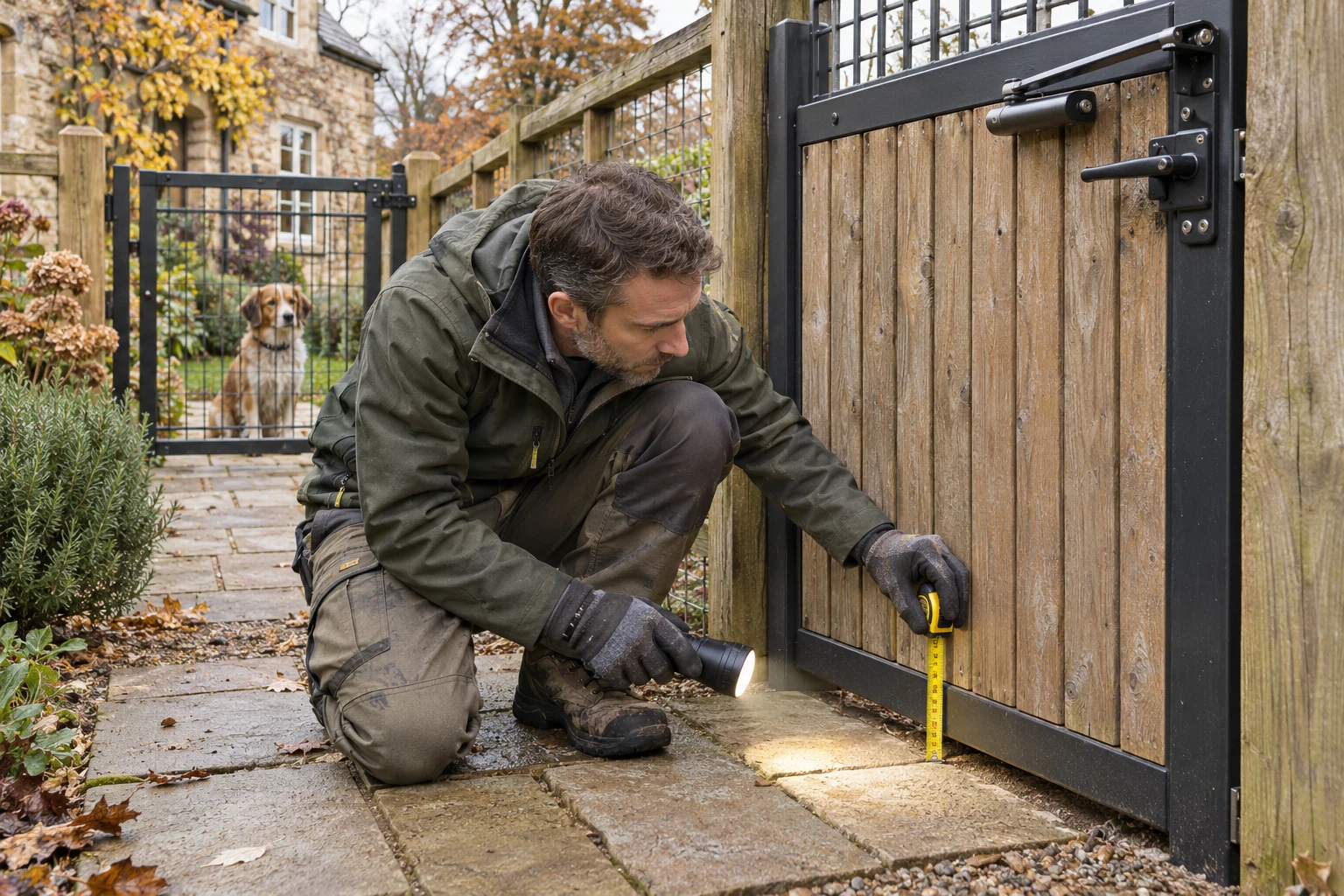
Fence height alone does not establish security. Follow the entire perimeter and inspect gaps below panels, soft soil that encourages digging, breaks hidden by planting, junctions with outbuildings, pedestrian-gate closers and vehicle-gate controls. The release button, intercom and latch should not be accessible to the dog. At the street boundary, a two-gate airlock is valuable because one leaf can be closed before the next opens.
A secure boundary does not need to make the garden feel like a compound. The article on privacy through house, landscape and security planning explains how views and planting can coexist with control. Plants must not conceal weak fence junctions. After winter, inspect frost movement at posts, settled paths and standing water along the dog route; the post-winter landscape checklist provides a useful wider framework.
Ventilation should remove moisture rather than perfume the symptom
Persistent odour in a dog entrance often points to damp textiles, stagnant water, a bed that never dries or ineffective air movement. Fragrance only masks the symptom. Establish whether the wet zone has dedicated extract, where replacement air comes from and whether air is being pushed into the clean hall. The design and measured performance should be reviewed in the context of SP 60.13330.2020 and the house as a whole; a generic air-change rate is not responsible without room volume, moisture load and system data.
Resting areas should be clean, dry, quiet and ventilated, without being placed in a cold draught, against a hot radiator or under intense sun. DEFRA's dog-welfare guidance is a practical reference rather than Russian regulation; it reinforces the need for a safe, comfortable environment. The individual temperature strategy should reflect breed, age, health and veterinary advice.
Wet-zone electrics and automation need a real test
Inspect sockets, lighting, floor heating, door drives and leak sensors around the wash station. Loose extension leads should not cross the floor or be available for chewing. A leak detector should be placed where a controlled water test can reach it, and the automatic shutoff must have a documented recovery procedure. Electrical compliance is reviewed against the project and SP 256.1325800.2016; protection classes and circuit arrangements are selected by the designer, not copied from a general article.
Make cleaning and storage easy enough to happen
Bowls, toys, leads and bedding all need cleaning and drying. CDC guidance distinguishes routine cleaning from disinfection, recommends following product labels, allowing items to dry fully and keeping animals away during chemical use. The planning consequence is straightforward: provide separate closed storage for food, medicines and cleaning products, plus a ventilated place for damp textiles. A utility sink or tub may be justified for pet equipment so that a food-preparation sink is not the default. The separation principle also appears in the discussion of clean and dirty workflows in a professional residential kitchen.
Commission the route in wet weather
A useful handover is a live scenario, not a photo session. Operate the pedestrian and vehicle gates, walk to the entrance, run the paw wash, rinse the basin, watch the drain, switch on extract and verify drying and storage. Then simulate a guest arrival, a delivery and two dogs leaving at once. Conflicts appear at these moments, not while rooms are empty.
- mark gates, drains, shutoff valves, filters and sensors on the house plan;
- record how to clean the hair trap and safely isolate the water supply;
- collect manuals for mixers, heaters, drains, fans, gate drives and automation;
- add periodic checks of latches, ground gaps, floor condition, drainage and extract to the maintenance log;
- show a backup carer the route, keys, veterinary contacts and emergency actions.
Include the dog areas in the operational handover package and assign technical assets through the engineering service contract. Whether the home is on the Rublevo-Uspenskoye or Novorizhskoye corridor, the test is the same: a dog-friendly home is valuable when its route is secure, dry, maintainable and easy enough to use every day.