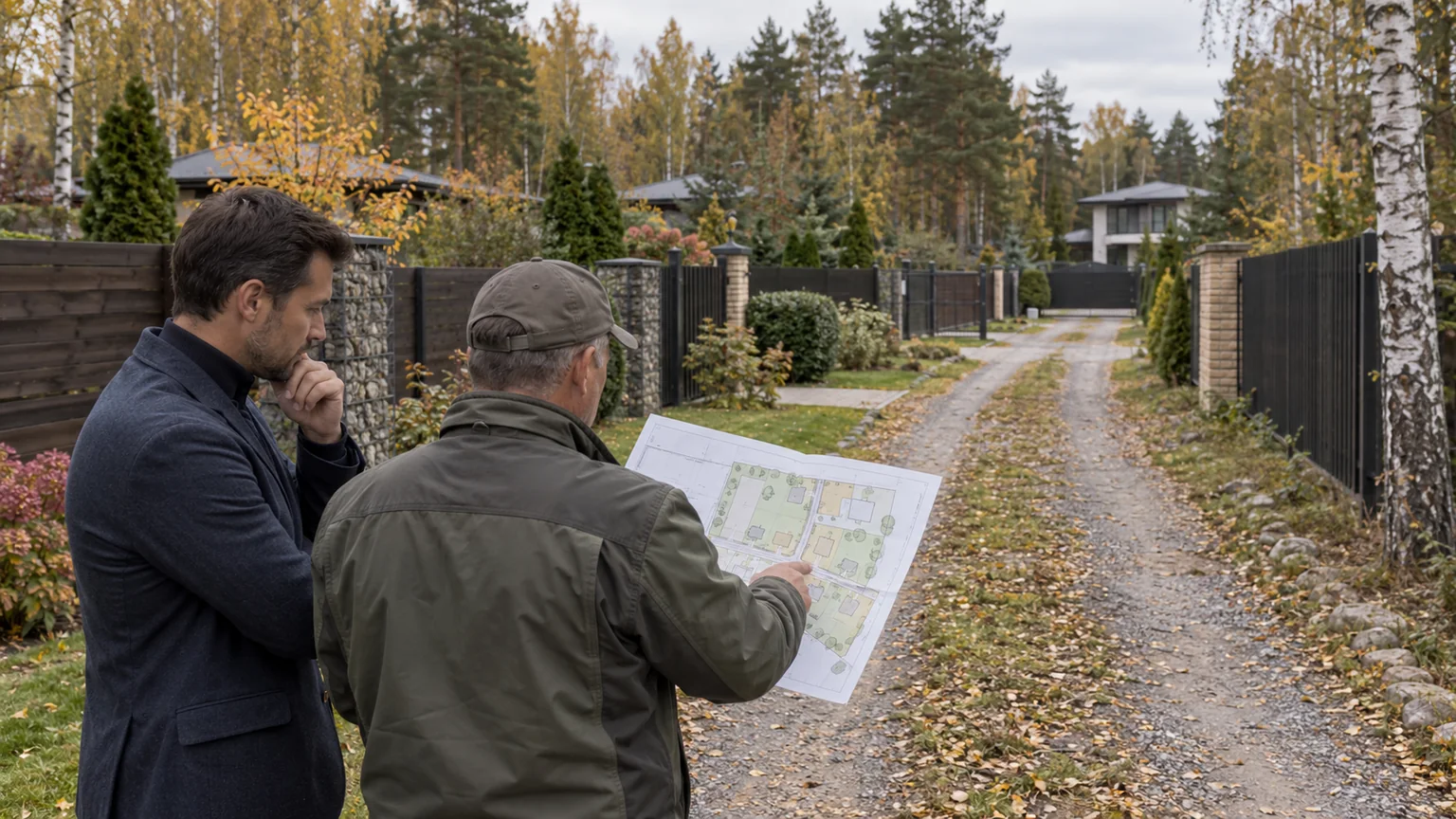
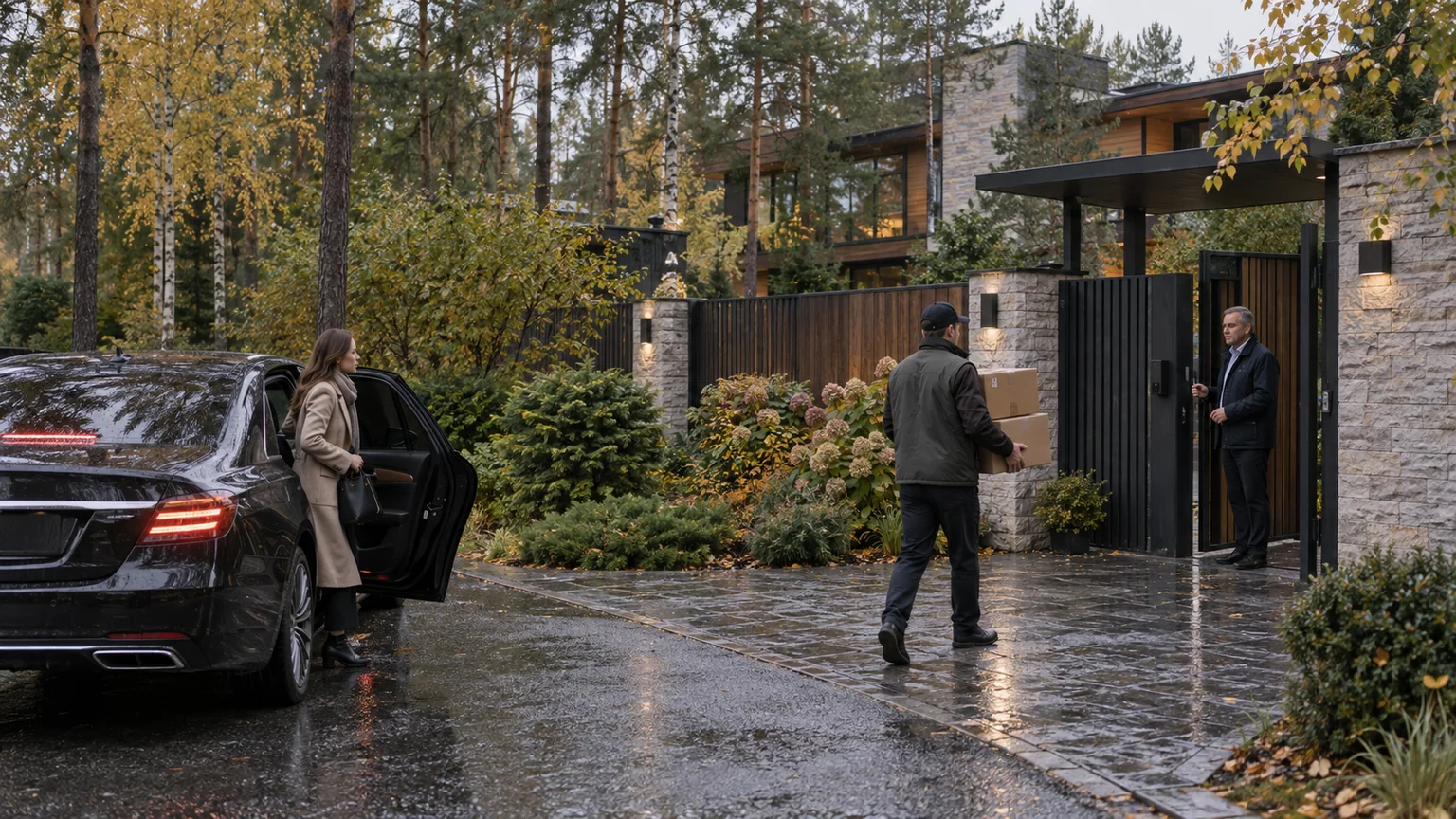
The School Run as a Home-Buying Test on Rublyovka
A practical family audit of admissions, morning and afternoon journeys, pickup points, school transport and fallback plans before buying a Rublyovka home.
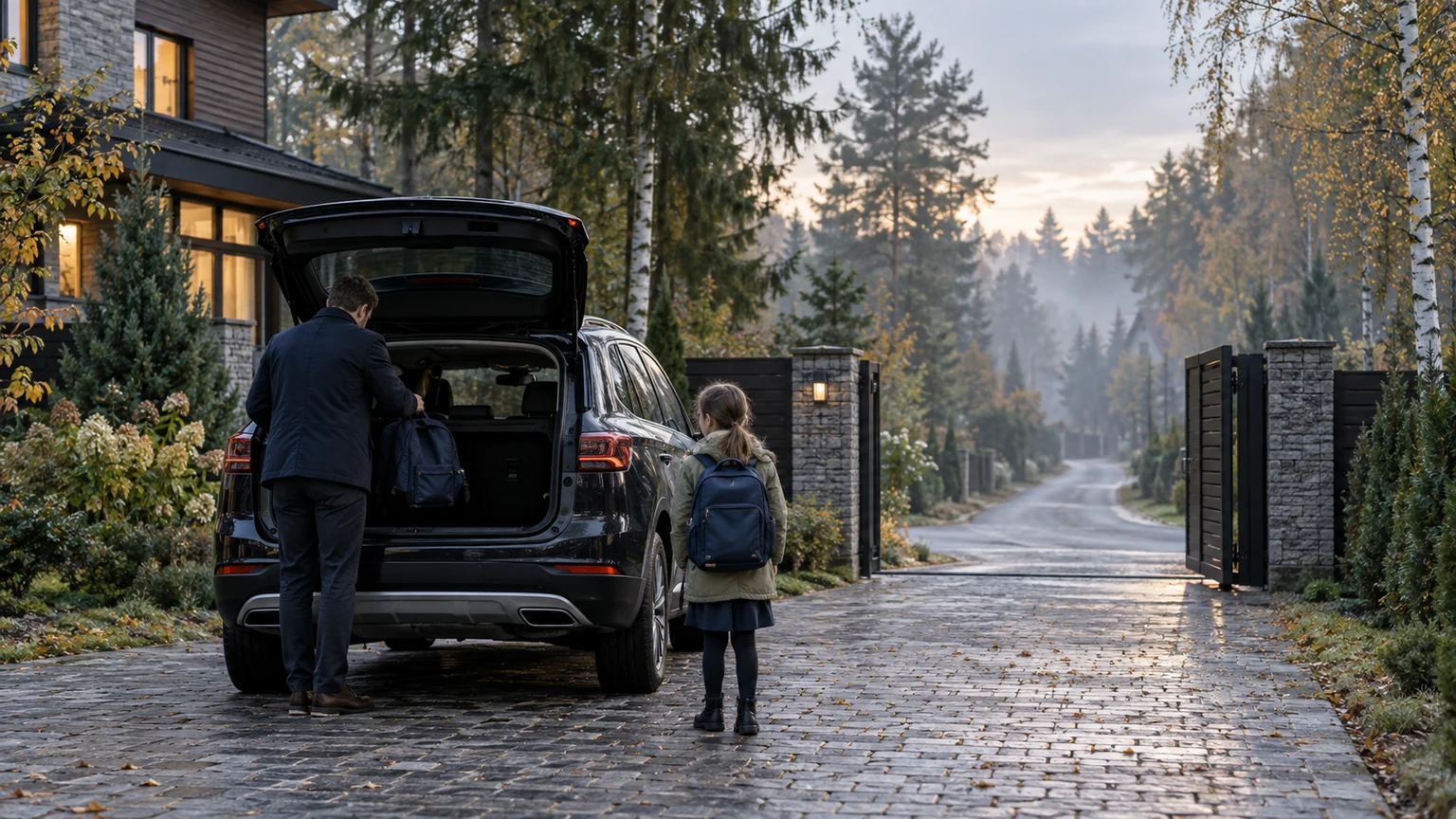
A country house may excel in architecture, engineering and landscape yet still fail a family because of one repeated task: the school run. It happens at the most sensitive times of day, intersects with clubs and parents’ work, may involve children on different timetables, and changes with the season. It therefore deserves the same pre-purchase scrutiny as the title documents or the building survey.
The common mistake is to compare two addresses by distance or by one navigation estimate. A family needs to understand variability, safe handover points, gate procedures, the afternoon return, the child’s age and the adult who can recover the plan when something fails. This guide is narrower than the general country-home route-mapping audit: it asks how school logistics should influence the choice of one specific Rublyovka property.
Confirm the school before measuring the journey
A convenient line on a map is irrelevant if the child cannot attend the intended school or the family is relying on an unconfirmed place. For a state school, verify the assigned catchment, current admission procedure and dates through the school, its governing authority and the relevant public-service portal. Russia’s Ministry of Education links the first admission stage to children living in the assigned area and eligible priority groups, while the Moscow Region service distinguishes between applicants inside and outside the assigned territory. For a buyer, the house address, the school place and the application timing are three separate checks.
For a private or international school, obtain written confirmation of the relevant year group, entry procedure, academic calendar and current transport policy. Do not treat last year’s bus route as a feature of the house: stops, timetables and minimum passenger numbers can change. If the child is already enrolled, confirm which campus hosts that age group; a single school organisation may operate from several buildings.
- Record the precise building and entrance, not only the school name.
- Confirm application status or entry conditions with the institution.
- Verify start and finish times for the child’s actual year group.
- Request the current school-bus rules and the responsible contact.
- List the separate addresses of clubs, tutors and regular appointments.
Until those facts are confirmed, any journey time is only a hypothesis. A home should not be selected around a school place that exists only as a verbal assurance.
Map the family’s week, not a single A-to-B route
The pair “home–school” describes only the first leg of the day. The actual chain may involve two children on different schedules, an after-school activity, a parent continuing into Moscow, a driver change, an errand and a late return. Build a weekday table showing who travels, from where, the required arrival, who collects, the next destination and what happens if an activity is cancelled. Give every essential movement both an owner and a fallback.
Separate the scenarios by age. A younger child may require handover to a named adult and minimal waiting. A teenager may be able to use a school bus, family driver, an age-appropriate booked service or public transport, but only within the family’s rules and after a real-world check. Do not project an older sibling’s independence onto a younger child, and do not assume one car can cover conflicting finish times.
Add the adults’ work journeys to the same matrix. It also helps to connect this exercise to the broader audit of taxis, deliveries and household services. A family driver may cover the normal morning, but the household still needs a backup car, an unambiguous map pin and a gate process that works when the regular vehicle is absent.
- Standard day: normal lessons and no additional activity.
- Long day: school, a club and a later return.
- Split day: children finish at different times or campuses.
- No-driver day: one parent, a school bus or a verified substitute.
- Disruption: illness, a cancelled bus, a closed gate or severe weather.
The result shows operational load rather than an attractive average: how many journeys cannot be combined, where waiting is created, whether a second car is necessary and which tasks cannot safely be delegated.
Test the drive during the real school window
Navigation software is useful for screening, but it is not a field test. Yandex Navigator’s own guidance allows a future departure date and time to be selected and explains that the journey estimate is recalculated as current road conditions change. That is a modelling tool, not a promise. Build a primary route and credible alternatives, then drive them on weekdays that match the family schedule.
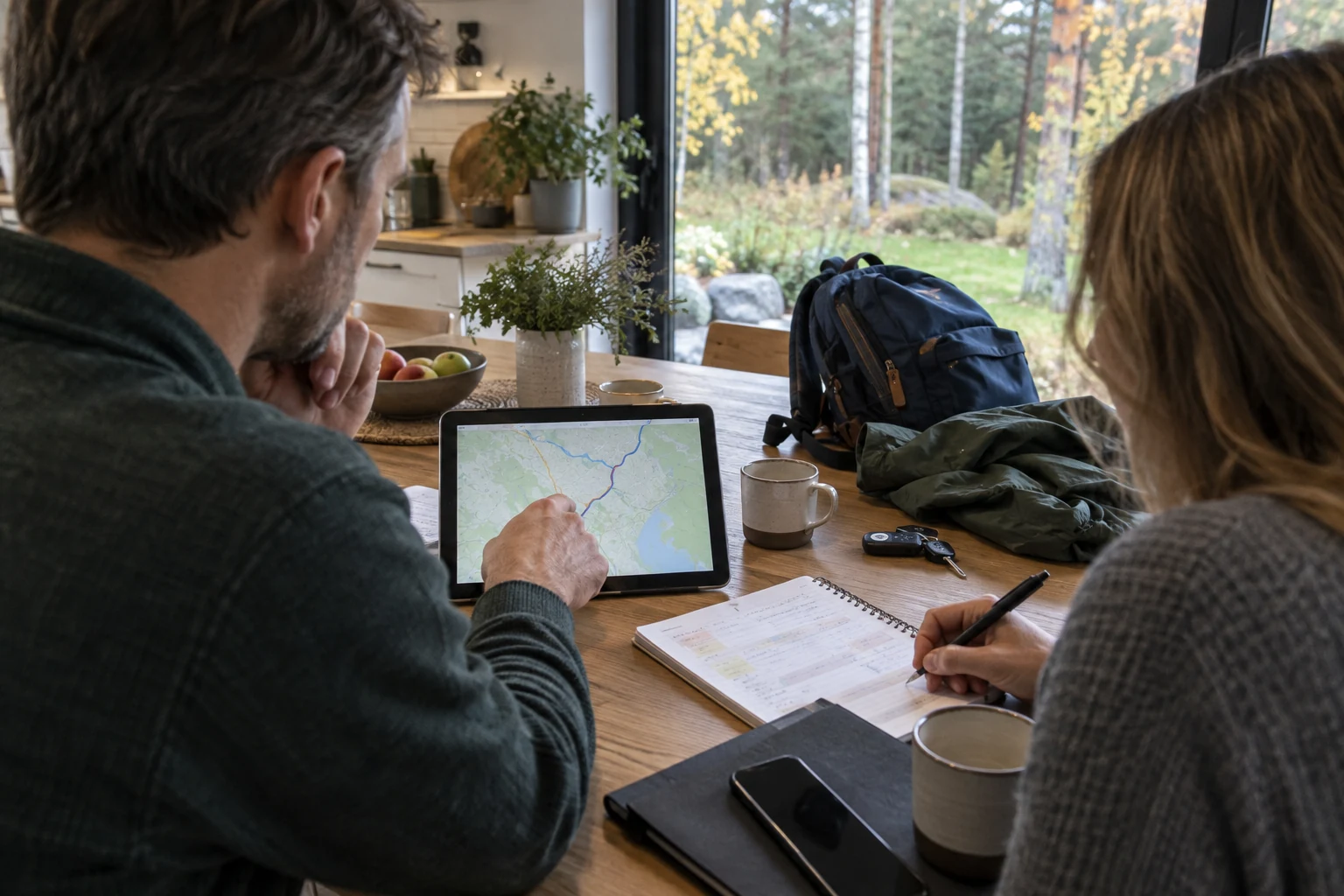
Start at the actual candidate’s gate, not the centre of the community. Note the gate-opening process, internal drive, difficult turns, level crossings, bottlenecks, routine drop-off points and the final approach to the school entrance. For the return test, depart from the place where the car will genuinely wait for the child. If there are several entrances, establish which one the relevant year group is allowed to use.
Repeat the exercise on comparable school days. One unusually smooth trip should not become a household assumption. Record the date, weather, departure, arrival, selected path and reason for any deviation. Look at variation and the consequences of lateness, not simply the best result. A route that is often quick but has no workable bypass may be less resilient than a slightly longer journey with several usable options.
- Test the morning outbound and afternoon or evening return separately.
- Use the exact house gate and authorised school entrance.
- Compare several school weekdays, excluding holidays and atypical closures.
- Identify an alternative before congestion occurs.
- Repeat the test after material timetable, seasonal or road-layout changes.
Inspect the first and last mile from the child’s perspective
Even a car journey begins with leaving the house and ends with a handover. At the property, inspect lighting, winter maintenance, surface grip, conflicts with service vehicles and a stopping place that does not block other residents. If the school bus collects outside the main gate, walk that path in darkness and rain: look for a safe footway, shelter, visibility and a waiting position separated from moving vehicles.
At the school, establish the authorised approach, the real queue, the drop-off position and the handover procedure for younger pupils. Convenience for the passenger is not enough if a stopping point conflicts with traffic. The family needs a repeatable process in which the driver knows the correct entrance, the child does not cross a chaotic vehicle stream, and the school knows who is authorised to collect.
Audit the community’s internal operation as well. Visitor queues, a closed secondary gate or snow clearance can introduce uncertainty before the main road. Cross-check the answers against the wider gated-community buyer’s checklist: school access depends on what happens behind the barrier as well as on the highway.
Audit the school bus or family driver separately
If the school offers transport, request its current stops, pickup window, ride pattern, notification method, supervision, gate-access rules and contingency for a breakdown or unavailable driver. An informal promise that a minibus “comes nearby” is not evidence of an organised service. Russian Government Resolution No. 1527 sets specific requirements for organised group transport by bus, including route documentation, driver conditions and seat-belt use. Compliance must be demonstrated by the transport organiser; the buyer should at least identify the responsible legal entity and obtain the operating rules in writing.
Inspect the proposed stop in person. Determine the side of the road, whether the child must cross traffic, where an adult waits during a delay, how a replacement vehicle is communicated and how the accompanying person is identified. If the bus cannot enter the community, the household still has a feeder journey to the stop and back; include it in the weekly matrix.
For a privately employed driver, document cover arrangements, approved vehicles, handover rules, communication, privacy and the response to a collision or mechanical failure. Establish who is responsible for maintenance and for an appropriate child restraint for the particular passenger. A staffing plan that depends on one individual and one car is not a complete transport system.
Design fallbacks before the transaction
School-run resilience is revealed by disruption rather than by a perfect day. Create at least one workable fallback for each critical leg: another community exit, an alternative road, a second adult, school transport, a vetted substitute driver, a properly agreed lift with another family or a parent’s remote-working day. A fallback should be tested rather than merely written into a spreadsheet.
Pay particular attention to simultaneous commitments. If two children must be collected from different places while the backup adult is working in Moscow, one road incident can create an impossible conflict. If a substitute driver cannot enter because the plate was not registered, establish an authorised external handover point. If the main road closes, the family should know both the diversion and who must be notified about the delay.
- Main gate unavailable: who opens the alternative and whether navigation reaches it.
- Regular driver absent: who drives and where the suitable vehicle is kept.
- Bus cancelled: how the school notifies the family and who collects.
- Early finish: where the child safely waits for an authorised adult.
- Weather or network failure: which contacts and meeting points everyone knows.
A sound fallback need not be fast; it must be clear, lawful and executable. If every deviation requires improvisation, that is a material property characteristic rather than a minor inconvenience.
Use school logistics to compare shortlisted homes
Compare properties by the family time and coordination they consume, not by abstract proximity to Moscow. A home closer to the school can perform poorly if it has a single vulnerable exit. A more distant candidate may work better with a stable drive, safe pickup and dependable school transport. Before translating the difference into money, count the weekly journeys, handovers and backup commitments.
There is no universal “time to school” for homes along the Rublevo-Uspenskoye Highway. The result depends on the exact gate, campus, hour and direction of travel. Even candidates in Barvikha and Zhukovka need address-level testing rather than assumptions borrowed from a neighbouring street. Use the broader Rublyovka versus New Riga comparison for area context, then perform this school audit for every individual house.
Give each candidate five fields: confirmed school; primary route; observed variability; safe pickup and drop-off; executable fallback. The strongest warning is not distance alone, but the combination of unpredictability, no alternative and dependence on one adult or provider.
Final buyer’s checklist
- Confirm the exact campus, year group and admission conditions.
- Check catchment and current dates through official sources only.
- Build a full weekly schedule for children, adults and activities.
- Assign a primary and backup adult to every essential journey.
- Map primary and alternative routes from the house’s actual gate.
- Drive the route during real school windows on comparable weekdays.
- Record variability and reasons for delay, not only the best run.
- Inspect lighting, surfaces and pickup safety at the home or gate.
- Verify authorised drop-off, waiting and handover at the school.
- Obtain written school-transport terms and identify the organiser.
- Test the process for a substitute driver, vehicle and gate permit.
- Rehearse a closed exit, cancelled service and early finish.
- Repeat the audit after a school, campus, timetable or road change.
The school run is not a secondary filter applied after choosing a house. It becomes part of the family’s weekly operating model and influences children’s independence, parents’ work and the need for staff. The reliable choice is not automatically the shortest line on a map. It is a system with a confirmed school, safe handovers, measured variability and a fallback the household can genuinely execute.