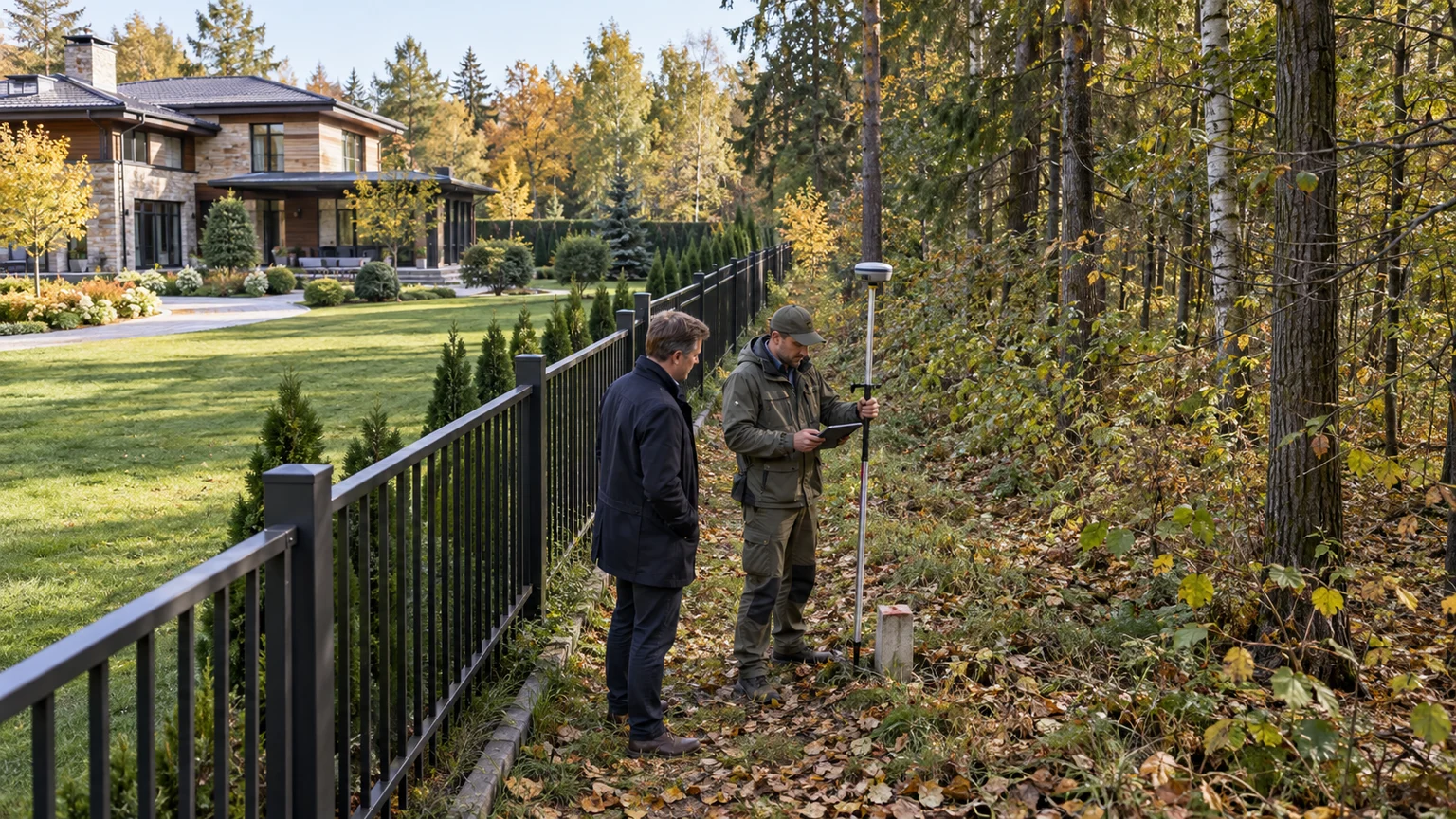
Gated Community Entrance Audit: Queues, Guests and Emergency Access
An impressive gatehouse can still create daily friction. This field guide shows how to test peak queues, guest approval, deliveries, failure modes and emergency access before buying a home.
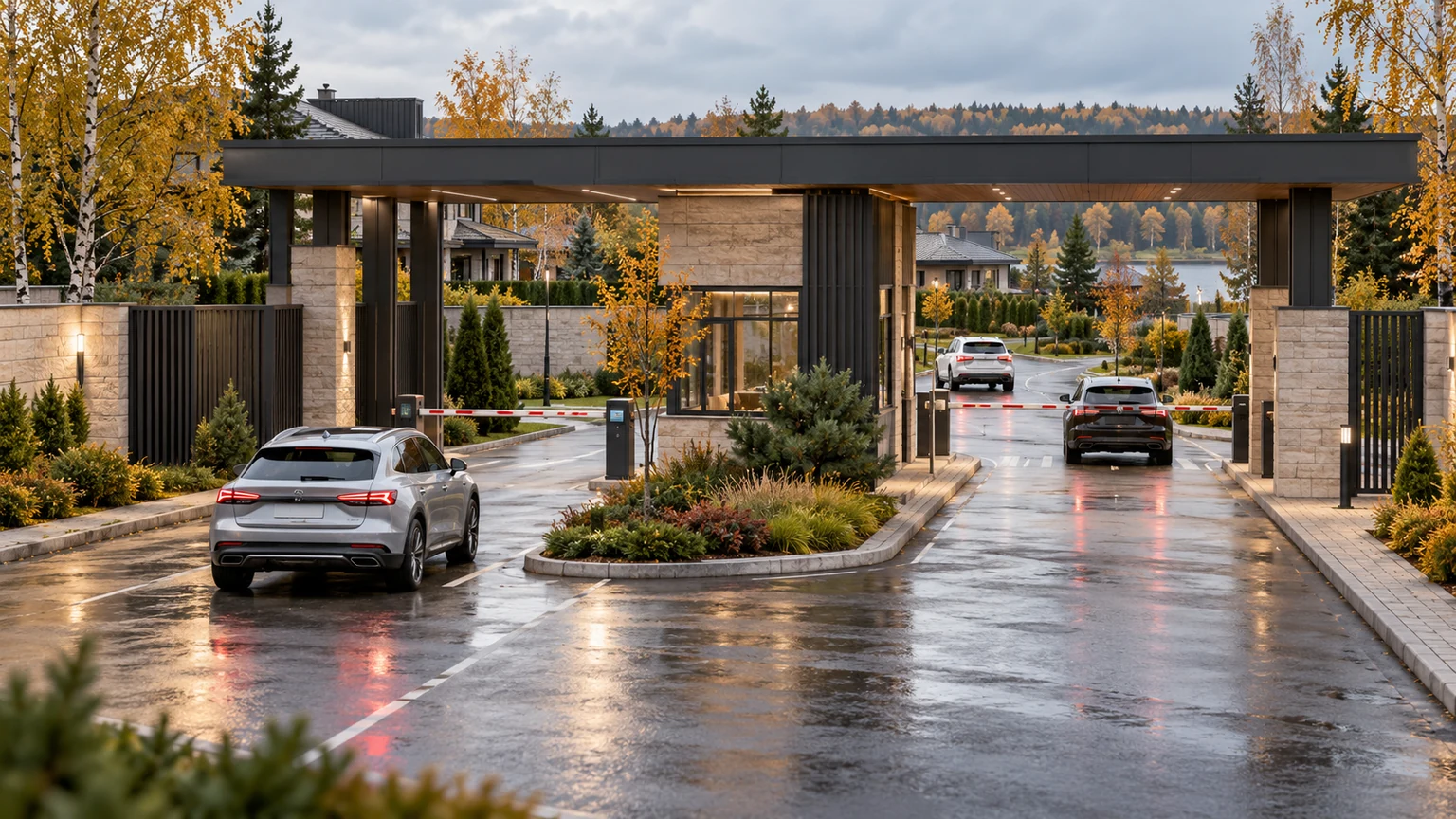
A gated-community entrance is not merely an architectural statement or a barrier arm. It is the operating boundary between the public road and every home inside. Residents, guests, taxis, couriers, domestic staff, contractors, large deliveries and emergency vehicles all compete for decisions at the same point. If those flows are poorly separated, a minor exception can become a queue, an unsafe manoeuvre or a failed arrival.
A buyer should therefore audit the gatehouse with the same discipline used for building services and title documents. A quiet midday visit reveals the façade but not the weekday peak, a wet evening, a failed network or a guest without the expected registration. Add the entrance to the broader gated-community due-diligence checklist: map the layout, observe different operating periods, walk through real user journeys and ask management for the procedures behind them.
Russia’s GOST R 51241-2008 covers access-control systems intended to prevent unauthorised entry and exit by people and vehicles. Rosstandart lists the standard as current and records Amendment No. 1 as effective from 1 February 2025. This gives a useful technical frame, not a buyer’s certificate of compliance. A qualified specialist must still establish which requirements apply to the specific site, design and equipment.
Map every flow before judging the architecture
Sketch the approach from the external road, the first braking point, entry and exit lanes, waiting space, turning area, pedestrian route, security post, visitor parking and the path for large vehicles. Then trace each user through that plan. The decisive metric is not the number of gates but the number of conflicts. Does a visitor block a resident while security calls the host? Must a courier cross opposing traffic? Can a refused vehicle leave without reversing into the public road?
A resident lane helps only if recognition occurs before the stopping point and one failed credential does not trap everyone behind it. A visitor lane without storage space simply relocates the queue. A wide portal is irrelevant if landscaping, control pedestals, parked vehicles or moving gate leaves reduce the usable envelope. Follow the actual swept path rather than relying on a plan dimension.
- Resident: registered vehicle, temporary replacement car, missing credential or changed number.
- Visitor: pre-approved arrival, unplanned guest and several cars under one invitation.
- Service: taxi, parcel courier, cleaner, gardener, contractor and regular household staff.
- Large vehicle: furniture, appliances, construction supplies, waste removal or recovery truck.
- Emergency: immediate entry without the ordinary approval sequence and an unobstructed route beyond the outer gate.
Connect this small-scale test to the wider journey. The guide to building a route map for a country home explains why distance alone is a poor proxy for travel time; the final queue at the gate may be a recurring part of that commute.
Measure capacity in operation, not in marketing language
There is no universal number of seconds that proves every checkpoint convenient. Service time depends on admission rules, the visitor mix, communications, driver behaviour and equipment placement. “Automatic entry” is therefore not an adequate test. Observe periods that resemble your own life: a weekday departure, evening return and a visitor-heavy weekend. If the buying season is atypical, request aggregated evidence or plan a later repeat visit.
Without recording plates, faces or personal details, note the user type, arrival at the back of the queue, arrival at control, start and end of verification, barrier opening and clearance of the controlled area. Classify delays: unread credential, missing invitation, host call, contractor registration, conflicting movement or manual logging. A series of fast passages does not compensate for one exception that blocks the only lane.
- Count arrivals in equal short intervals rather than blending a peak with a quiet hour.
- Separate queueing time from the transaction at the barrier.
- Record the longest observed cases and their causes as well as a typical passage.
- See whether a queue clears between groups or grows continuously.
- Locate its tail: inside the site, in a protected bay or on the external carriageway.
- Repeat after adverse weather or a community event when that condition matters to the decision.
Ask management for anonymised operational indicators: passages by category, manual exceptions, periods of unavailability and recurring failure types. The purpose is to evaluate the process, not to obtain a private movement record of residents.
A guest journey must be clear before the guest arrives
A workable process answers practical questions in advance. Who creates the invitation? Which information is required? When does it become valid? Can the vehicle change? What happens without mobile data, and who decides after office hours? Test the sequence with permission: issue an invitation, arrive by car, call a taxi and arrange a delivery. Clarity matters as much as speed.
A visitor should not have to stop on a live road to search for security or commit to a closed barrier with no escape route. There needs to be a safe place to wait, communicate and turn away. For a group visit, establish whether one invitation covers all vehicles or each driver needs a separate record.
Delivery is its own flow, not simply another guest. The guide to delivery, taxis and country-living services examines the wider household logistics. At the gate, test a courier with no known plate, a replacement driver, an after-hours order and access when the owner cannot answer immediately.
A strict rule can still be predictable and hospitable when it is communicated. Friction begins when the outcome depends on which guard is on duty. Ask for the written resident and visitor guide, then compare it with the shift’s actions. If an app is the only normal channel, identify the approved fallback: telephone, intercom, local list or another controlled route.
Failure mode matters more than a flawless demonstration
The standard sales demonstration uses ideal conditions: the plate is read, connectivity is live and the invitation exists. Due diligence should explore a controlled failure. What happens during a power outage, network loss, camera fault, motor failure, heavy snow or database error? Where is the manual release, who may use it, and how is operation controlled until repair?
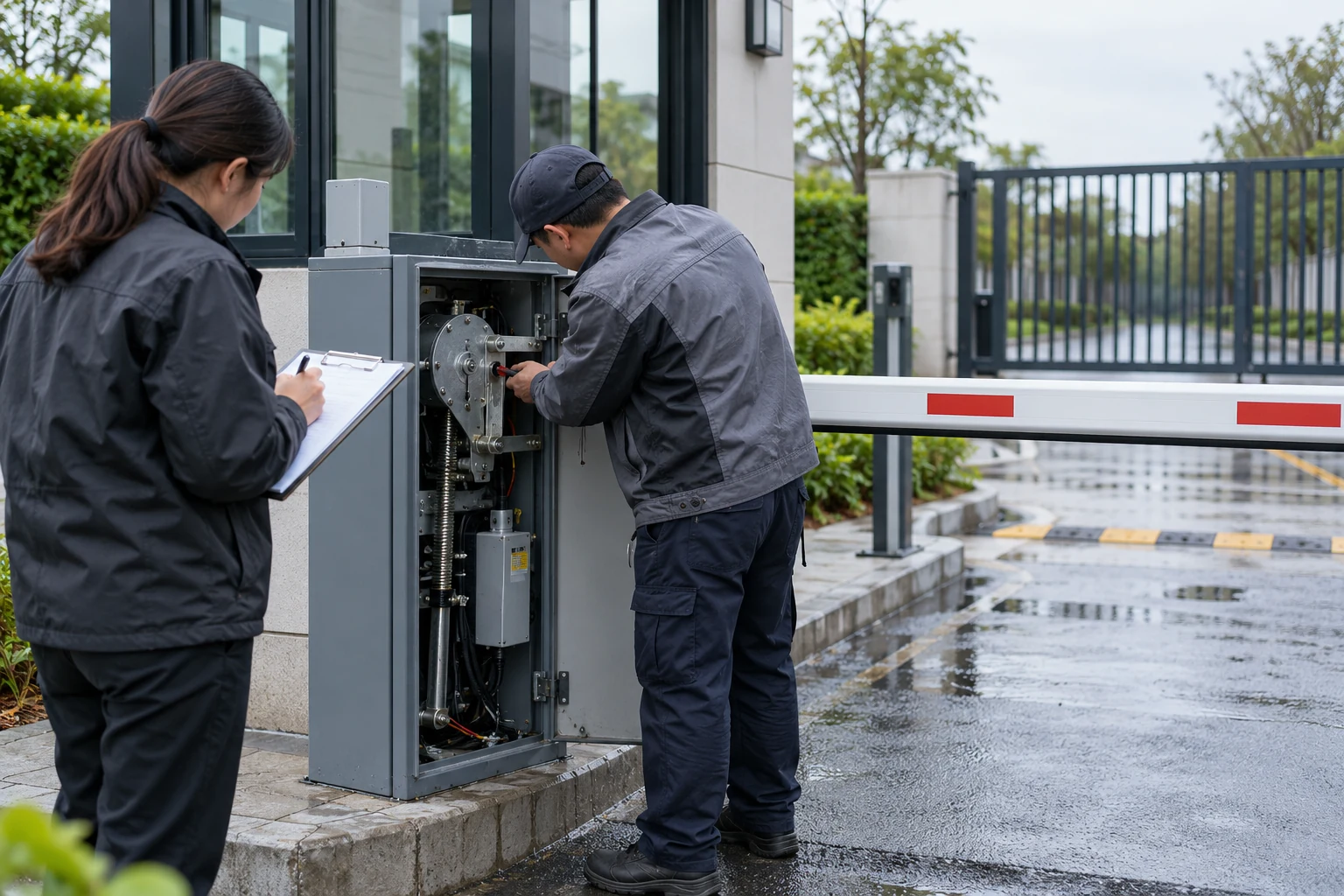
Request a demonstration under an agreed safe procedure, not a verbal assurance. Staff should know which element moves first, how it is secured in an open position and how traffic is managed during repair. Sliding and swinging gates also need a clear movement zone; snow, ice, a parked car or a failed drive must not turn manual operation into improvisation.
Security hardware must not obstruct rescue access. The current SP 4.13130.2013 addresses fire access and spatial planning. Russian EMERCOM guidance on paragraph 71 of the fire-safety regime rules explains that gates and barriers on fire routes must allow unobstructed passage, with automatic, remotely controlled video/audio-assisted, or directly staffed manual opening arrangements as applicable. A fire-safety professional should verify the site-specific solution rather than a buyer extrapolating from the barrier brand.
Trace the entire emergency route. Opening the first arm is not sufficient if a fire appliance then encounters another gate, a tight turn or parked cars. Identify who keeps the route available and how that responsibility is checked.
Separate security, convenience and privacy
These goals interact but do not replace one another. A camera may improve identification but cannot create waiting space. A tall enclosure may reduce a driver’s sightline. Rapid opening for a known plate says little about contractor control, passenger handling or the removal of property. Score each function independently.
GOST R 51241-2008 classifies access-control equipment and provides general technical requirements and test methods. For a buyer, that leads to evidence-based questions: which devices form the system, what commissioning record exists, which events are logged and who maintains it? A reader or camera cannot reveal the performance of the whole installation by appearance; configuration, authority and response procedures are equally important.
Walk the pedestrian route in both directions. A person should not need to use the vehicle lane, squeeze around a raised arm or wait between moving leaves. Check lighting at the intercom, audibility, weather protection, the position of controls and movement with luggage or a pushchair. Where formal accessibility is material, commission a specialist review against the applicable requirements.
Video, logs and number recognition also need a transparent governance model. A buyer can ask which event categories are kept, who is responsible, how incidents are requested and what the escalation path is; obtaining other residents’ raw records is unnecessary. This balances control with the principles discussed in Privacy Without a Fortress.
Audit ownership, operation and service responsibility
The gate may look like one community asset while the land, access road, equipment and staff belong to different parties. Identify the owner of the entrance parcel and hardware, the system operator, the security contractor, the maintenance counterparty and the body that approves access rules. This continues the due diligence in Who Owns the Roads and Utilities in a Gated Community?
Request an appropriate view of the design and as-built scheme, commissioning evidence, maintenance procedure, anonymised fault history, service contract, escalation chain and planned upgrades. Not every sensitive document must be handed to a prospective buyer, but management should be able to identify the accountable party and explain the service funded by community charges.
- Is a service response target defined, and where is an urgent fault reported?
- Who authorises an open-gate mode during an extended failure?
- How are resident, staff and temporary credentials updated?
- Who issues physical identifiers and revokes lost ones?
- Where do the powers of guard, remote operator and management begin and end?
- How is a large delivery approved and damage to paving or equipment handled?
- How are rule changes communicated and an incorrect refusal challenged?
Do not import another community’s tariff or judge quality by headcount. Ask for cost categories—staffing, communications, automation maintenance, backup power, snow clearance, paving repairs and software—and compare them with the actual service and failure response.
Run a structured field test before committing
Arrange the review with the seller and management. One participant may arrive with the resident or seller, another as a declared guest, and a third may represent a taxi or delivery when appropriate. Do not attempt to breach the rules or impersonate emergency services. Any equipment failure test must be performed by authorised staff using the approved procedure.
- Inspect geometry in daylight: lanes, storage bays, turning space, pedestrian path and continuation of the fire route.
- Observe two distinct peak periods and separate waiting from service time.
- Complete resident, visitor and service journeys under the current rules.
- Test communication at the barrier, clarity of instructions and a safe rejected-entry route.
- Ask staff to demonstrate backup power, manual opening and the emergency-access procedure.
- Compare the shift’s explanation with written responsibilities and service contracts.
- Record defects, consequences, evidence and remedies—not simply a favourable or unfavourable impression.
Classify findings. Critical issues affect safe control or confirmed emergency access. Operational issues create recurring queues or dependence on one communication channel. Contract issues concern unclear ownership, accountability or budget. Comfort issues include navigation, shelter and interface quality. This prevents an aesthetic weakness from being confused with a purchase-changing risk.
When comparing homes along Rublevo-Uspenskoye Highway and Novorizhskoye Highway, do not rank entrances by the scale of the portal. A strong gatehouse is almost invisible in daily life, predictable for visitors, measurable for management and capable of opening safely through an approved fallback during a fault or emergency call. That performance—not the façade—is what the buyer needs to test.