Handing Over a Country Home to a New Management Team
A practical framework for transferring a private residence to a new management team without losing technical knowledge, access control, service history or operational continuity.

Replacing an estate manager, chief engineer or entire operations team is a vulnerable moment for a large country residence. Heating, water, security and household routines continue, while crucial knowledge may exist only in one person’s phone or memory. A key ring and a folder of manuals do not constitute a handover.
A controlled transition is a project in its own right: define the estate boundary, record its condition, transfer the asset register, test critical systems together and change access without interrupting service. ISO 41001, adopted in Russia as GOST R ISO 41001-2023, frames facility management as a systematic way to meet stakeholder requirements and sustain effective operations. A private estate need not pursue certification to use that central idea: the house should depend on a managed process, not an irreplaceable individual.
Define the estate boundary and transition owner
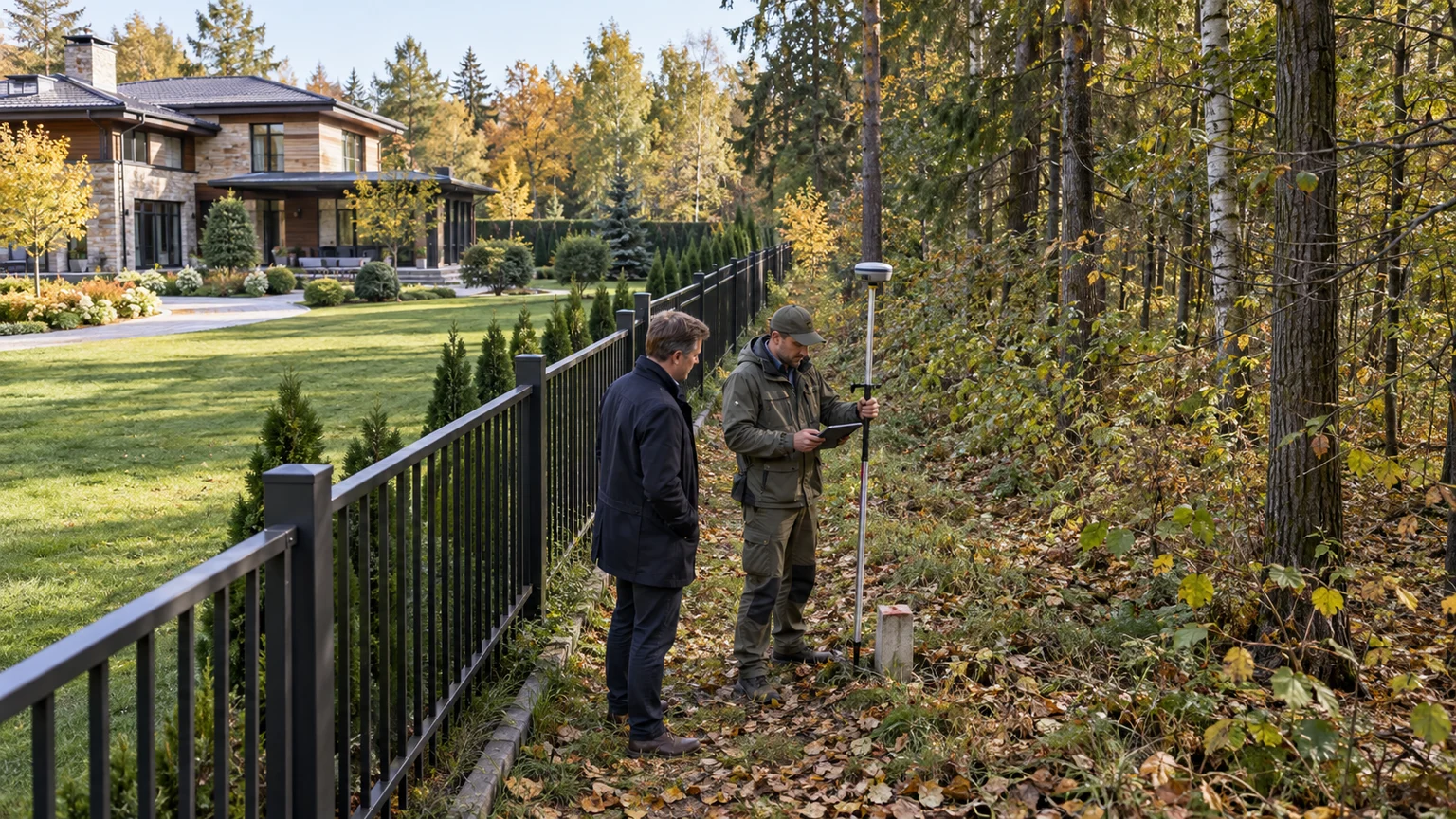
The owner or representative should appoint one person to lead the transfer. That person defines the perimeter: main house, guest buildings, garage, plant rooms, borehole, wastewater treatment, generator, security, landscape, pool or wellness areas, communications, automation, equipment stores and relevant household assets. Without a signed scope, the outgoing and incoming teams will interpret “the house” differently.
Separate three levels of responsibility:
- in-house operations, such as routine rounds, logs, approved switching and request intake;
- specialist service, requiring a qualified contractor, controlled procedure or proprietary tools;
- owner approval, covering material setting changes, expenditure, repairs, critical shutdowns and contractor access to private zones.
Compare this with the actual services provided by the gated community. Our questions for a community management company focus on shared roads, utilities, access and common areas. Internal plant and private household staff require a separate responsibility map. No pump, gate or communications line should sit in a gap where both teams believe it belongs to someone else.
Build one authoritative technical archive
The archive should answer a practical question: can the incoming engineer operate and service the house safely from this information? Each system needs an up-to-date diagram, equipment identity, commissioning data, warranty position, service history, contractor contacts, controlled settings, spare-parts list and known constraints. An accurate as-maintained drawing is more useful than an elegant design set after years of alterations.
The core handover library should contain:
- plans showing actual routes, isolation points and service zones;
- manuals, certificates, test records and recent service reports;
- an asset register with unique identifiers and exact locations;
- the maintenance calendar and evidence of completed work;
- contracts, warranties and contacts identified by role rather than only by name;
- approved configuration backups and a documented restoration route;
- an inventory of filters, chemicals, tools and critical spares.
A digital archive needs controlled folders, versions and an owner. A personal cloud account belonging to the departing manager is not the house archive. Keep an offline set where it remains available during a network outage but protected from water, fire and casual viewing. Reconcile the archive with the physical estate using our guide to country-house plant rooms and service access: drawings, labels and installed equipment should agree.
Record defects and temporary arrangements
The house need not be perfect on handover. The greater risk is a fault known to the outgoing team but absent from the signed record. Each open item should state the symptom, exact location, discovery date, operational impact, temporary mitigation, contractor, next action and decision owner. “Occasionally shows an error” is of little value without event history and the conditions that trigger it.
List temporary bypasses, disabled sensors, manual modes, provisional cables, unfinished repairs and components approaching replacement. Every temporary arrangement needs an owner and a condition for removal; otherwise the new team may accept it as normal design.
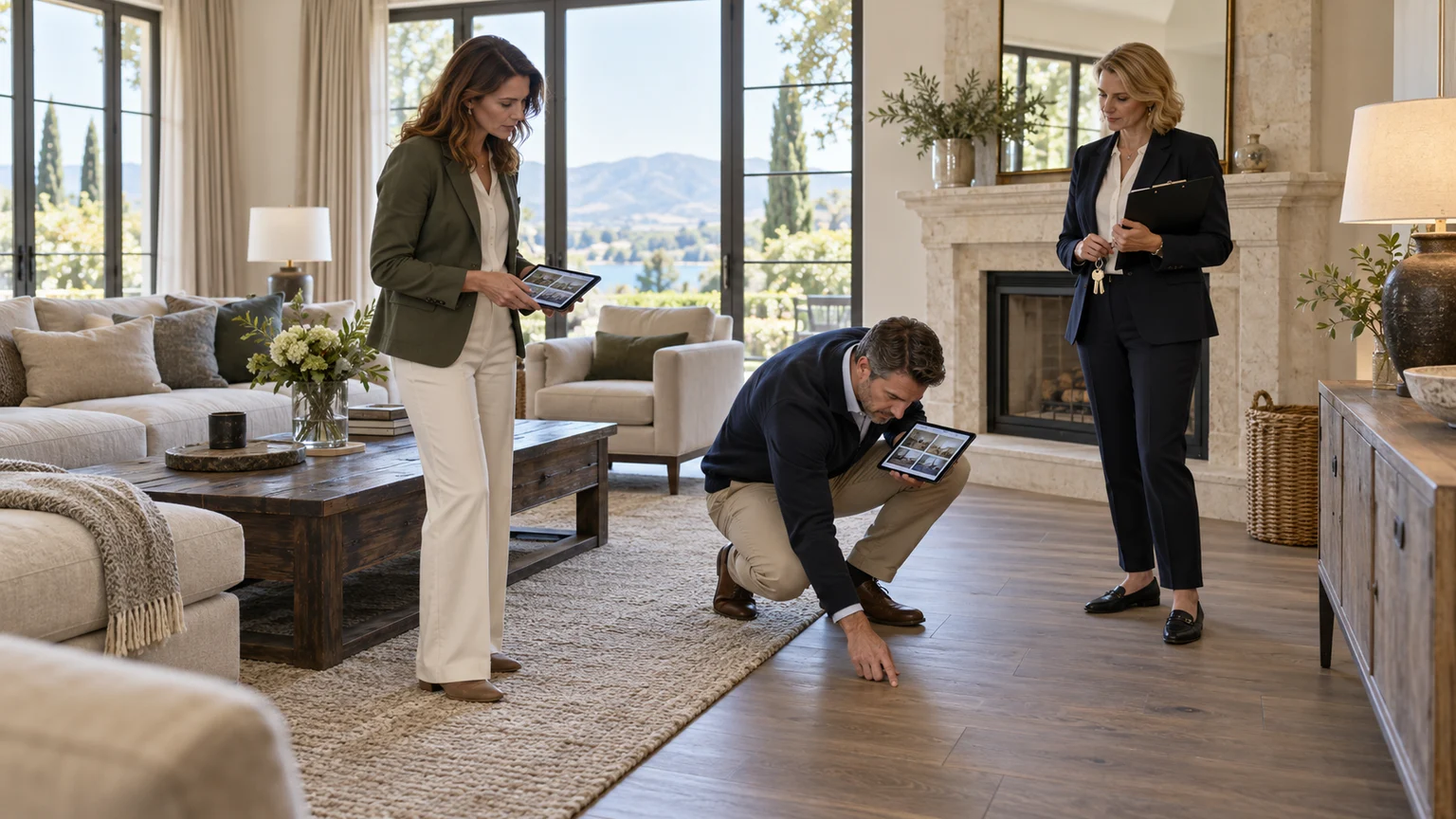
Use photographs, meter readings, alarm lists, consumable condition and recent event logs, but do not replace the witnessed walk-through with a photo library. Where the transition follows a purchase, reconcile open items with the technical due-diligence record so transaction defects do not disappear into routine maintenance requests.
Transfer physical and digital access
A modern residence has more access points than its visible keys: master keys, remotes, gate and safe codes, badges, automation apps, CCTV, alarms, routers, intercoms, chargers and backup-power interfaces. It may also rely on SIM cards, notification mailboxes, cloud subscriptions and telephone numbers receiving alarms.
The NIST Cybersecurity Framework 2.0 calls for identities and permissions to be managed and reviewed, with least privilege and separation of duties. Applied to a residence, this means maintaining an account and device register, assigning an owner to each administrative credential, creating named accounts for the new team and revoking obsolete access after a verified transition.
Do not change every password at the start of the first day. That can break notifications or lock the team out of a system whose configuration was never backed up. First verify communications and recovery, then perform the agreed credential change, record the outcome and confirm old accounts are closed. Credentials do not belong in the general handover report or an unprotected chat; the owner should define a protected vault and emergency-access method.
Count physical keys by room and authority level. Pay particular attention to server and security rooms, chemical stores, plant spaces, service hatches and generator access. Household circulation and staff boundaries can be checked against our guide to planning dedicated staff areas.
Run witnessed tests, not a guided tour
A tour shows where equipment is located; a test proves that the new team can operate it. Prepare a scenario, permitted actions and an acceptance outcome for each critical system. The outgoing specialist demonstrates the normal procedure, the incoming engineer repeats it, and the transition owner records any deviation.

The exact scenarios depend on the property. Typical areas include heating circuits, ventilation modes, pumps and water treatment, gates, alarm notifications, security escalation, isolation of individual zones and recovery from an approved simulated interruption. Generator and UPS tests must follow an agreed method and identified priority loads. Our guide to country-home backup power helps structure that exercise.
Never create a fire, electrical or hydraulic hazard merely to demonstrate a function. If a test requires a specialist contractor, the estate team should witness the approved procedure and receive the record. Russia’s SP 484.1311500.2020 covers design and subsequent maintenance of fire alarm and automated fire-protection systems. The handover should confirm the installed scope, active faults, maintenance provider, alarm route and escalation procedure without unauthorized configuration changes.
Transfer routines, calendars and escalation paths
A useful routine describes an outcome, not only a frequency. “Inspect plant room” is too vague. The operator needs the route, indicators to observe, actions permitted, record format and threshold for stopping and calling a specialist. Daily or shift, weekly, monthly and seasonal routines should be derived from the actual design, manuals and service contracts, not copied from another estate.
Define an escalation path for each major alarm:
- who receives and acknowledges the first message;
- what may be assessed remotely and what requires attendance;
- which systems may be stopped without further approval;
- who informs the owner and in what form;
- which contractor is called and how access is authorized;
- where cause, action and final outcome are recorded.
Verify contacts with a call or test message. A familiar engineer’s name is not enough without a company, role and backup route. Transfer the procurement calendar at the same time: filters, treatment chemicals, fuel, consumables and seasonal equipment. Set reorder levels for the actual property rather than importing quantities from a different house.
Use a controlled overlap and sign the outcome
The decision point must be explicit. Before it, the outgoing lead remains accountable; after it, the incoming lead does, with disputed matters escalated to the owner’s representative. The overlap should reflect complexity and seasonality. The aim is not an arbitrary number of calendar days but enough real operating cycles to observe household occupancy, visitors, service attendance, deliveries, alarms and a backup scenario.
During overlap, the incoming team should maintain the logs while the outgoing team answers questions and checks knowledge. New discrepancies belong in one transition register, not scattered chat threads. The final operational record should attach:
- the transferred systems, spaces and assets;
- the archive and backup inventory;
- keys, badges and revoked or reassigned access;
- open defects and temporary measures;
- witnessed test records;
- maintenance calendar and active contracts;
- stores, tools and accountable property;
- decisions still reserved for the owner.
The record does not erase responsibility for a concealed defect or replace legal instruments. It fixes the operational picture on the transition date. Success is simple to recognize: the new team understands the estate, can run agreed scenarios safely, knows its authority limits and can restore control without relying on the former manager’s personal phone.