How to Choose a Gated Community: 12 Checks Before Buying
A practical framework for checking title, shared roads and utilities, management, service charges, security and everyday life before committing to a home.
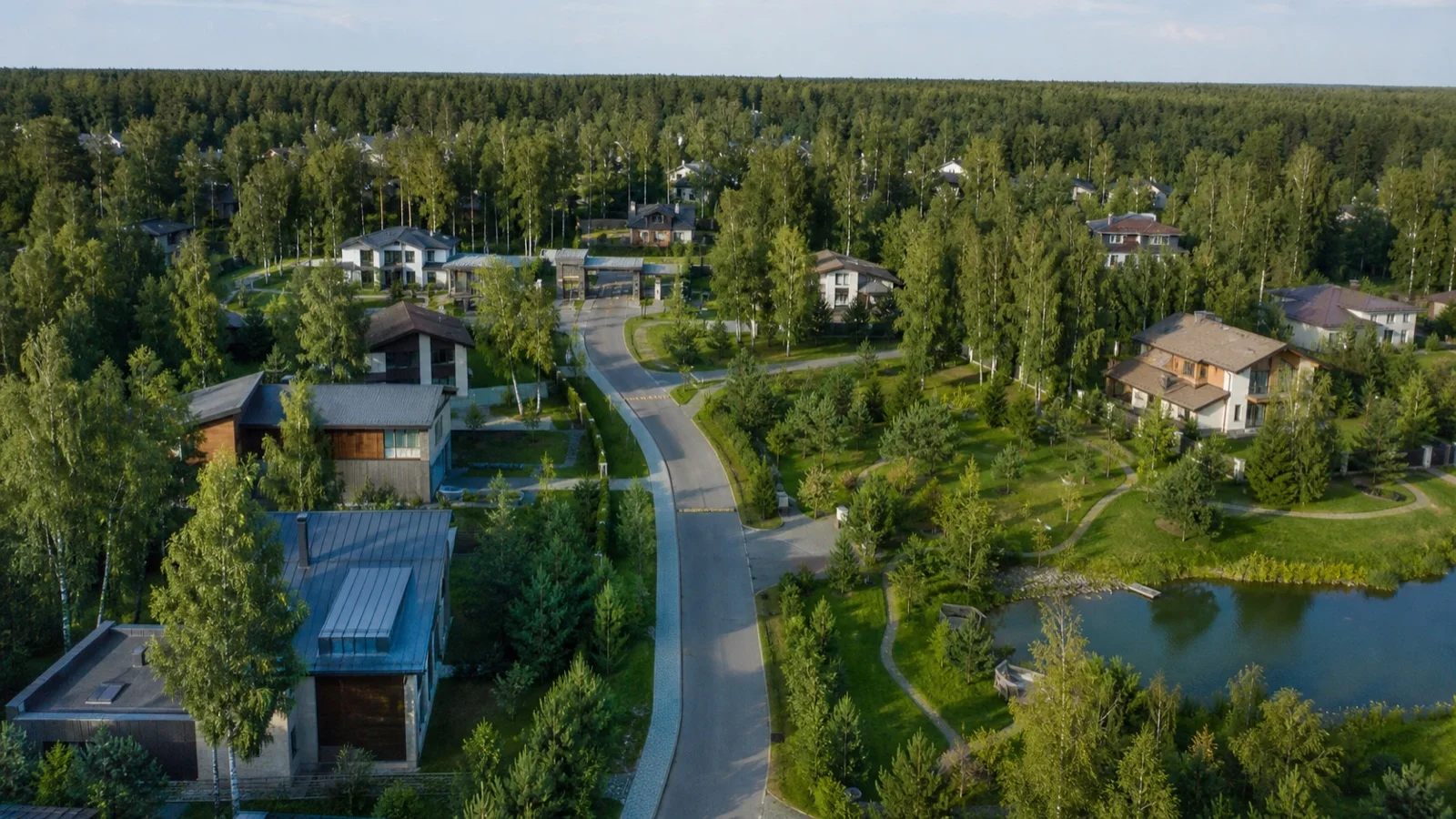
Choosing a country home also means choosing the system around it. Shared roads, utility networks, security, management rules and service charges will shape everyday life long after the initial viewing. A beautifully finished house cannot compensate for uncertain access rights, opaque costs or a community that does not fit the household’s routine.
The review should begin before any reservation payment. The first viewing is the right time to build a document request, not to rely on verbal assurances. Information from the seller, the management company and official registers should agree. A discrepancy is not automatically fatal, but it needs a written explanation and, where appropriate, advice from an independent lawyer, cadastral engineer or building specialist.
Use the gated-community directory to create a shortlist, then apply the same twelve checks to every candidate. The final decision must be based on the particular plot, house and agreements offered to the buyer.
Start with the household’s real weekly routine
List the journeys that happen every week: offices, schools, healthcare, sport, family visits and deliveries. Decide whether shared parks and leisure facilities are essential or merely attractive. This turns a broad search into a set of testable requirements and makes different communities easier to compare.
A highway name does not determine convenience on its own. Homes along Rublyovo-Uspenskoye Highway and Novorizhskoye Highway may differ in the scale of the community, the age of the infrastructure and the management model. Drive the actual route when the family would normally use it, identify an alternative approach and inspect the final section between the main road and the gates.
- Separate five non-negotiable criteria from optional preferences.
- Map repeated journeys rather than relying on a nominal location.
- Consider winter, wet seasons and periods of nearby construction.
- Assess the community and the individual house as two different assets.
Checks 1–3: title, boundaries and shared assets
1. Registered information for the house and plot
Obtain current official register information for both the land and the house. Match the registered owner, cadastral identifiers, areas and recorded restrictions with the seller’s documents. A register extract is an essential reference, but it does not replace physical inspection or a legal review of the transaction history. If fences, buildings or boundaries appear inconsistent, a cadastral professional should examine the issue.
2. Permitted use and the surrounding land
Review the land-use position of the property and investigate adjacent areas. Russia’s official spatial-data platform can provide useful public context, but a transaction decision should rely on formal documents and professional interpretation. Treat an empty neighbouring field as land with an unknown future until its status and planning context have been checked.
3. Ownership of internal roads and utilities
Ask for a clear asset and responsibility map. It should identify the owners of internal roads, street lighting, power infrastructure, gas pipes, water facilities and wastewater systems. Then establish the legal basis on which the homeowner may use each asset. A general claim that “everything belongs to the community” is not enough: request the relevant agreements, easements or other documents and understand how repairs are funded.
Do the same for the approach from a public road to the community boundary. Who clears it in winter, who repairs damage, and is lawful access protected if an intermediate plot changes hands? This can be particularly important in smaller developments where infrastructure is split among several entities.
Checks 4–7: utilities, management and the full annual cost
4. Electricity and resilience
Request the connection documents for the specific property and confirm its allocated capacity. An executed grid-connection act records a completed connection; a future intention or a general capacity claim is not equivalent. An electrical engineer should compare the paperwork with the incoming supply, metering, distribution boards and actual loads. Large residences may also need a review of backup generation, automation and safe switching procedures.
5. Water, wastewater and gas
For each system, identify the resource source, asset owner, maintenance boundary and emergency process. “Mains utilities” is too broad to be meaningful: a community well differs from municipal water, while a shared treatment plant differs from an individual system. Ask for available water-test results, maintenance rules and property-specific connection records. Gas appliances and the boiler room should be inspected by properly qualified specialists.
6. The management organisation
Review the management agreement, scope of services, term of authority and decision-making process. Ask to see a typical operating report, the procedure for logging faults and the emergency contacts. Speak to several residents about snow clearance, utility failures, contractor access and complaint handling. Resident experience does not replace documents, but it helps identify which documents and processes require closer attention.
7. Total cost of ownership
Build an annual budget rather than comparing one monthly service-charge figure. Separate compulsory community charges from metered utilities, house security, waste removal, landscape care, technical maintenance and seasonal work. Verify current charges, the rules for exceptional assessments and any debt associated with the property using agreements, invoices and available statements—not figures copied from a listing.
Also examine how major expenditure is approved. If an internal road or treatment facility requires substantial work, who approves the scope and how is each owner’s contribution calculated? The aim is not to predict an exact future amount; it is to determine whether the process is understandable and governable.
Checks 8–10: security, construction and usable amenities
8. Security as an operating process
A barrier at the gate is not a complete security system. Test the process for residents, guests, taxis, couriers and construction teams. Review lighting, patrol arrangements and the way homeowners contact security. Establish where the community service’s responsibility ends and the individual owner’s responsibility begins. The useful measure is a working procedure, not the number of cameras shown in a brochure.
9. Building and renovation rules
If nearby plots remain undeveloped, request the construction rules. Check permitted working hours, heavy-vehicle routes, temporary fencing, material storage and waste removal. Review architectural controls as well: they may affect façades, boundary treatments and exterior alterations. Consistent rules can protect the character of a development, but the buyer must understand their practical effect before committing.
10. Amenities that can actually be used
Separate operational facilities from projects under construction and marketing concepts. For a school, club, restaurant, beach or sports area, confirm access conditions, operating times and seasonality. Walk the route instead of judging it from a master plan. Established Barvikha and a large planned community such as Millennium Park organise internal and external amenities differently; the better model is the one that matches the household’s habits.
Visit shared areas after rain and after dark if possible. Drainage, lighting, road surfaces and pedestrian conflicts become easier to see. A summer viewing should also lead to questions about winter maintenance and actual snow-clearance practice.
Checks 11–12: inspect the house and structure the decision
11. Independent technical survey
Community management normally maintains common assets; it does not certify the condition of an individual house. Commission an independent inspection covering the structure, roof, façades, windows, heating, ventilation, electrical installation, water and drainage. The scope should reflect the property: pools, lifts, complex controls and separate service buildings require their own expertise.
Ask for a written report that records defects, priorities and the limits of the inspection. This makes it easier to distinguish routine maintenance from issues that affect the purchase decision, the move-in programme or negotiations.
12. Decision matrix and pre-contract conditions
Consolidate the findings under four headings: legal position, building and engineering, community management, and daily-life fit. For every unresolved issue, record the evidence required and the responsible adviser. Critical conditions—such as proof of utility access or resolution of a document discrepancy—should be reflected in the transaction documents after legal advice.
- Do not make a payment solely to preserve an emotionally attractive option.
- List the furniture, equipment and systems included in the transfer.
- Check available evidence of balances owed to management and utility providers.
- Prepare a handover list for keys, controls, manuals, service contracts and meter readings.
- Keep verifiable facts in the decision matrix and move important promises into written terms.
A strong gated community is not a collection of advertised amenities. It is a predictable framework for rights, maintenance, costs and everyday conduct.
When two houses are comparable, the more resilient choice is usually the one with clearer responsibility for shared assets, more transparent decision-making and a better fit with the household’s actual routine. Those factors reduce avoidable surprises after completion and remain relevant when the property is eventually resold.