Planning a Home Library and Preserving a Family Archive
A room-by-room planning guide for books, family papers and photographs, with practical checks for heat, damp, light, shelving and emergency access.
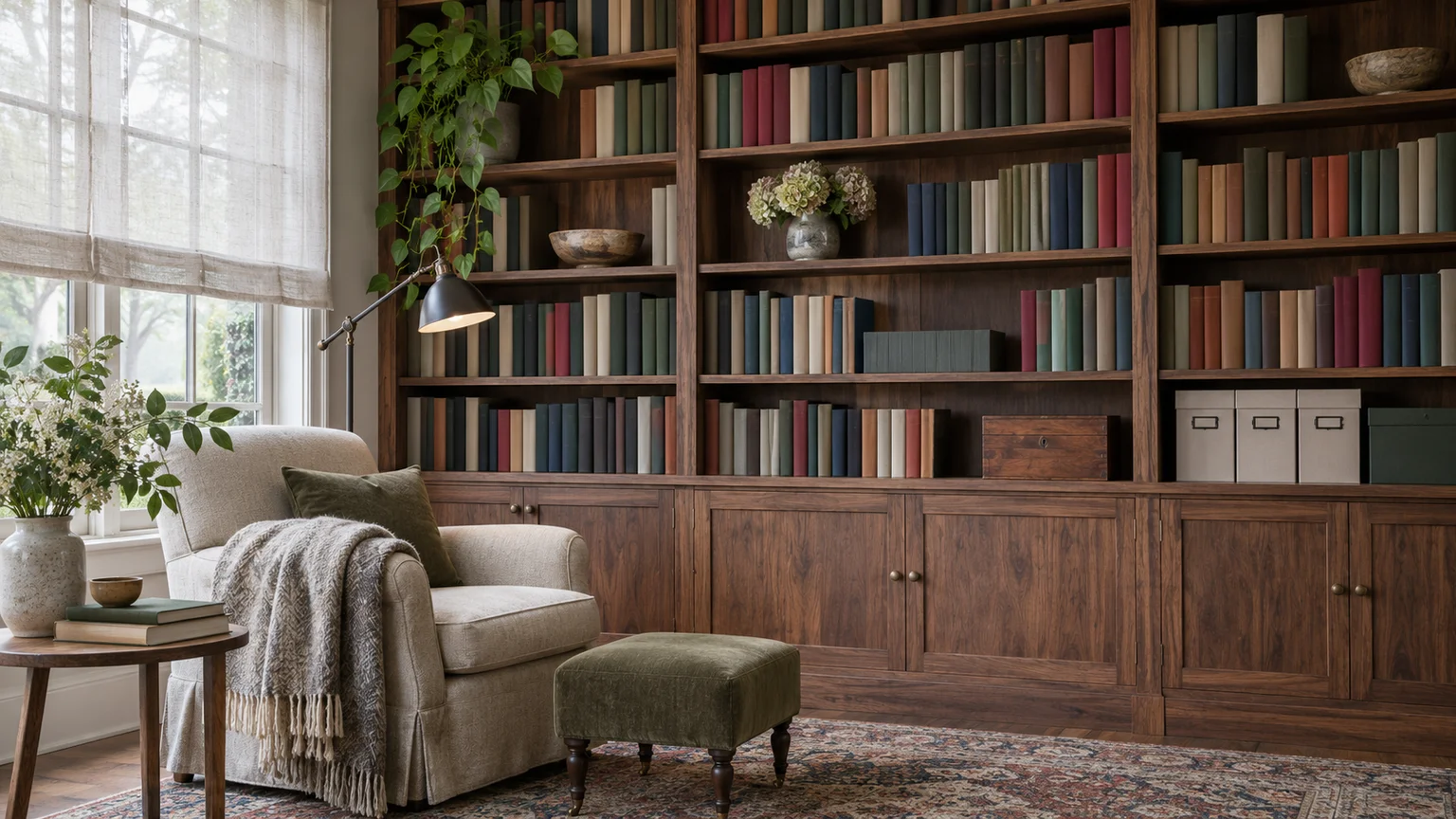
Design the room around two routines. Someone should be able to reach a book, sit down and read comfortably. The same household should be able to retrieve a fragile album or important original without bringing the rest of the archive into the light. Sketch both routes before deciding how much open shelving, closed storage and table space to buy.
Survey the room above and below
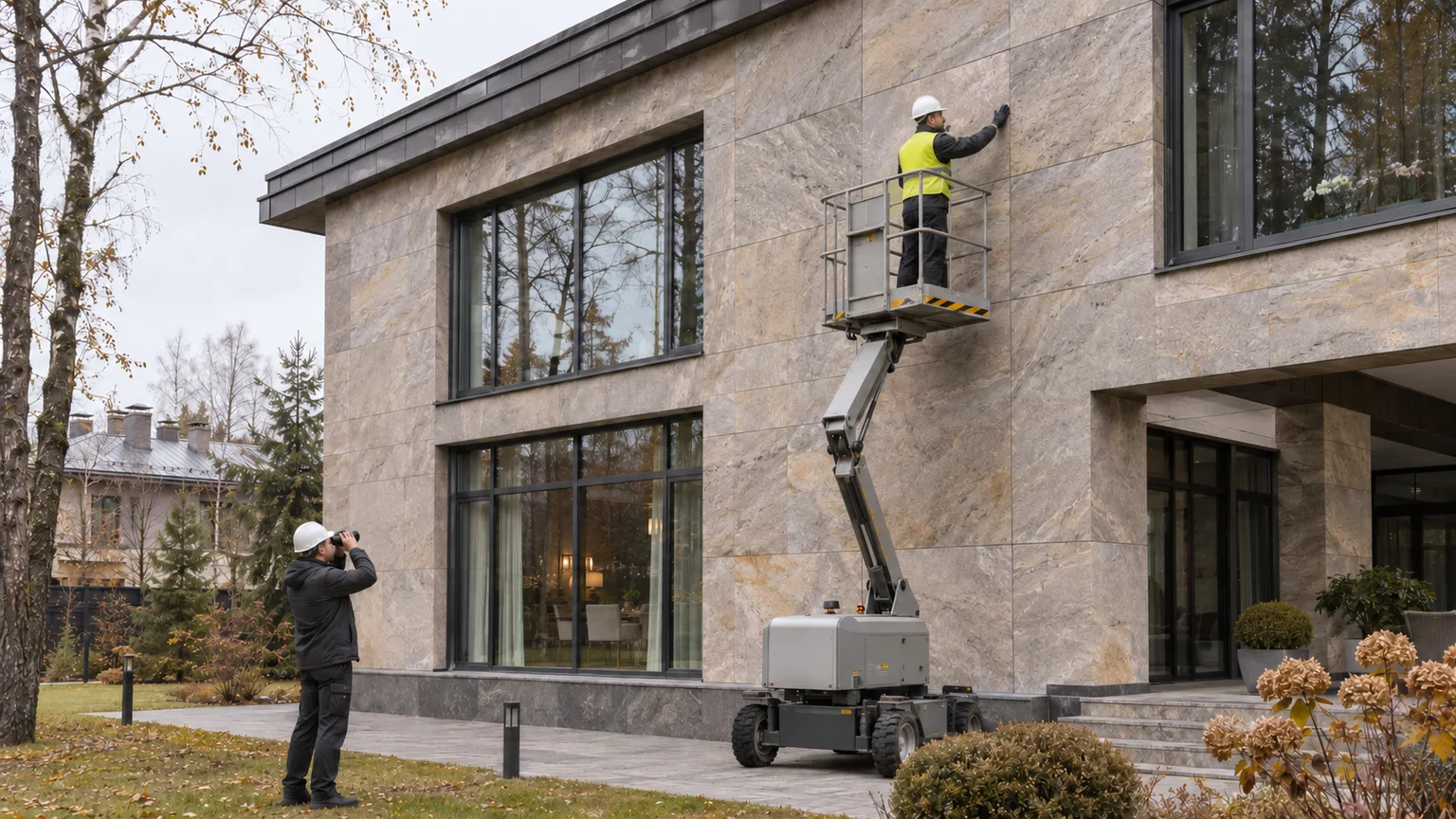
On a viewing, check what sits above the proposed storage wall. A bathroom, water pipe or roof junction may turn a good-looking bookcase location into a poor place for originals. Inspect the base of the walls and the backs of existing cupboards. Ask the seller about past leaks and how heating and ventilation run while the house is unoccupied. Our guide to inspecting concealed services can help you prepare those questions. The US National Archives recommends keeping family records and photographs off the floor and away from leak sources, damp basements, garages and hot attics.
Put a temperature and relative humidity logger near the intended storage, away from radiators, direct sun and supply vents. Compare it with the reading area and keep notes on rainfall, heating changes and absence settings. In its guidance for books, the Library of Congress gives about 35–50% relative humidity as an example of stable, relatively dry storage. The Canadian Conservation Institute recommends below 50% for general collections on paper. A conservator can advise on a mixed collection that includes vulnerable negatives, slides and rare materials. If the room also holds valuable prints or paintings, refer to the home art collection guide when planning the environment.
Give reading and display their own lighting
Try a task light at the chair and on the worktable, then check which shelves catch sun or reflected glare during the day. Light damage to paper and photographs accumulates, as the Library of Congress explains. Use blinds and closed storage to shorten the exposure. Keep the display copy of a treasured letter where the family can enjoy it and put the original back in its folder. UV filtration can help with one part of the exposure, while visible light remains relevant.
Make boxes easy to lift and originals easy to find
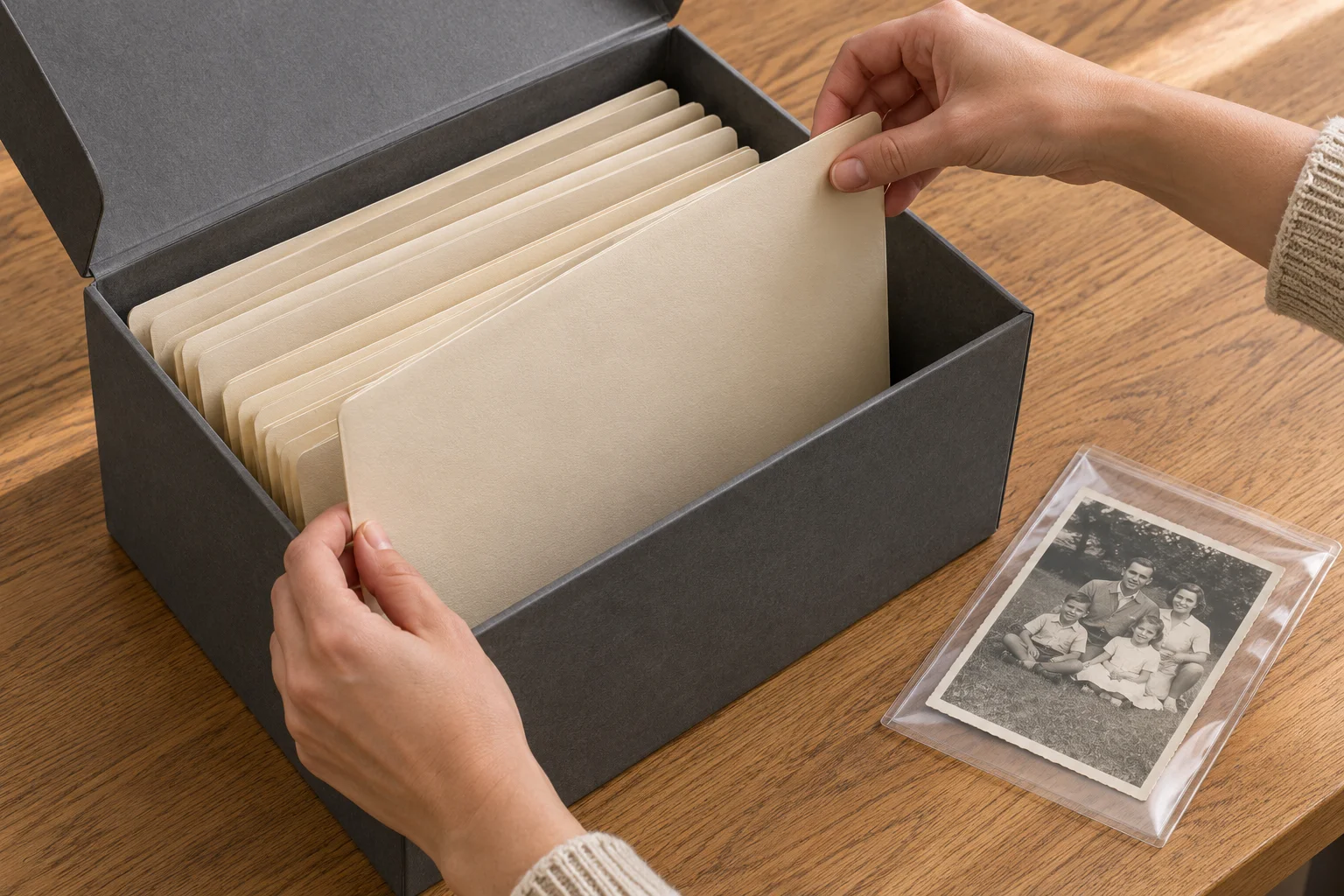
Group regularly used books by size and support upright volumes with bookends as needed. Lay oversize books flat on a shelf that supports the whole cover. Choose enclosures that fit papers without folds, and select photo enclosures intended for long-term contact with photographs. Give folders short location codes and keep a separate inventory. Provide a clean table with room to set down a box and open a large album with its binding supported.
Before signing off on the joinery, weigh some full shelves or sample boxes, add the furniture mass and allow for growth. A structural engineer can use that inventory alongside the location of each support and the existing floor construction. SP 20.13330.2016 is the Russian design reference for loads and load combinations. The weight of a concentrated run of shelving needs to be checked against the actual floor and supporting structure. Review fixing details with the installer and keep the travel path clear when carrying a heavy box.
Put responsibility and recovery in writing
- Decide which originals are for household access and which belong in secured storage. Keep the catalogue separate and make sure an authorised person can retrieve documents when needed.
- Digitise frequently requested items. Keep the originals, manage access to sensitive files and test recovery from a separate backup. A copy kept away from the house helps if the same event affects the main computer and the paper archive.
- Check how occupants hear a smoke alarm and maintain detectors under the house fire safety plan and the equipment instructions. Keep exits clear and leave immediately in a fire.
- Identify where leak alerts go, who can isolate the water and where sound boxes can be moved once the area is safe. Include those details in the property operations file.
Use the same checklist to compare properties along the Rublevo-Uspenskoye corridor and Novorizhskoye corridor. For each house, identify the best reading position, the proposed storage environment and any work that must be done before moving the collection. That gives you a basis for comparing the rooms beyond the number of shelves.