Pergolas, Canopies and Awnings: What to Check Before You Buy
A practical inspection of terrace shelter, from awning controls and winter settings to wall brackets, post bases and the point where rainwater leaves the deck.
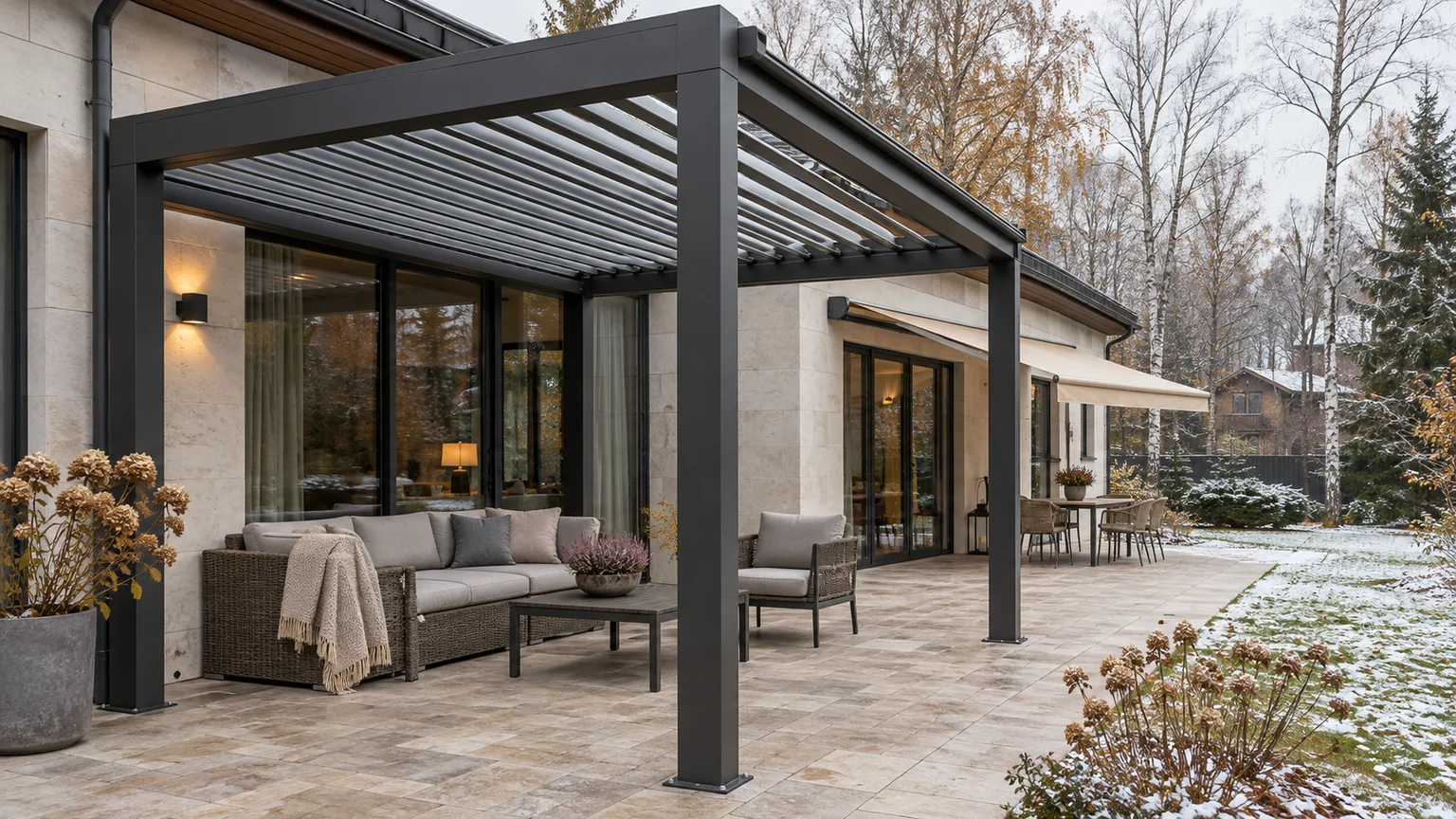
At a viewing, a broad terrace may look ready for outdoor dining. Ask the owner to show how it works on a windy afternoon, in steady rain and during a winter absence. An open pergola can shade the table at some times of day. A retractable awning can make the seating area comfortable in summer. A fixed canopy may suit a route you need to use through the year, provided the design and drainage support that use.
Work out which part of the terrace you need to shelter
Mark the outdoor table, door swings, steps and route from the kitchen on the terrace plan. Check where the shadow falls at the times you use the terrace. For an adjustable louvered roof, ask how much protection the closed setting provides in rain and where any retained water goes as the louvers reopen. For a fabric awning, get the exact model, installed width and projection. Check its documentation for weather restrictions and operating positions. Additions such as side screens and solid panels change the configuration and should be reviewed by the designer before purchase or installation.
Ask for two kinds of wind evidence
Get the product declaration and the site design. The product documentation describes the conditions under which a particular awning configuration was assessed and how the manufacturer allows it to be used. Commission Delegated Regulation (EU) 2019/1188 sets different wind resistance classes for different families of external blinds and awnings. Where a declaration uses that classification, match the product family and the dimensions, rather than comparing class numbers on brochures. For the site design, ask how the loads reach the house wall or the footings and how the exposure at the location has been considered.
For a fixed canopy, ask for the design assumptions for wind and snow. Russian SP 20.13330.2016 covers loads and load combinations in building design. A high wall or step in roof level warrants a conversation about local snow accumulation, and a canopy under the main eaves may also be exposed to falling snow. Use the guide to snow and ice around house roofs to review the positions of doors, steps and walking routes. For movable elements, ask for the permitted winter position and instructions for frost. One manufacturer, markilux, permits use of its Markant model in light, steady rain and calls for retraction in heavy rain, strong gusts and snow. Apply the instructions for the model actually fitted at the house.
Locate the structural fixings
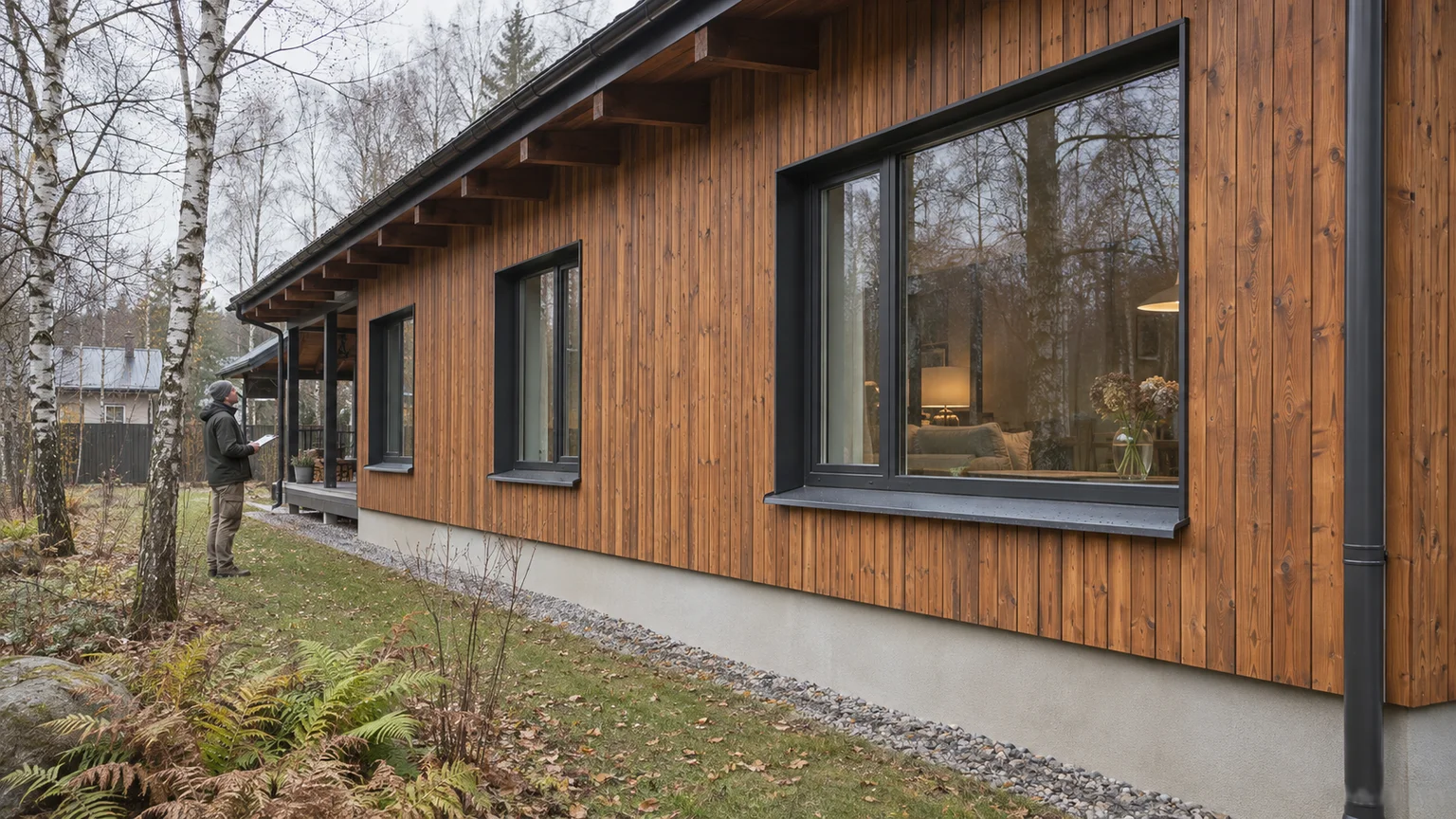
Ask for one section through a wall bracket and one through a post base. For a bracket above glazing or fitted through insulation, the drawing should identify the supporting wall or beam and the fixing specification. Look for before-and-after installation photos and signs of water below the bracket. Use the timber cladding inspection guide if the wall is boarded. For a freestanding structure, establish whether posts bear on dedicated footings or a suitable structural slab. SP 22.13330.2016 covers foundation design in Russia. Ask an engineer to examine movement, corrosion or cracks around the supports, especially if the paving has recently been relaid.
Follow the water beyond the terrace grate
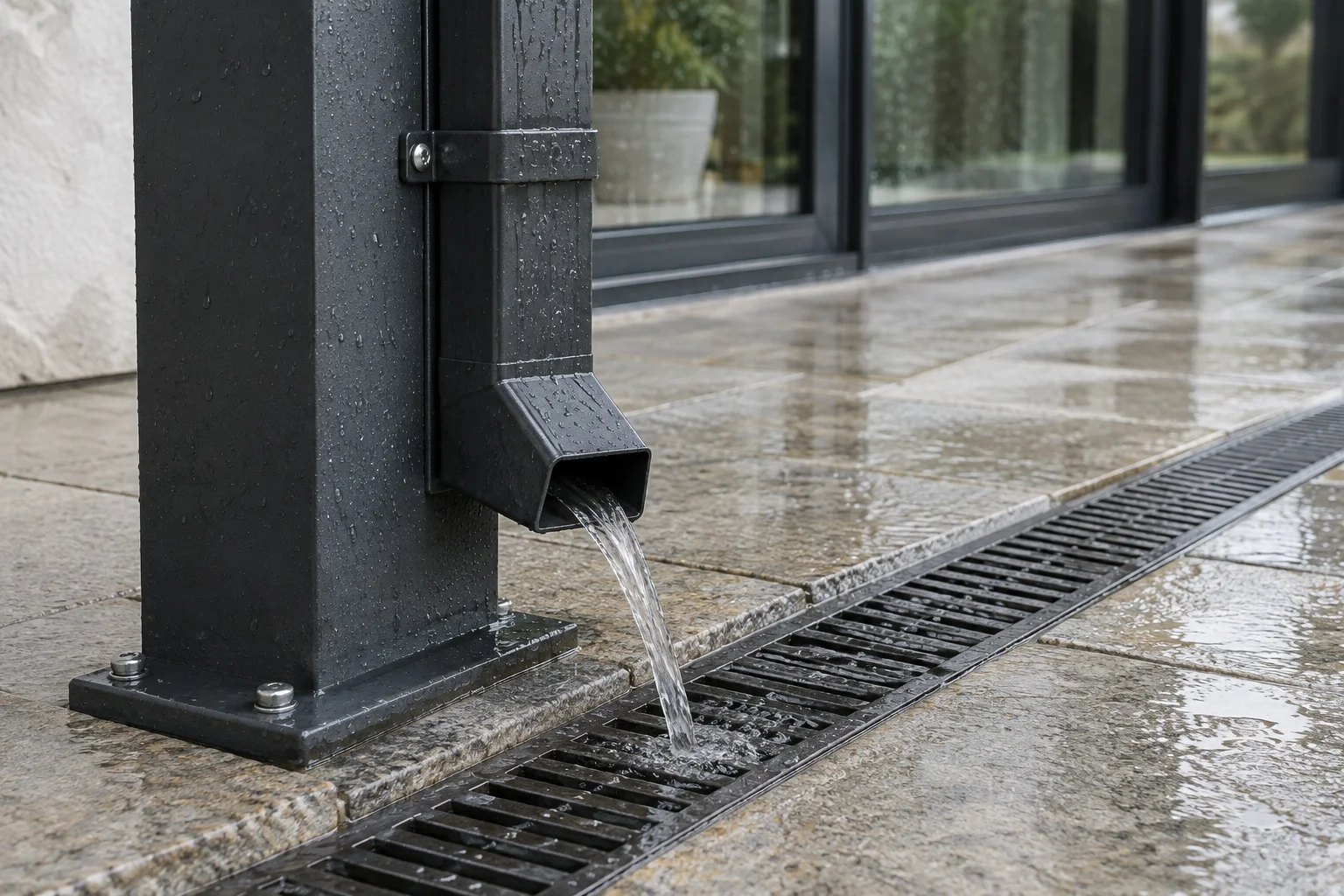
Walk from the canopy edge to each outlet, channel and final discharge point on the site plan. The route may be hard to trace when the pipe is concealed in a column. Ask to see any inspection cover and have the installer demonstrate normal drainage under the conditions allowed for the product. Then walk the likely overflow route. Water across a low threshold or along steps is a reason to budget for changes. Russian SP 17.13330.2017 addresses roofs within its scope and SP 32.13330.2018 covers external drainage networks for rainwater and snowmelt. Refer to the site runoff and slope guide if the discharge would run down towards a retaining wall or lower entrance.
Make a short handover list
- In suitable weather, have the seller demonstrate a complete movement cycle. Check the travel path, end position and access for future motor replacement.
- Ask the installer how they test the wind control and what the equipment does when power is lost. Confirm any authorised manual override and the setting to leave the system in while the house is empty.
- Keep the product data, bracket and footing details, seasonal instructions, maintenance contacts and pictures of concealed work in the property operations file.
- Separate repairs that affect use today from future servicing. Quote water discharge problems, structural repairs and replacement of fabric or motors as distinct jobs.
If you are comparing houses along the Rublevo-Uspenskoye corridor and Novorizhskoye corridor, compare the activities each terrace can support and the conditions in which it can safely be used. Reliable drawings and a working demonstration are more useful than the headline covered area.