A Country House for an Art Collection: Climate, Light and Security
How to assess a country house for a private art collection: material-led climate zones, cumulative light exposure, mounting, water and fire risks, security and access control.

A country house cannot be judged suitable for an art collection simply because it has generous walls and dramatic daylight. Paintings, works on paper, photographs, textiles, wood, metals, plastics and mixed-media objects respond differently to relative humidity, temperature, light, pollutants and physical forces. A comfortable residential interior may still create collection risks through direct sun, warm air from a convector, water services above storage or unrestricted access to small portable objects.
The answer is not to operate the entire house as a museum. Match each object’s vulnerability to a location, create zones with different levels of control, and establish monitoring, maintenance and emergency routines. A conservator should define requirements after reviewing materials, condition and storage history; engineers then determine how reliably the house can achieve them.
Build an object register with conservation profiles
Without a current register, neither environmental planning nor loss detection is reliable. Each record should include an internal identifier, authorship and provenance information, materials and technique, dimensions and weight, condition, photographs, current location, mounting method, handling requirements and treatment history. Frames, bases, cases and transit packaging should be linked as components rather than treated as incidental furniture.
Add a practical vulnerability profile:
- sensitivity to relative-humidity change;
- light sensitivity and display strategy;
- risk of corrosion, cracking, distortion or fading;
- vulnerability to water, dust, pests and pollutants;
- orientation, support and movement requirements;
- emergency-salvage priority;
- insurance and valuation records with restricted access.
This register relates to the household inventory but should not disappear within it. Our guide to a furnished country house and its contents explains serial numbers, accessories and photographic schedules. Art records need an additional condition history and movement log, because an object can remain physically present while becoming separated from its documentation, frame or packing case.
Create climate zones rather than one house-wide number
There is no universally correct relative humidity for every collection. The Canadian Conservation Institute distinguishes several risks: damp, crossing a material-specific critical level and damaging fluctuations. Identify materials and vulnerabilities first, then agree a target range and acceptable rate of change with a conservator.
A wall thermostat is not a collection-monitoring system. Independent data loggers should be placed near objects but outside direct airflow and solar heating. Gather seasonal and event data: severe cold, thawing, power failure, a large gathering, wet cleaning and fireplace operation. Review rates of change and local gradients near exterior walls, windows, floors and high ceilings, not only monthly averages.
A practical residential scheme may include:
- normal living spaces for robust objects;
- a controlled gallery room for sensitive paintings and paper;
- closed cases or cabinets with passive buffering;
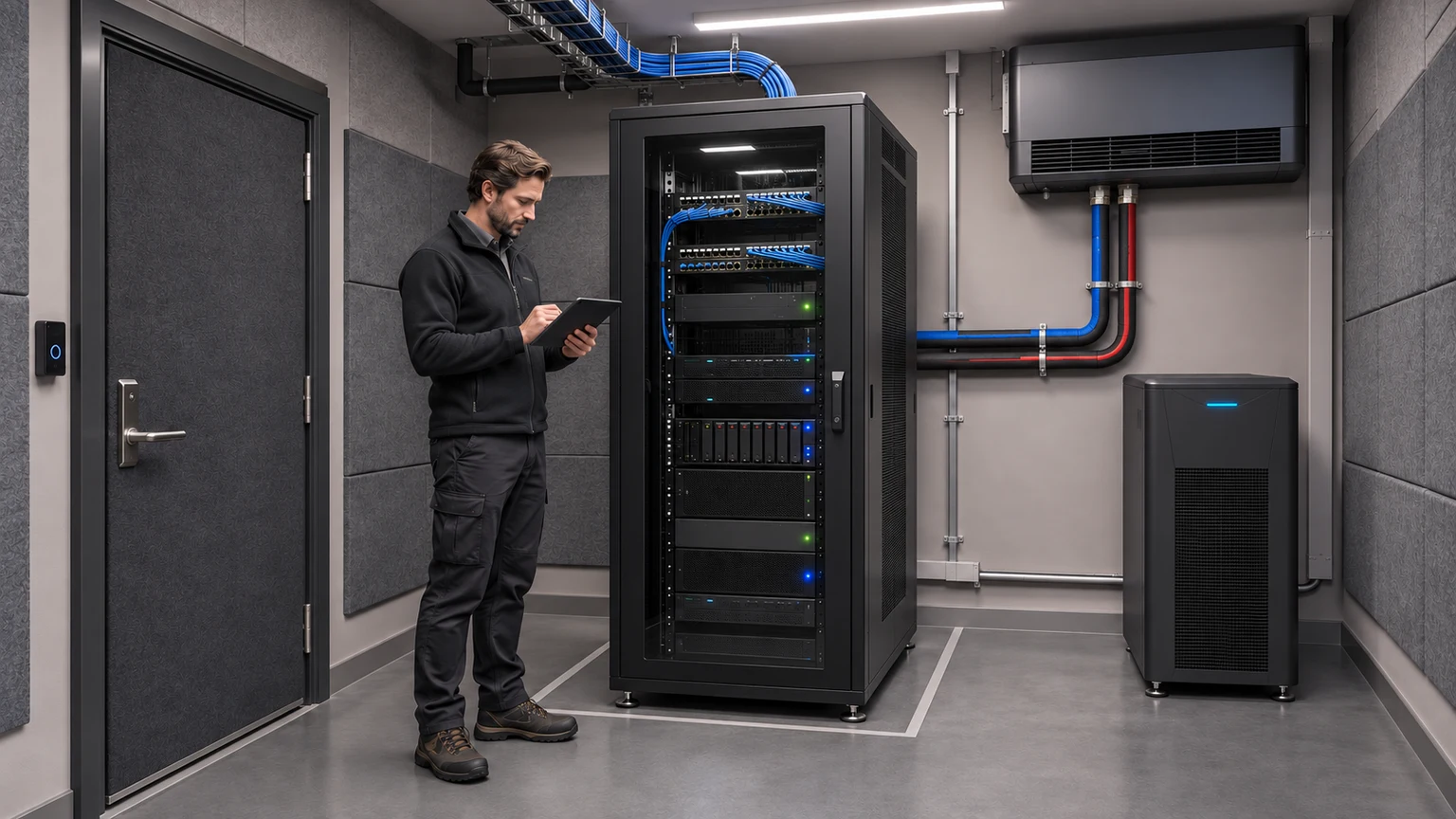
- restricted storage with independent monitoring;
- a quarantine area for incoming or returning objects.
Engineers should confirm that these zones can be maintained without condensation in the building fabric or systems fighting each other. Supply air should not discharge directly onto canvas, paper or timber. When controls fail, conditions should remain manageable long enough for the team to respond. Review continuity with our country-house backup-power guide.
Manage cumulative light exposure
Light damage accumulates and cannot be reversed. A single daytime lux reading does not describe exposure: duration, spectrum, season, window treatment and room use all matter. The Canadian Conservation Institute recommends reducing exposure for vulnerable materials and controlling ultraviolet radiation; the correct strategy depends on colourants and technique.
Measure illuminance at the object plane in morning, daytime and evening conditions and repeat seasonally. Check direct sunlight, reflections from pale floors, radiant heat from close fittings and failure of automated blinds. Where art is placed near large windows, test the actual glazing and shading system using the approach in our article on panoramic glazing, solar gain and privacy.
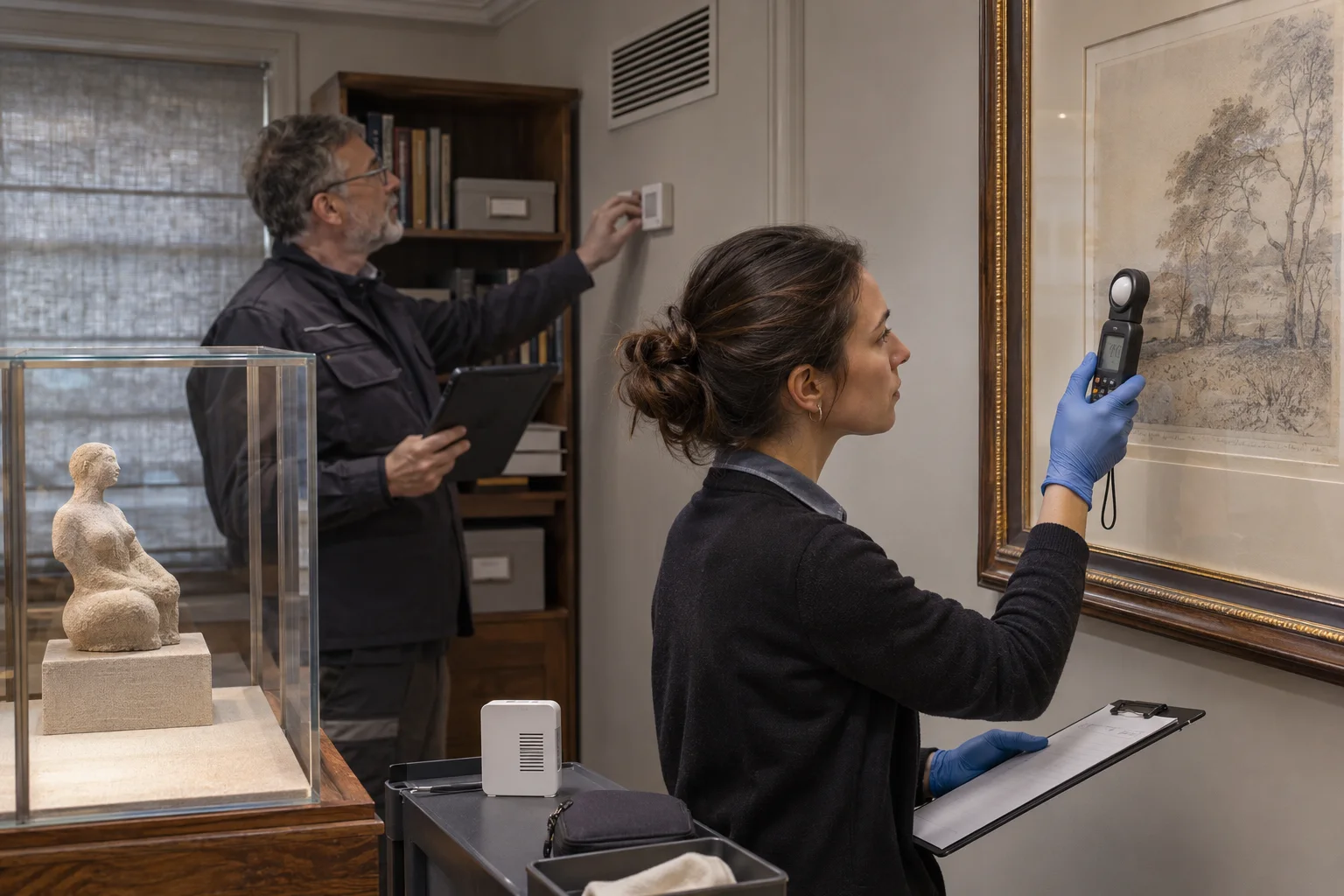
Useful controls include layered blinds, low-heat directional lighting, ultraviolet filtration, timers and rotation of sensitive works. A film or curtain is not a permanent guarantee: condition and performance require verification. Automated scenes should have intelligible manual control and return to a safe state after loss of power.
Verify mounts, cases and movement routes
Damage often occurs during housekeeping, furniture changes or movement rather than in a major disaster. Confirm the wall construction, concealed services, fixing type, load path and safe removal method for each installation. Heavy works should not rely on a decorative lining; tall sculptures require stability and overturning assessment.
Test the route from unloading point to display location using the packed dimensions: gates, steps, turns, lift, doors, floor protection and unpacking area. The plan should not depend on removing guardrails, tilting against instructions or leaving an object unattended. Assign trained people, appropriate handling equipment, a clean work surface and before-and-after condition photography.
A display case is more than glazing. It may reduce handling, water, dust and rapid environmental change, but unsuitable internal materials can introduce pollutants. Review seals, internal finishes, inspection access, locks, sensors and emergency removal. Small objects need discreet restraint or a purpose-made support agreed with a conservator.
Coordinate water and fire planning
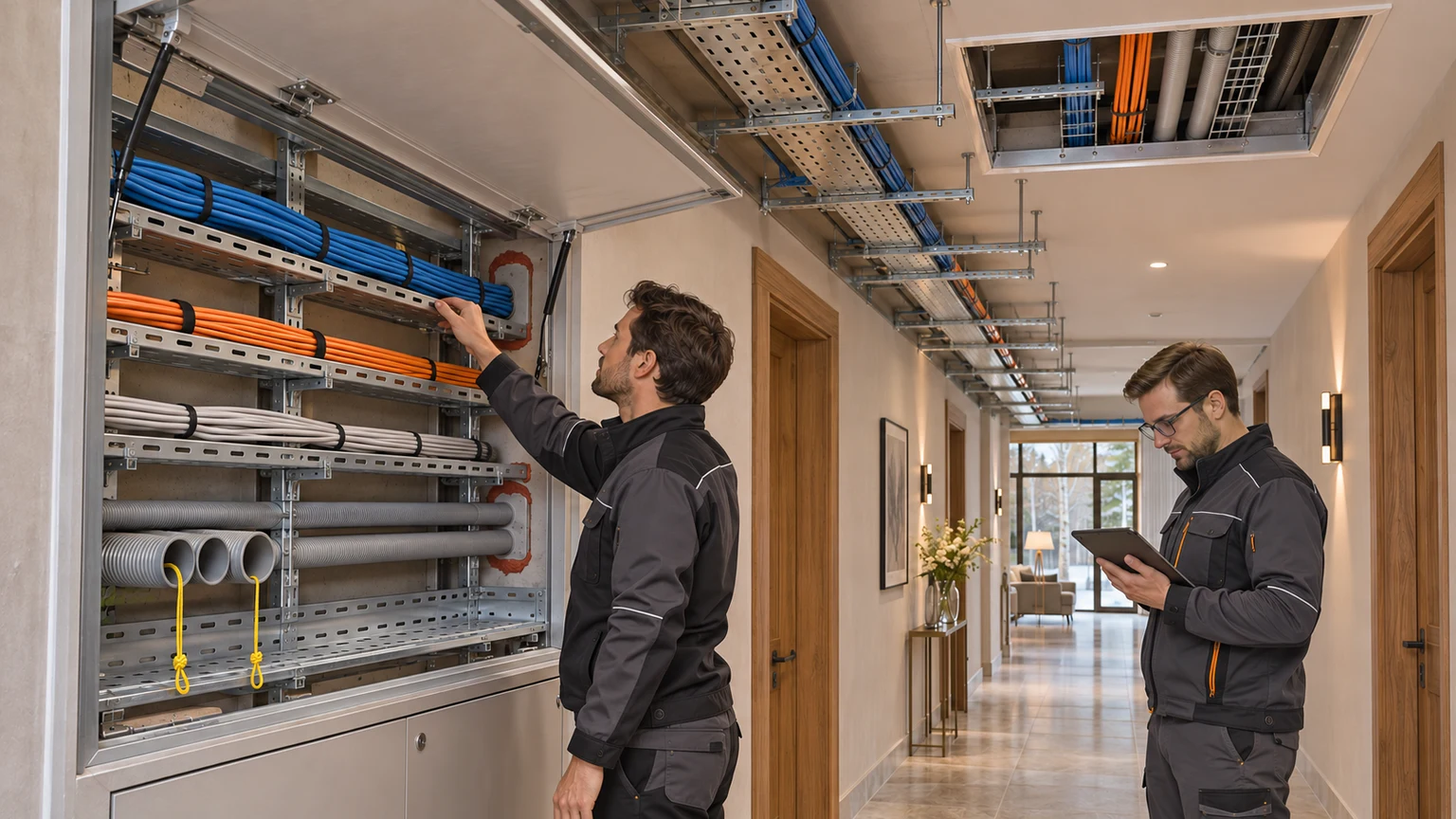
Do not place a collection beneath plumbing, air-conditioning equipment, bathrooms or a roof zone with an uncertain history simply because the wall is convenient. The Canadian Conservation Institute identifies roof leaks, HVAC and heating failures, broken pipes and firefighting water as credible sources of collection loss. Map services above galleries and storage, condensate drains and the path water would take to lower levels.
Early detection matters more than cosmetic repair. Leak sensors should detect the event before water reaches objects, and alerts must reach a named responder. Stored objects should be raised from the floor. Staff need access to appropriate isolation controls, but fire protection must never be improvised or disabled.
Fire strategy must protect life, the building and the collection. Qualified designers select detection and suppression under the applicable rules and room scenario. The owner’s role is to prevent aesthetic compromises from hiding detectors or creating uncontrolled cable loads, preserve fire separation and exits, and plan recovery from heat, smoke, soot and water.
Use layered security
Perimeter alarms do not protect an object from someone who is already inside. Effective protection combines the building envelope, controlled doors, zoning, secure mounts, cases, video coverage, inventory controls and procedures. The Canadian Conservation Institute notes the particular exposure of small portable objects and open displays or weak cases.
Separate permissions for:
- family members and permanent estate staff;
- guests moving through residential areas;
- housekeeping personnel working near objects;
- escorted engineering contractors;
- conservators and art handlers with task-specific temporary access;
- security-system administrators using individual accounts.
Camera access should not expose the collection to unnecessary users, and a rehung room should not create blind spots. Catalogues, valuations and location plans are sensitive data too; protect off-site backups by role. Architectural zoning can follow the principles in our guide to privacy, landscape and residential security.
Write operating and emergency procedures
Good installations degrade without oversight: sensors drift, filters block, blinds fail and former contractors retain credentials. The operating schedule should cover data review, inspection of mounts and cases, alarm tests, water-source checks, HVAC servicing, lighting review and inventory reconciliation.
Keep the emergency plan short enough to use. Name the person receiving alerts, those responsible for life safety and building systems, the conservator and insurance contacts, the location of response materials and object priorities. Do not move a wet, burned or structurally unstable work without professional advice; hurried rescue can increase damage.
The owner’s checklist:
- every object has a record, photograph, location and vulnerability profile;
- climate requirements reflect materials rather than one universal number;
- loggers provide seasonal evidence and alerts reach a responder;
- light is measured at the object plane with shading and rotation planned;
- mounts, cases and packed movement routes have been checked;
- water sources and fire scenarios are mapped;
- physical and digital access is role-based;
- emergency priorities, contacts and a safe working area are defined.
When the estate team changes, this package should not be handed over as scattered files and shared passwords. Use the structured approach in our guide to transferring a country house into new management: one system register, witnessed tests, open defects and confirmed access transfer. A house is genuinely ready for art when condition, environment and movement remain controllable during ordinary family life and during an emergency.