Country-House Engineering Service Contract: SLA and Emergency Response
A practical structure for a country-house engineering service agreement: asset register, responsibility boundaries, staged response SLAs, emergency work, critical spares and verifiable outcomes.

“All engineering systems covered 24/7” sounds reassuring but says very little about what will happen. Who acknowledges an alarm at night? Who can shut down a boiler or isolate a circuit? Is remote diagnosis included while attendance, labour and parts are charged separately? At what point is an incident stabilized, and who authorizes restart?
A useful service agreement converts those questions into an operating model. It begins with an asset register and criticality assessment, defines roles, response stages and spending authority, and ends each intervention with evidence: logs, readings, photographs, a completion record and an updated equipment history. Legal counsel should review the final structure because one arrangement may combine services, works, parts supply and elements of facility management.
Define the assets before defining service
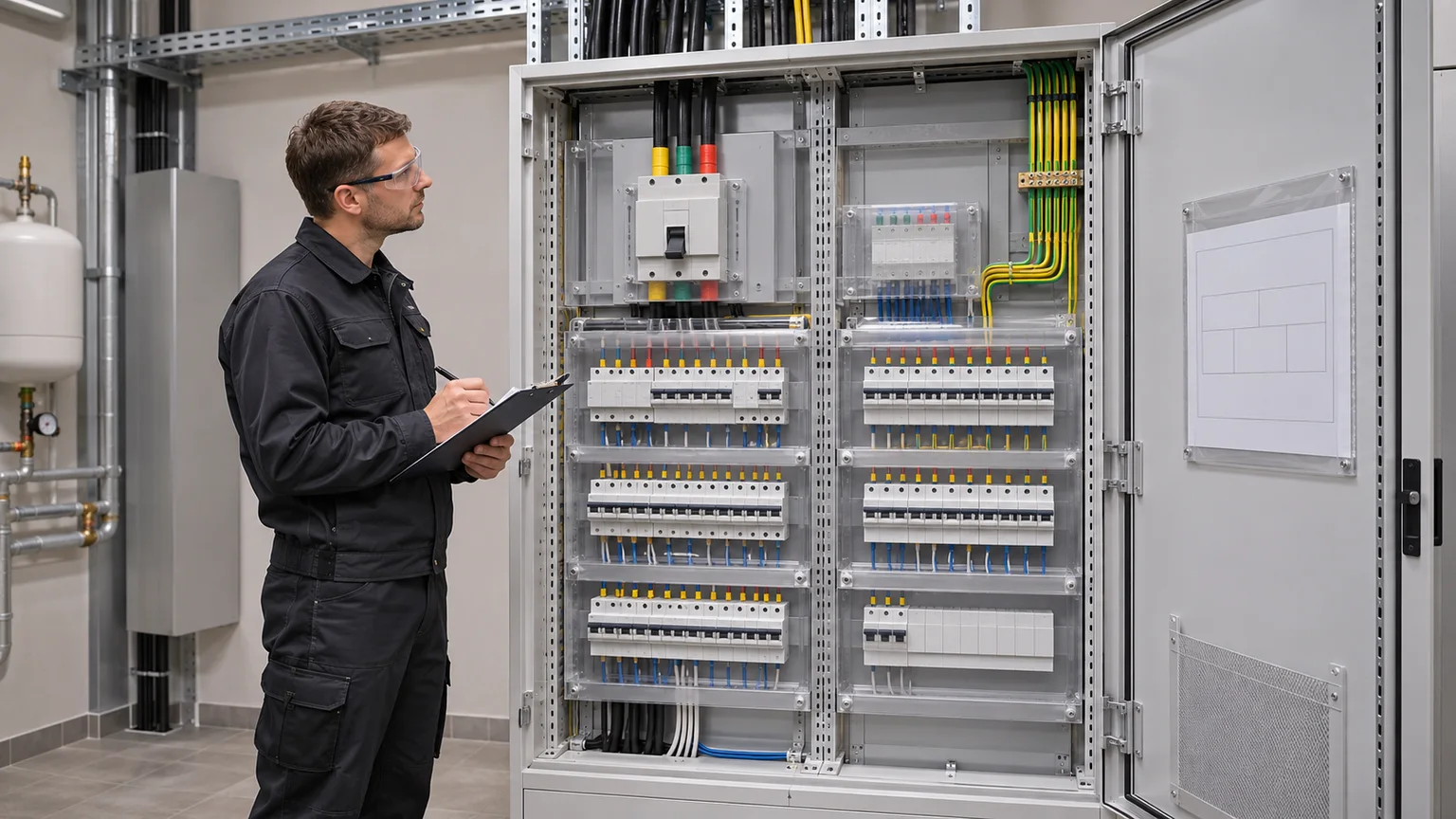
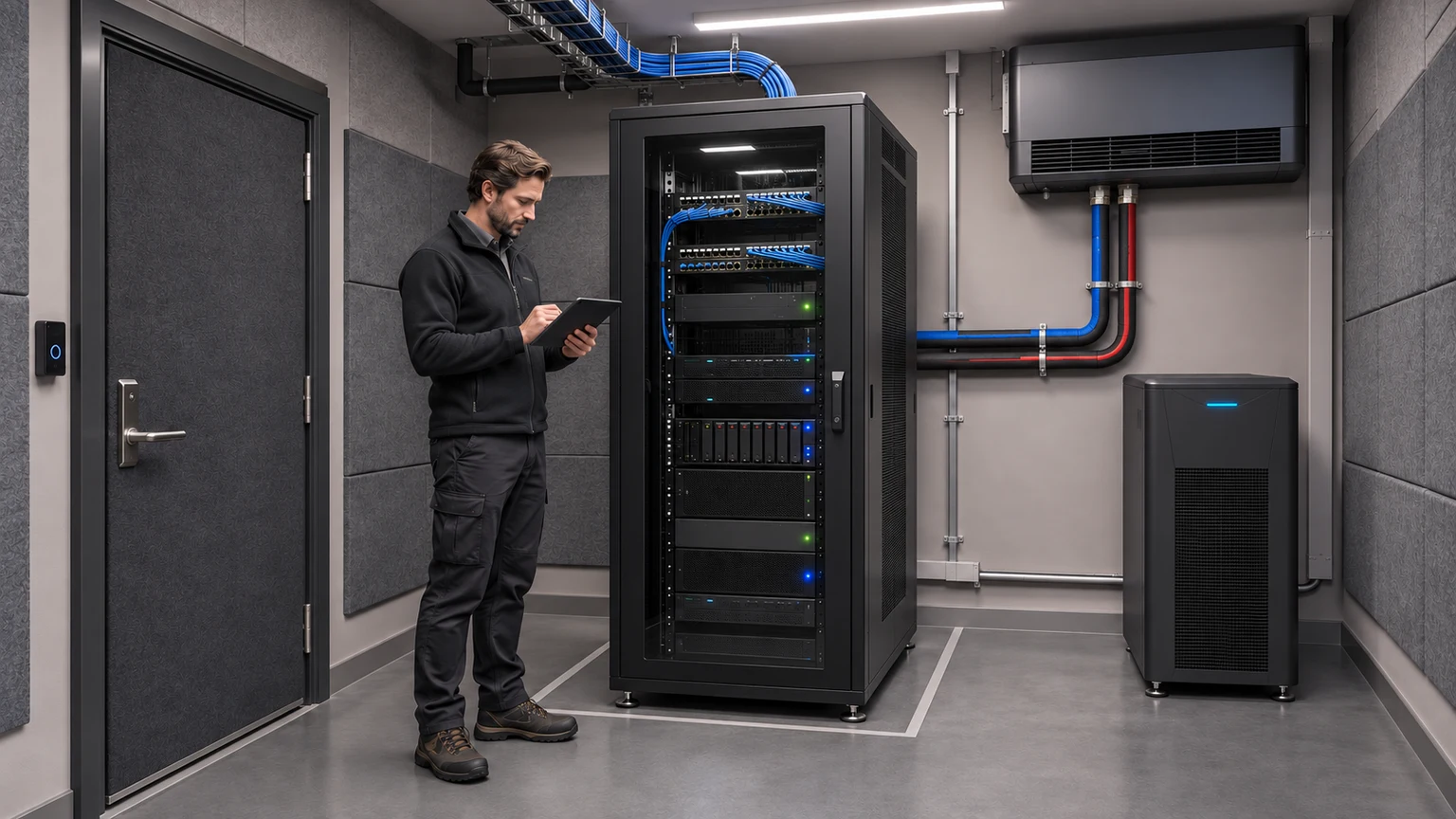
An SLA cannot be managed if the supplier does not know exactly what is covered. Attach an asset register listing boilers, pumps, heat exchangers, air-handling units, cooling, water treatment, borehole equipment, drainage, backup power, controls, gates, security and any other agreed systems. Record location, maker and model, serial number, commissioning date, warranty status, manuals, last service and criticality.
Classify assets by consequence rather than room:
- life safety — fire, gas and safe-isolation functions;
- house continuity — winter heating, water, drainage, power, communications and security;
- property protection — leak detection, drainage and climate for sensitive rooms;
- comfort — local cooling, decorative lighting and selected automation scenes;
- seasonal systems — irrigation, heated paths, pools and outdoor equipment.
Contract boundaries must reflect actual authority. If a contractor covers the plant room but cannot change control settings or inspect the flue, say so explicitly. Review service clearances using our guide to country-house plant rooms. A pump that cannot be removed without dismantling adjacent pipework is a property constraint that a response-time promise cannot erase.
Break the SLA into auditable events
An SLA is an agreed service level, not a marketing label. Divide each incident into events that can be evidenced:
- alarm or request registered;
- receipt acknowledged by a named duty role;
- initial remote triage completed;
- attendance decision and technician assignment made;
- technician arrived;
- unsafe development stopped or equipment isolated;
- temporary service restored;
- root cause corrected and system tested under load;
- closure report accepted by the estate representative.
One promise to “arrive quickly” confuses acknowledgement, dispatch, stabilization and final repair. Set separate service windows, communication channels, evidence and escalation rules for each incident class. Do not copy response times from another estate: location, standby coverage, road access, criticality and parts availability all matter.
Define which alarms trigger automatic attendance and which require estate confirmation. Repeated false alarms should lead to corrective work rather than a succession of closed tickets. For electrical incidents, align the agreement with tested priorities in our backup-power and UPS guide.
Planned maintenance must produce evidence
“Maintained in accordance with regulations” is incomplete unless the actual schedule is attached. State the interval or operating condition, work content, required measurements, consumables, acceptance criteria and report format. Manufacturer requirements may differ from the frequency justified by load and environment; the supplier should identify conflicts rather than choose the easiest minimum.
Each visit should leave:
- identified assets and completed operations;
- readings with units and test conditions;
- active and historical control-system faults;
- before-and-after photographs of relevant components;
- replaced consumables and removed parts;
- exceptions with priority and operating restrictions;
- the next date or condition-based maintenance point;
- confirmation that records and settings were updated.
SP 255.1325800.2016 treats safe building operation, maintenance, engineering services and operational control as connected activities. It does not write a private-house contract, but it supports the right model: documented condition, traceable work and continuing control.
Emergency attendance begins before the vehicle moves
The duty team needs a minimum incident pack: address and access point, affected system, symptom, event time, image or fault indication, any smoke, odour, water or temperature issue, and whether people are present. The operator must distinguish safe remote checks from situations requiring evacuation, emergency services or a clear prohibition on homeowner action.
Write down authority. Who may restart a system remotely? Who can isolate water, gas or power? Which actions are forbidden to household staff? If the contractor receives remote control access, use individual accounts, limited permissions, activity logs and prompt revocation at contract end.
Arrival is not the end of the SLA. The emergency record should capture initial state, stabilization, any temporary arrangement, remaining restrictions and criteria for safe return to service. Starting a standby pump may restore pressure without resolving the failure of the primary unit. Water-system response should also reflect the logic in our water-storage and pressure guide.
Build critical spares around risk
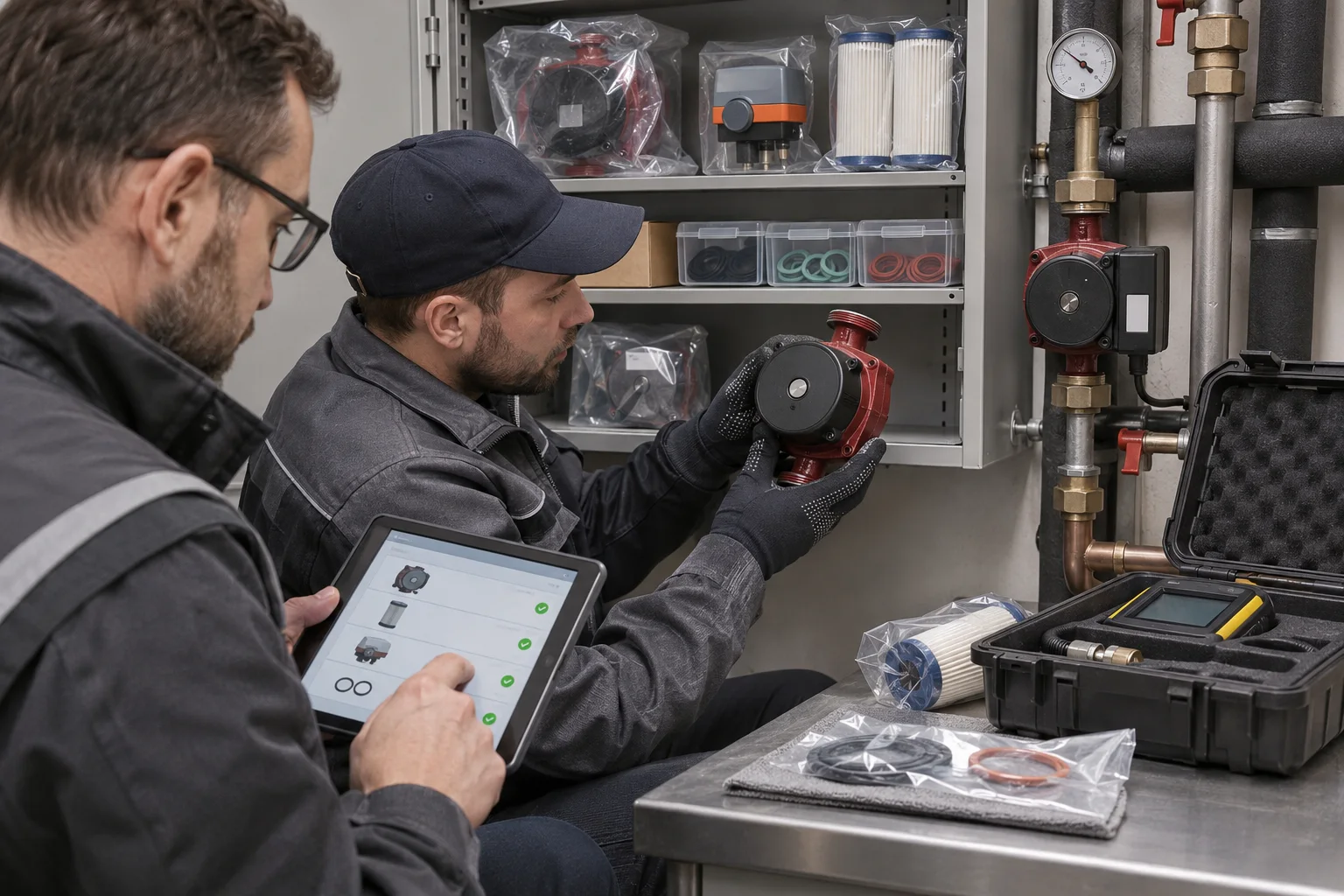
A shelf of random filters and old control boards is not resilience. Create the spares matrix from asset criticality, failure likelihood, delivery time, compatible alternatives and the availability of a safe temporary arrangement. Each item needs exact model and revision compatibility, quantity, storage location and conditions, ownership and replenishment rules.
Separate:
- consumables for scheduled work;
- standard parts held at the service provider’s depot;
- site-specific emergency stock owned or reserved for the property.
On-site stock still requires control of moisture, temperature, cleanliness and packaging. Electronics and batteries are not permanent inventory. Periodic counts should identify obsolete revisions, expired materials and parts removed without replenishment. When a spare is used, record its identity, the reason for replacement and the disposition of the removed component.
Resolve overlaps between contractors and warranties
Large houses often use separate suppliers for heating, cooling, water treatment, generators, automation, pools and security. Without boundaries, each party may blame an adjacent system. Use a responsibility matrix showing who diagnoses, decides, performs, approves and receives information.
Integrations are the common failure point. A sensor problem may look like ventilation failure, poor power quality like an automation fault, and low water pressure like boiler trouble. Name the lead incident coordinator and the process for joint attendance. Commercial disagreement must not delay safe stabilization.
Warranty assets require compliance with manufacturer and authorized-service terms. Unauthorized work may create a warranty dispute, but it cannot justify inaction where the building is at risk. Agree permissible emergency measures and escalation in advance. Where alteration history is unclear, begin with the warning signs in our guide to ageing engineering behind a luxury interior.
Make the commercial model intelligible
A retainer rarely includes everything. Separate scheduled visits, remote monitoring, emergency call intake, travel, diagnosis, labour, materials, delivery and specialist subcontractors. Define the approval method and evidence for each cost category rather than hiding it behind “charged as incurred”.
Set spending authority: what the estate manager may approve immediately to prevent loss, and what requires owner approval. If the owner cannot be reached, a pre-agreed emergency allowance and list of permissible actions should apply. This is not authority for uncontrolled replacement; it prevents delay where delay increases damage.
Judge quality by more than closed ticket count. Track repeat failures, overdue maintenance, report completeness, register accuracy, replenishment of spares, time to safe stabilization and avoidable alarms. Penalties alone do not improve the asset; require root-cause review and corrective action.
Plan mobilization and exit
The opening period is an acceptance exercise, not routine service. The supplier verifies the register, receives manuals and permissions, records baseline defects, witnesses functional tests and confirms emergency contacts. Our article on transferring a house to a new management team provides a structured handover method.
Exit deserves equal detail. Require return of keys and loaned devices, revocation of digital access, transfer of logs and settings, a spare-parts count, open-ticket list, warranty records and a final backup. Property data should belong to the owner and be exportable, not trapped in a supplier-only application.
Final checklist:
- the asset register matches the house and states criticality;
- the SLA separates acknowledgement, triage, attendance, stabilization and restoration;
- planned tasks have work content, acceptance criteria and reports;
- emergency authority and prohibitions are understood by estate staff;
- spares have model, location, condition and ownership controls;
- contractor and warranty boundaries are defined;
- charges, approval limits and emergency spending are transparent;
- credentials, records and exit data remain under owner control.
GOST R ISO 41001-2023 connects facility management with objectives, stakeholder needs and systematic improvement, while ISO 41012 provides a framework for sourcing and developing agreements. The lesson for a private house is straightforward: contract for outcomes and controlled risk, not merely visit frequency. Precise assets, events, evidence and authority make emergency response less dependent on personal messages in the middle of the night.