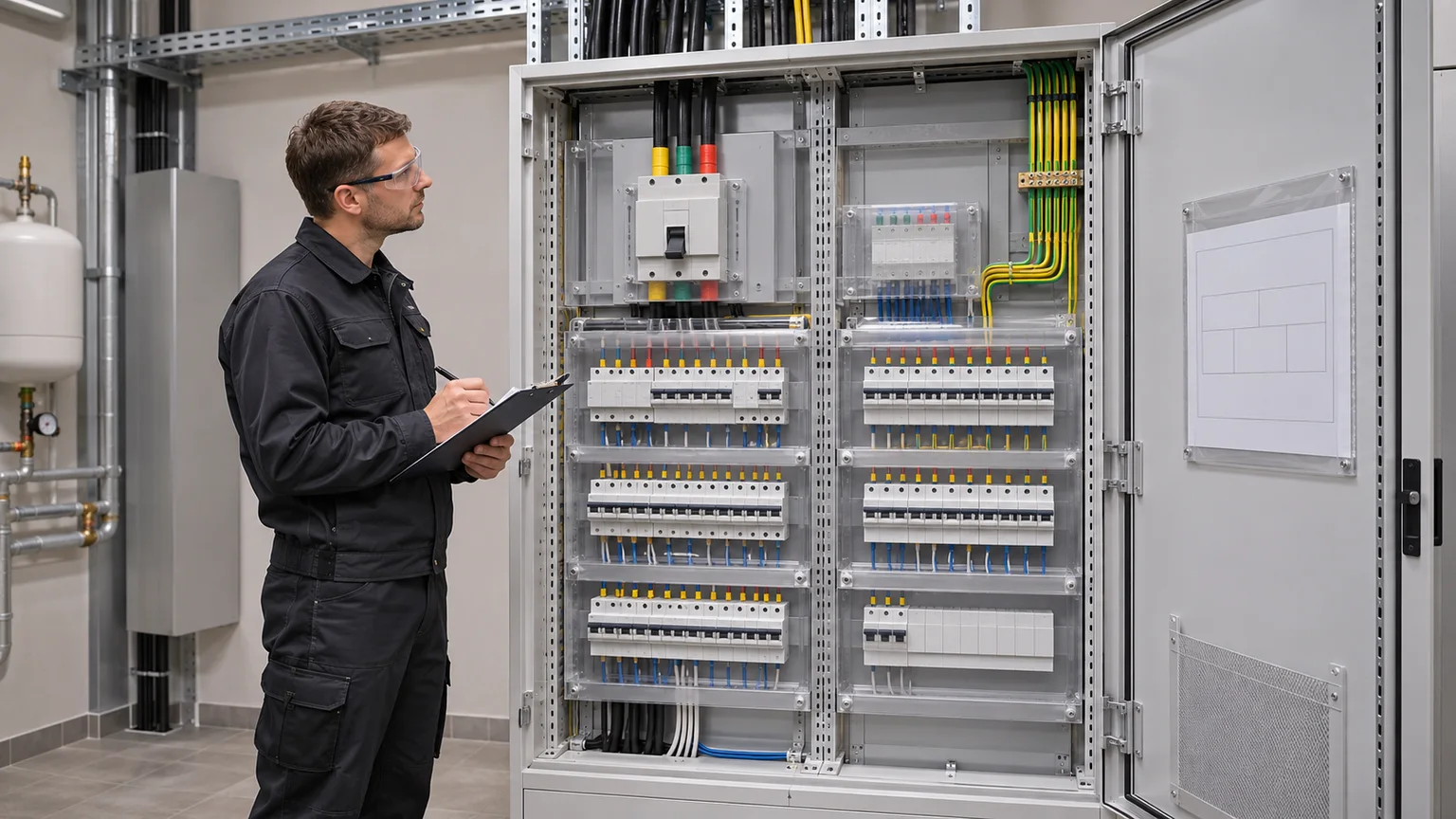
Wine Cellar in a Country House: Climate, Waterproofing and Commissioning
A residential wine cellar is a compact climate-controlled room whose success depends on a stable regime, dry construction and maintainable systems rather than decorative finishes.
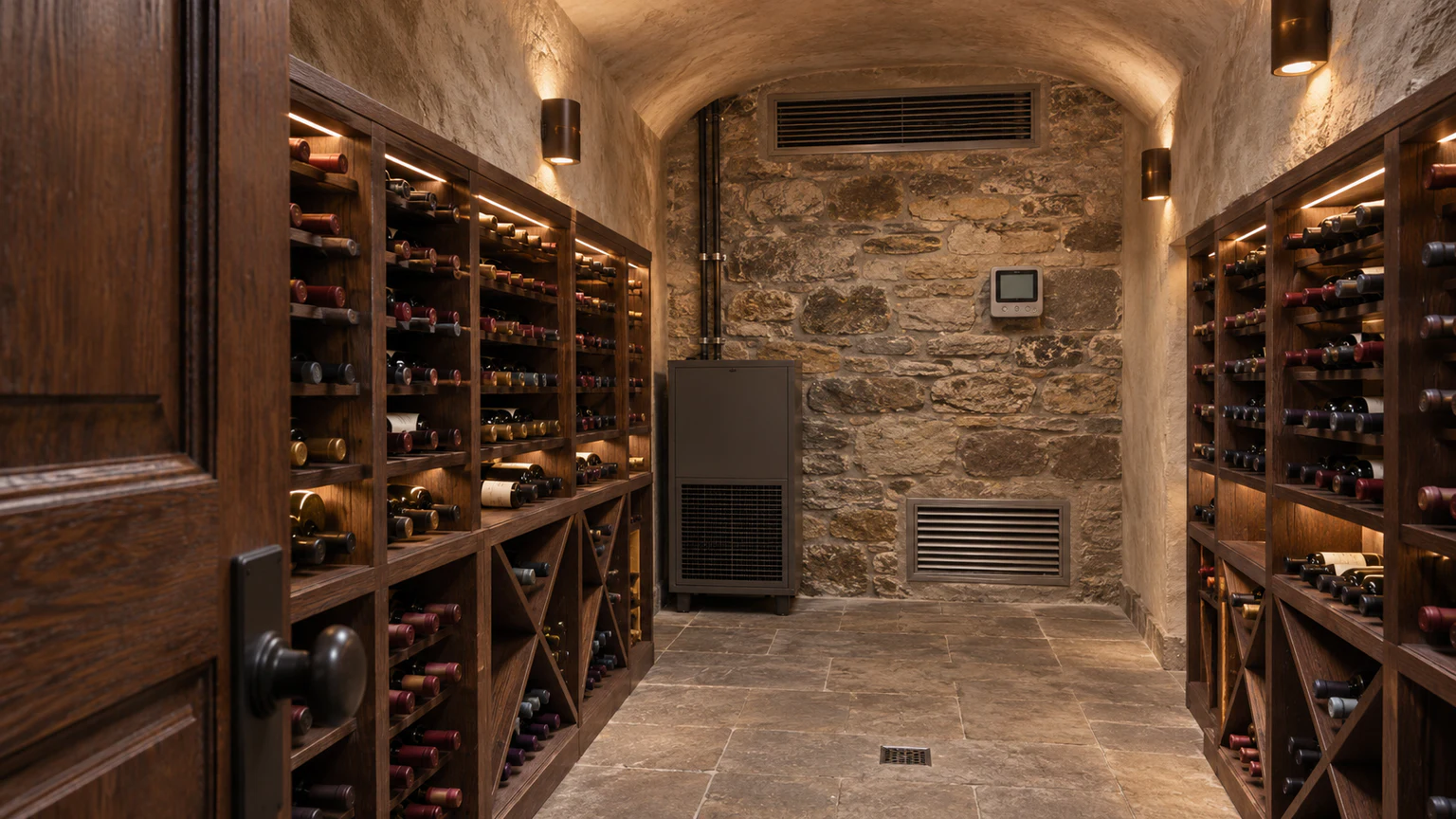
A handsome rack room is not automatically a wine cellar. A collection needs a predictable environment without prolonged heat, abrupt temperature cycling, direct light, condensation or intrusive odours. The house needs something equally important: a cold room that does not drive moisture into adjoining construction, hide a leak behind finishes or depend on one inaccessible cooling unit.
The cellar should therefore be treated as a small engineered facility. Its brief begins with the collection and the operating pattern, moves through heat and moisture calculations, and ends with logged data, alarms and a response plan. This approach applies both to a new build and to due diligence on an existing country house.
Write the collection brief before selecting equipment
There is no single ideal setting for every bottle and every holding period. Start by recording what will actually be stored: wines for regular consumption, bottles intended for long ageing, sparkling wine, large formats, cases, and closures with different storage requirements. The list determines rack density, bottle orientation, light exposure and whether one climate zone is sufficient.
OIV guidance for bottled wine cites 15–20°C and humidity not above 70% in its stated context. AWRI also stresses the damage associated with prolonged heat, direct light and pronounced thermal cycling. Those references are not a universal private-cellar set point. The final brief should reflect the collection, producer guidance and intended storage horizon. Stability and documented performance matter as much as the selected nominal value.
- Create an inventory of bottle formats, closures and intended holding periods.
- Separate the long-term archive, service stock and an intake area for new deliveries.
- Decide whether separate zones are genuinely required before buying a packaged cooler.
- Record the target temperature and humidity band, alert thresholds and named responders.
Owners who already manage sensitive assets may find the same risk-based logic in our guide to climate, light and security for a private art collection. The point is to protect defined materials, not to chase an attractive average number.
Stable temperature is more valuable than maximum cooling
Cooling capacity cannot be selected from floor area alone. The engineer must account for heat transfer through walls, ceiling and floor; adjacent-room temperatures; door openings; lighting; occupants; equipment; and deliveries of warm bottles. A below-grade room also requires an understanding of seasonal ground conditions and insulation placement. The calculation should cover part-load behaviour as well as peak demand: an oversized unit may short-cycle and deliver poor moisture control.
Air distribution deserves its own review. A strong cold jet aimed at one rack creates a local condition that a sensor by the door will miss. Supply and return paths should move air through the room without blowing directly onto bottles. Sensors belong in representative locations, with larger rooms monitored at more than one height and near the most exposed parts of the envelope.
A cellar cooler is not a substitute for the house ventilation strategy. The room needs controlled air exchange without drawing odours from a garage, plant room, kitchen or chemical store. Cooling, dehumidification or humidification, ventilation and room pressure should be coordinated under the applicable HVAC design. Condensate needs a visible, serviceable route with protection against drain odours and a practical cleaning point.
Control humidity by examining the dew-point risk
Air that is too dry can be undesirable for some natural closures and labels. Excess moisture encourages mould, corrosion, timber movement and packaging damage. Yet a hygrometer in the middle of the room cannot answer the crucial building question: is moisture condensing within the wall or at a concealed cold junction?
A cold room inside a warmer house needs a hygrothermal envelope design. Continuous insulation, the location of vapour-control layers, door seals, ceiling junctions and service penetrations must work as one system. Putting the vapour layer on the wrong side can trap moisture. The detail should therefore be calculated for this assembly rather than copied from a normal heated room.
Operational control should include independent temperature and relative-humidity sensors, data logging, alarm thresholds and periodic comparison between sensors. Trends are valuable. A slow rise in humidity may indicate changing groundwater conditions, a failing door seal, a blocked condensate drain or deteriorating equipment before a visible stain appears.
Waterproof the structure before decorating the cellar
A basement cellar cannot be dried by refrigeration alone. The investigation must distinguish groundwater pressure, capillary moisture, surface runoff, a plumbing leak and condensation. Russian SP 250.1325800.2016 covers protection of below-grade parts of residential buildings from groundwater, while SP 71.13330.2017 addresses execution and acceptance of insulation coatings. The final protection strategy must reflect the site investigation and the actual structural system.
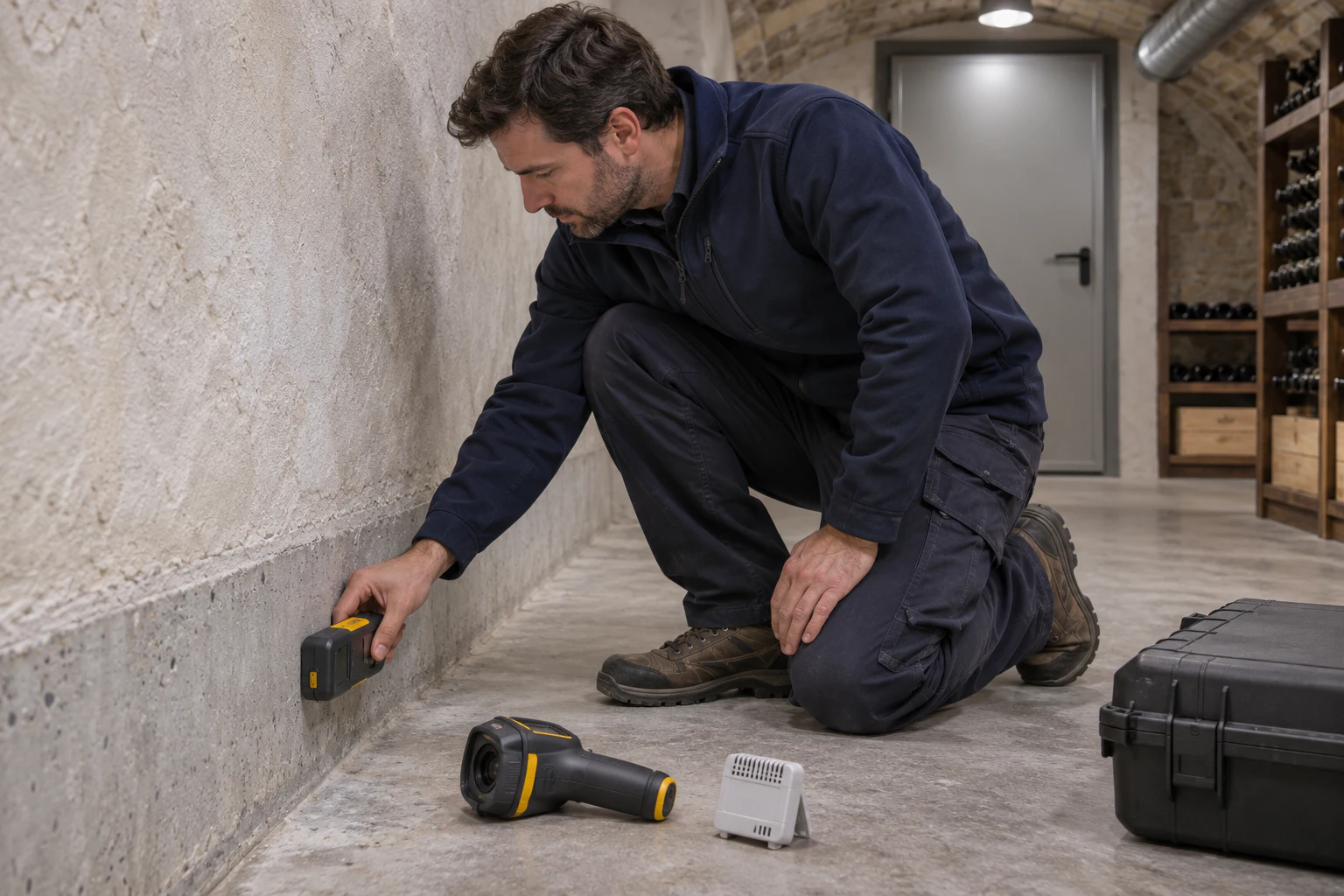
External waterproofing and an intelligible route for water are preferable where access permits, but completed houses often impose constraints. An engineer should map joints, penetrations, construction interfaces, drainage and sumps; test material moisture; and define repairs only after diagnosis. An internal coating over an unidentified wet wall may improve appearance without resolving water pressure or revealing the condition of reinforcement.
During a purchase, connect the cellar review to the wider assessment of groundwater, levels and plot drainage. Request as-built waterproofing and drainage drawings, concealed-work records, photographs taken before backfilling, outlet levels and repair logs. Missing records do not prove failure, but they increase the value of instrumented investigation and carefully agreed trial openings.
Light, odours, vibration and racks belong in the engineering brief
AWRI documents the impact of light and elevated temperature on wine. Cellar lighting should operate only when needed and should not heat the upper racks. A permanently illuminated display requires a separate technical case. The insulated door must seal properly while remaining safe to open from inside. Paints, cleaning chemicals, fuel and continuously vibrating machinery should not share the room.
Racks must be designed for the actual mass of bottles and cases, fixed to a suitable substrate and arranged to preserve access to the envelope and services. They must not conceal sensors, drains, filters or maintenance panels. Aisles and turning space should allow cases to be moved without striking bottles, controls or equipment.
- Check whether luminaires warm the upper rows or remain on continuously.
- Confirm that bottles do not obstruct equipment intake and discharge paths.
- Preserve access to filters, traps, pumps, valves and sensors.
- Inspect the anchorage of tall racks, timber condition and metal corrosion.
- Separate guest circulation from delivery handling where the cellar supports entertaining.
The service-access principle is the same as in our guide to country-house plant rooms: equipment should be maintainable without dismantling expensive finishes or relocating half the collection.
A cooling failure should be visible before it becomes a crisis
Use two layers of supervision: the unit controller and an independent environmental logger. Alarms should cover more than a temperature threshold. Power loss, sensor communication failure, drain overflow and abnormally long compressor operation can all provide earlier warning. For a valuable collection, define who receives the alert, who can enter the property, who may call the contractor and where bottles can be moved temporarily.
Backup power should follow a critical-load assessment rather than placing the entire cellar on the nearest UPS. Compressor starting current, moisture control, ventilation and controls must fit within the residence power strategy. Coordinate the design with the house backup-power plan and prove it with an actual transfer test.
The maintenance agreement should identify every asset, consumables, inspection tasks, condensate-line cleaning, sensor checks, access to alarm history and emergency authority. Our guide to an engineering service contract and SLA provides a useful framework.
Commissioning checklist for a residential wine cellar
Commissioning must demonstrate operation, not merely the absence of visible defects on inspection day. Review the design and as-built records, inspect the envelope, measure conditions with independent instruments and exercise failure scenarios. A new installation should be tested with representative loading and realistic operation; a short run in an empty, already-cool room says little about long-term stability.
- Documents. Obtain heat and moisture calculations plus drawings for the envelope, waterproofing, drainage, power, ventilation and condensate disposal.
- Envelope. Inspect the door, junctions, penetrations, salts, musty odours, finishes and accessible wall and floor areas.
- Climate. Compare multiple sensors, review logs, check temperature distribution across racks and observe recovery after door opening.
- Failures. Simulate loss of power and communications; confirm alerts, backup operation, safe restart and condensate management.
- Serviceability. Verify access to filters, equipment, drains and valves, and record model and serial data in the asset register.
- Collection. Establish an observation period for the empty room, then a staged loading plan and an intake rule for damp or contaminated cases.
For a property transaction, add the results to the wider technical review and compare them with the seller’s records. The overall sequence is set out in our guide to prime country-home due diligence. A strong cellar is defined not by stone and cabinetry but by proven stability, a dry envelope, service access and a rehearsed response to failure.