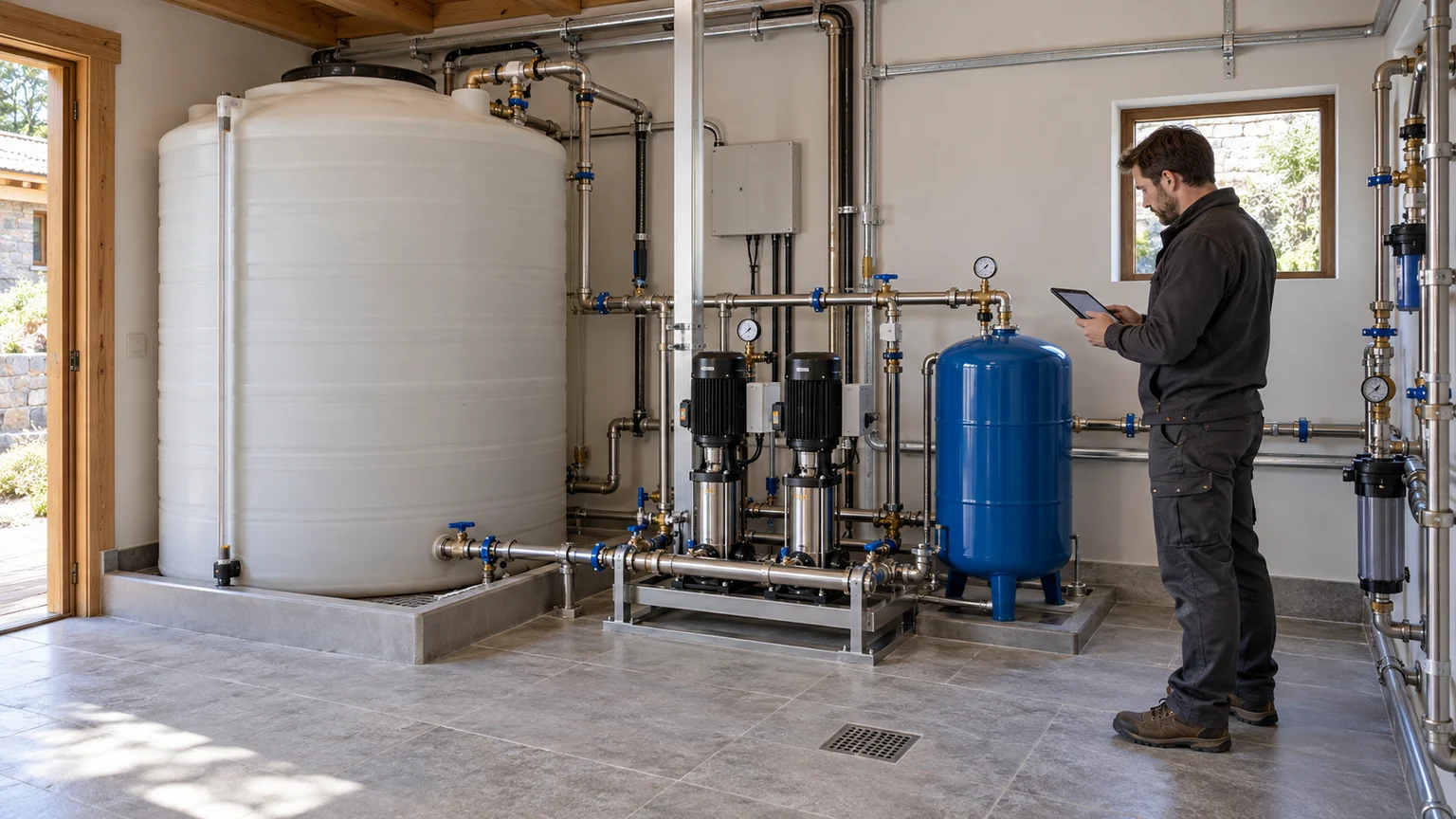
Country-House Lightning Protection: Earthing and Surge Checks
A practical post-season review of a country house’s lightning protection: roof conductors, bonding, earthing, surge devices, records and specialist verification.
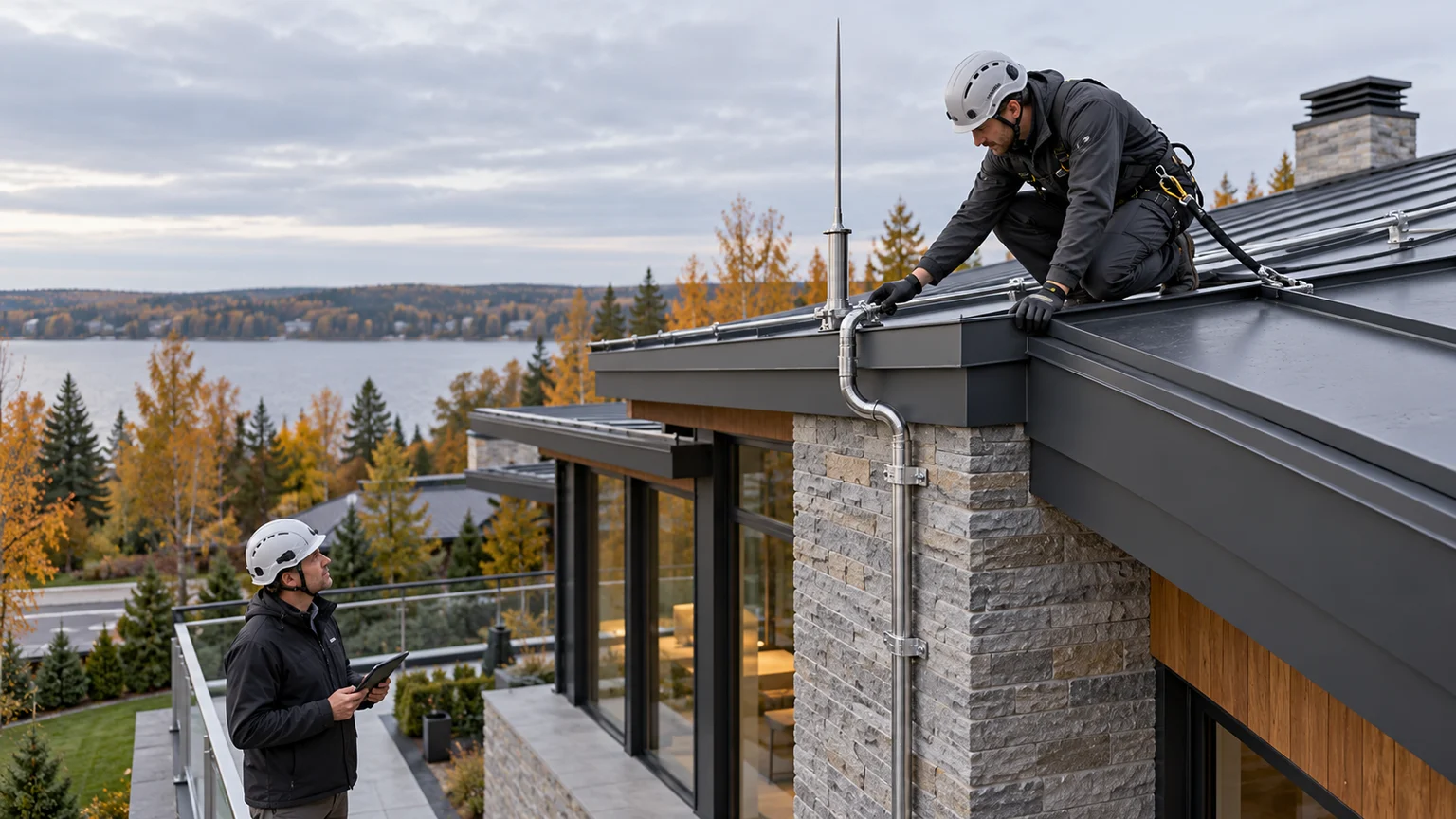
A country house lightning-protection system is more than a metal rod on the roof. Performance depends on the complete path: air terminals, down conductors, joints, earth-termination system, equipotential bonding and measures protecting internal electrical and electronic equipment. One intact component cannot prove that the system works as designed.
The end of the storm season is a useful inspection point before persistent snow limits roof access. The owner or estate manager can assemble records and identify visible concerns, but measurements and work inside the electrical installation belong to qualified specialists following an agreed method.
Recover the original protection concept
Begin with documents rather than the roof. Establish the risk basis, protected zones, conductor routes, earth arrangement, bonding points and the location and coordination of surge protective devices. GOST R IEC 62305-1-2010 sets out general principles for protecting structures, occupants and connected services; the actual design must reflect the property’s configuration and risk assessment.
Request:
- a roof plan showing air terminals and protection zones;
- down-conductor routes and their connection to the earth-termination system;
- the main equipotential-bonding diagram;
- single-line distribution diagrams showing SPD types and locations;
- protection arrangements for communications, gates, CCTV, antennas and outdoor equipment;
- commissioning and subsequent measurement records, inspections and repairs;
- updates following solar panels, antennas, canopies, metalwork or new automation.
If the built roof differs from the drawing, the old scheme cannot simply be assumed valid. Added equipment may alter protected geometry, introduce conductive paths or create a route for a surge into the house. Combine this review with a separate roof covering and junction inspection, while recognizing that the roofer and lightning-protection engineer answer different questions.
External protection depends on continuity
Inspect accessible air terminals, conductors, fixings, connectors, down conductors and test points. Look for physical damage, loose supports, corrosion, heat marks, deformation after roof work, broken conductors, unsuitable material contact and sections buried behind later finishes.
Pay particular attention at eaves, façade joints, the plinth and locations where landscaping or cladding work could have severed a down conductor. A pristine new section beside aged metal should lead to a review of the repair record: visual continuity may have been restored without electrical verification.
GOST R 59789-2021 addresses protection of structures from damage and people and animals from dangerous touch and step voltages near the lightning-protection system. The inspection therefore extends beyond the roof to accessible conductive parts, low-level joints, routes near entrances and terraces, and consistency with the design.
Do not improvise access to a wet, icy or fragile roof. Safe routes, anchorage and inspection access are part of maintainability. If reaching an air terminal requires an unsecured ladder or walking across delicate finishes, record that as a separate operational defect.
Earthing cannot be verified from a photograph
The earth electrode system is largely hidden, so a neat strip of metal on the façade proves little. The specialist needs to understand electrode material and geometry, joints, connection to the main bonding system, accessible test points and measured performance. Corrosion, drainage installation, excavation, new paving or relocated services may change conditions while the visible section remains unchanged.
There is no single resistance value that should be copied into every country-house report. Acceptance criteria depend on the supply arrangement, protective devices, lightning design, soil and applicable requirements. A meaningful test record states the method, conditions, connection arrangement and the design criterion used for comparison. An isolated number without that context has limited value.
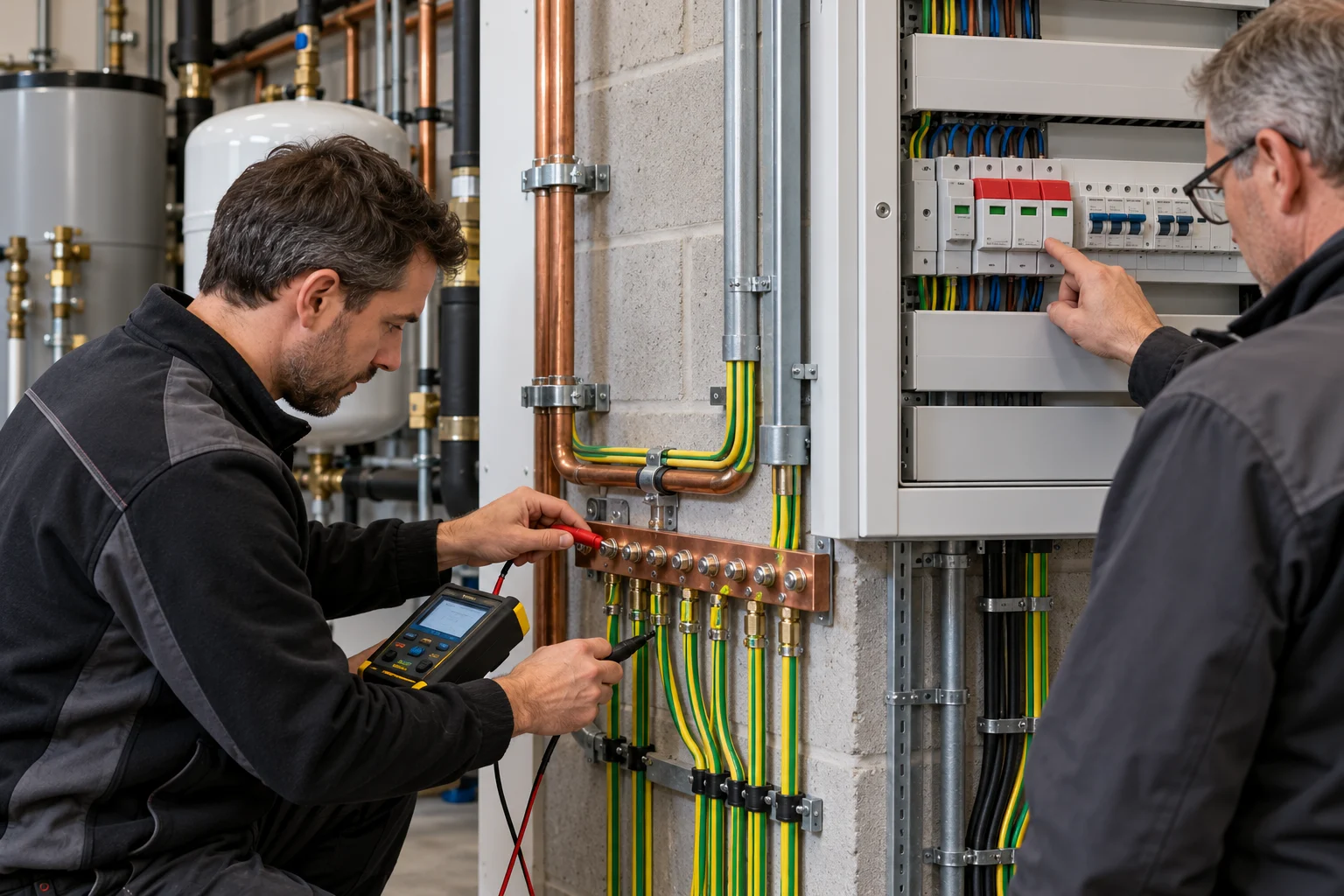
Ask where tests can be performed safely, how each conductor is identified and whether a baseline record exists for comparison. If no credible baseline can be produced, the estate needs a new one. Access to bonding bars and panels should also be assessed using the principles in our guide to country-house plant rooms and service access.
SPDs form a coordinated system
A surge protective device limits transient overvoltage and diverts impulse current, but it does not replace external lightning protection or earthing. GOST IEC 61643-12-2022 covers principles for selection, placement and coordination of SPDs in low-voltage distribution systems. Finding one module in the main board does not prove that every vulnerable route is protected.
Review the service entrance and downstream boards, connection paths, associated protective devices, coordination between stages, status indicators and consistency with the single-line diagram. If an indicator calls for replacement, do not merely reset or swap the module without understanding the event and associated damage. A normal indicator colour also cannot prove correct device selection, installation or the condition of the wider system.
Map every externally entering circuit: gates, outdoor lighting, copper communications, intercoms, cameras, antennas, pumps, borehole equipment and garden systems. GOST R IEC 62305-4-2016 addresses protection of electrical and electronic systems inside structures through coordinated measures including zoning, bonding, shielding and surge protection. In practice, inspect every credible impulse path rather than only the main power cable.
After a nearby strike or unexplained alarm
Following a security report, protection trip or simultaneous equipment faults, preserve event data before repeatedly restarting devices. Useful evidence may exist in building automation, UPS, inverter, gate, alarm, router, HVAC and water-treatment logs. Aligning timestamps can reveal which systems were affected together.
Do not open boards, touch damaged conductors or repeatedly re-energize a tripped circuit until safety is established. A specialist examines the service entrance, SPDs, joints, bonding and sensitive equipment before defining further tests. Damage may appear as unstable communications, false alarms or loss of one interface rather than complete failure.
Lightning protection and backup power solve different problems. A generator or UPS supports loads during loss of supply but may itself need coordinated surge protection and correct bonding. Review operating priorities and switching logic with our country-home backup-power guide.
Due diligence on an existing house
Lightning protection is easily overlooked during a normal viewing. Ask for a design, measurement records, concealed-work photographs and change history rather than accepting “it has lightning rods.” Trace down conductors, identify test points, review SPD markings and establish who maintained the system.
Warning signs include:
- an air terminal whose conductor disappears behind finishes and cannot be traced to earth;
- conductors moved during roof work without a revised plan;
- one SPD module with no coordination design or protection of external services;
- verbal claims about earthing without identifiable test reports;
- antennas, solar equipment or outdoor systems added after the design;
- no record of past SPD operation or module replacement;
- unsafe or impossible access for inspection and testing.
Include this work in the wider technical due diligence for a prime country home. It does not replace an electrical-installation survey: ageing distribution boards, unclear bonding and unrecorded alterations may form a broader problem hidden by expensive finishes. That risk is explored in our guide to ageing services behind a luxury interior.
The owner’s final checklist
A seasonal review should leave the owner with an intelligible package:
- an updated diagram of external and internal protection;
- a list of inspected components and deviations;
- photographs tied to specific assets;
- measurement reports stating method and assessment criteria;
- an SPD register by board and circuit, including replacements;
- roof, façade, service and equipment changes requiring design review;
- a repair plan with priorities, owners and verification after completion.
No lightning-protection system promises absolute immunity. Its purpose is to manage risk through coordinated measures. The best evidence is therefore not the most conspicuous roof rod, but a traceable chain from design and external conductors through earthing, bonding, SPDs, measurements and continuing maintenance.